Step into the vibrant world of Egyptian cuisine and explore the rich flavors, traditional recipes, and culinary history of the land of the Pharaohs. From savory dishes to sweet indulgences, Egyptian food is a true reflection of the country’s culture, geography, and history.
1. A Gastronomic Adventure: Traditional Egyptian Cuisine
Egyptian cuisine combines influences from Arab, Mediterranean, and Turkish traditions, creating a unique culinary heritage. Meals focus on fresh, local ingredients, simple preparation, and bold yet balanced flavors. Herbs, spices, and grains form the backbone of every dish, making Egyptian cuisine both hearty and flavorful.
2. Timeless Egyptian Recipes Passed Down Through Generations
Many traditional Egyptian recipes have been preserved for centuries. These dishes showcase the country’s culinary culture and are enjoyed by locals and visitors alike:
- Ful Medames: Slow-cooked fava beans with olive oil and spices, often served with warm pita bread.
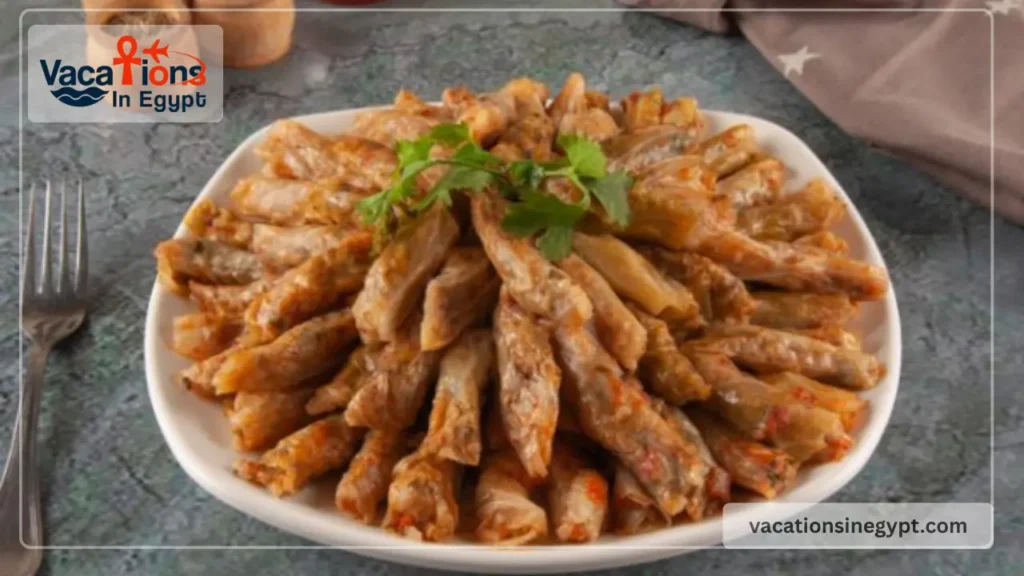
- Mahshi: Vegetables like bell peppers, zucchini, and eggplant stuffed with rice, herbs, and spices.
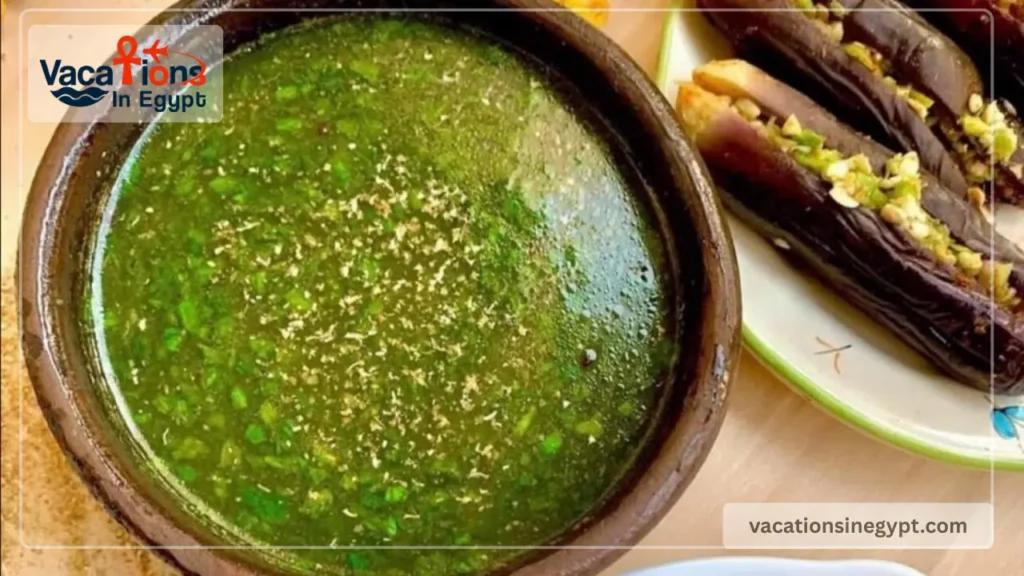
- Molokhia: A classic green stew made from jute leaves, served with rice or bread.
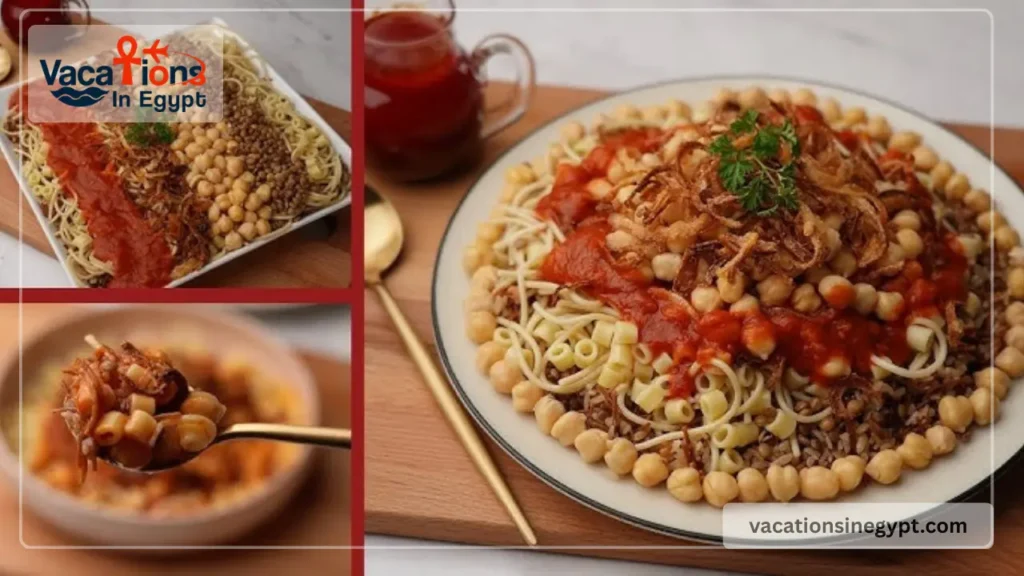
- Koshari: Egypt’s national dish, a comforting mix of rice, lentils, macaroni, chickpeas, tomato sauce, and fried onions.
3. Egyptian Street Food: A Feast for the Senses
Egyptian street food offers an authentic taste of local flavors:
- Shawarma: Marinated meat, roasted on a vertical spit, served with vegetables, tahini sauce, and pita bread.
- Falafel (Taameya): Deep-fried balls of ground fava beans or chickpeas, blended with herbs and spices.

- Koshari: Popular street vendors serve this hearty dish with spicy tomato sauce and crispy onions.
Street food is inexpensive, flavorful, and an essential part of Egypt’s culinary culture.
4. Sweet Indulgences: Egyptian Desserts
Egyptian desserts are rich, aromatic, and often infused with nuts, honey, and spices:
- Basbousa: Semolina cake soaked in syrup flavored with rosewater or orange blossom water.
- Umm Ali: Creamy bread pudding layered with phyllo, milk, nuts, and raisins, sprinkled with cinnamon.
- Sahlab: A fragrant, milk-based drink with orchid powder, coconut flakes, and pistachios.
- Roz Bel Laban: Creamy rice pudding flavored with rosewater and garnished with nuts and raisins.
5. Dining in Egypt: From Street Food to Fine Dining
Egyptian culinary culture spans humble street stalls to luxury restaurants overlooking the Nile:
- Street Food: Affordable, fast, and delicious meals like falafel, shawarma, and koshari.
- Fine Dining: Upscale restaurants feature refined versions of traditional dishes, often with Nile views or historic settings.
Whether you dine in bustling markets or serene restaurants, Egyptian cuisine is a feast for all senses.
6. Famous Egyptian Dishes With Historical Significance
Egyptian cuisine carries centuries of history:
- Molokhia: Dates back to pharaonic times, made from jute leaves and served with rice or bread.
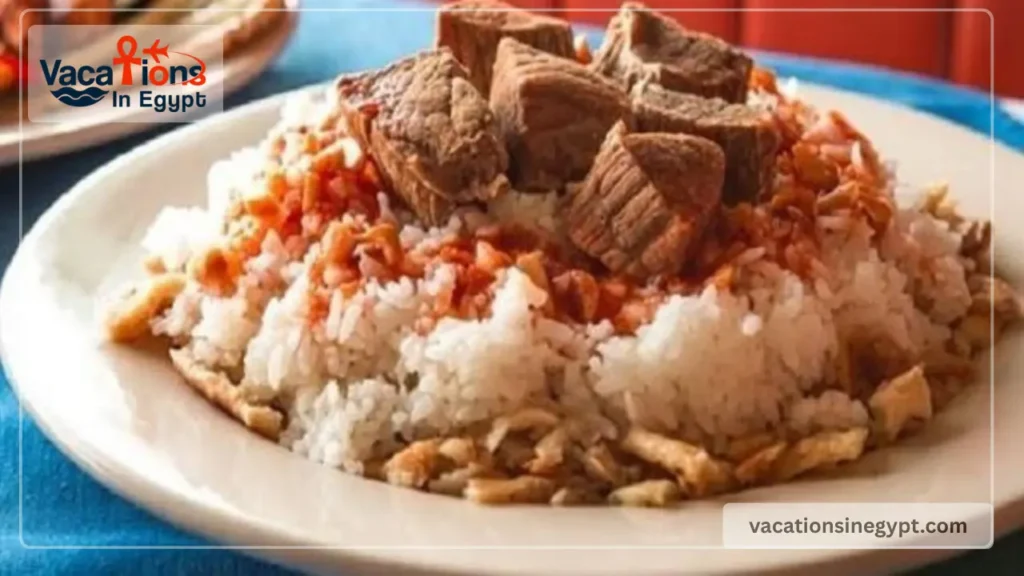
- Fattah: A ceremonial dish with layers of bread, rice, and meat, often prepared for special occasions.
- Koshari: National comfort food reflecting centuries of cultural blending.