King Akhenaten—born Amenhotep IV—was one of the most controversial rulers of ancient Egypt’s 18th Dynasty. He reigned from about 1353 to 1336 BC after the death of his father, Amenhotep III. Akhenaten is famous for introducing a revolutionary religious reform centered on the worship of one god, the Aten.
Akhenaten (1353–1336 BC)
Early Life and Family
Akhenaten was the second son of Amenhotep III and Queen Tiye. After the death of his older brother, he became crown prince and later king.
He married the famous queen Nefertiti, often described as one of the most beautiful women of the ancient world. Together they had six daughters.
He also had another wife, usually identified as Kiya, and is widely believed to have been the mother of Tutankhamun.
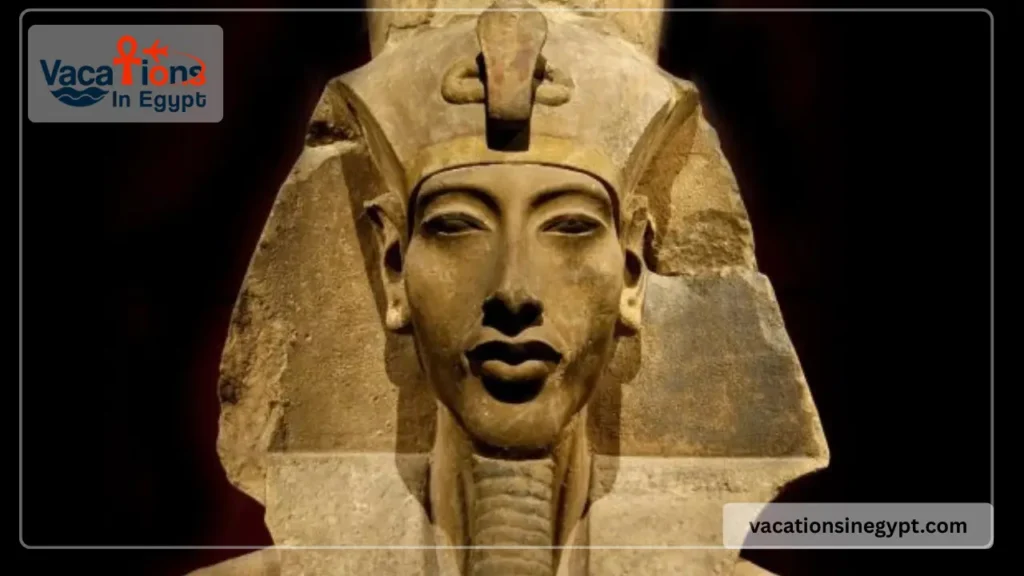
Some scholars have suggested that Akhenaten may have suffered from Marfan syndrome, based on artistic depictions of his elongated features, but this remains unproven.
Religious Revolution
Akhenaten is known for establishing what many consider the first form of monotheism in history.
In the ninth year of his reign, he:
- Banned the powerful cult of Amun
- Closed temples dedicated to Amun and other traditional gods
- Declared Aten (the sun disk) as the supreme and only god
- Changed his name from Amenhotep IV to Akhenaten, meaning “Effective for Aten”
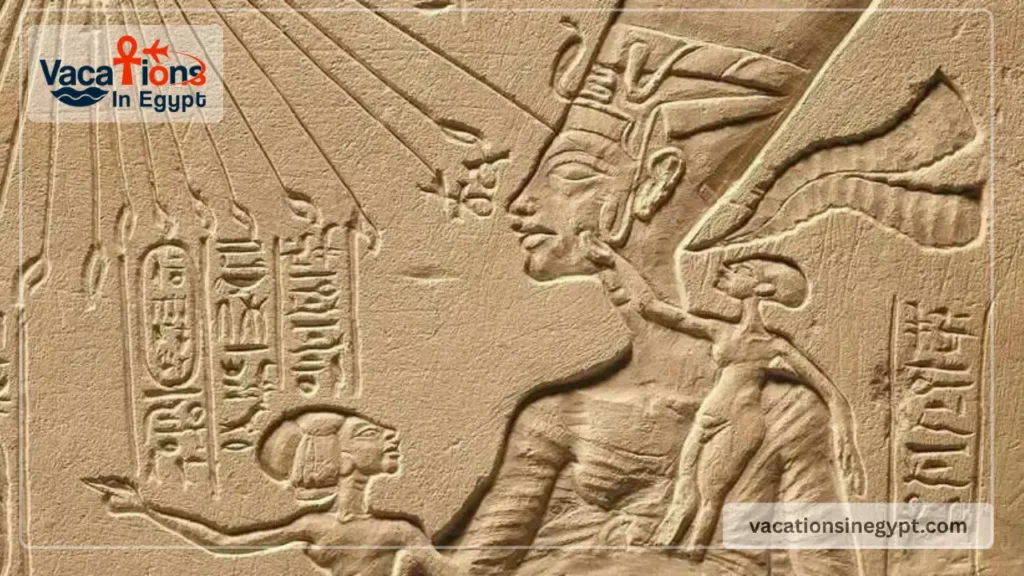
Aten was represented as a sun disk with rays extending downward, often ending in hands that offered life to the royal family.
One of the most important religious texts from his reign is the Hymn to Aten, found in tomb inscriptions at Amarna.
New Capital: Amarna
Akhenaten moved the capital from Thebes to a new city he built called Akhetaten (“Horizon of Aten”), known today as Amarna.
He built:
- Temples dedicated to Aten
- Open-air sanctuaries
- Palaces and administrative buildings
He also constructed temples to Aten at Karnak.
Art of the Amarna Period
Art during Akhenaten’s reign changed dramatically. This new artistic style is known as the Amarna style.
Characteristics included:
- Elongated heads and necks
- Thin arms and legs
- Realistic family scenes
- Emotional and intimate depictions of the royal family
One famous artistic theme shows Akhenaten, Nefertiti, and their daughters beneath the rays of Aten.
Unlike earlier idealized royal art, Amarna art focused on realism and individuality.
Foreign Policy and Military Affairs
Unlike previous pharaohs, Akhenaten paid little attention to military campaigns.
Although Egypt still controlled territories in Nubia, Palestine, and Syria, his lack of military involvement led to:
- Discontent among military leaders
- Loss of influence in foreign territories
- Expansion of the Hittites in northern Syria
The diplomatic correspondence from this period, known as the Amarna Letters, reveals complaints from Egyptian allies who felt neglected.
Death and Legacy
Akhenaten died in 1336 BC in his new capital. After his death:
- The worship of Aten declined
- The old gods, especially Amun, were restored
- The capital returned to Thebes
- His son Tutankhamun reversed his religious reforms
Later Egyptian rulers tried to erase his memory. His name and image were removed from monuments, and he was referred to as “the heretic king.”
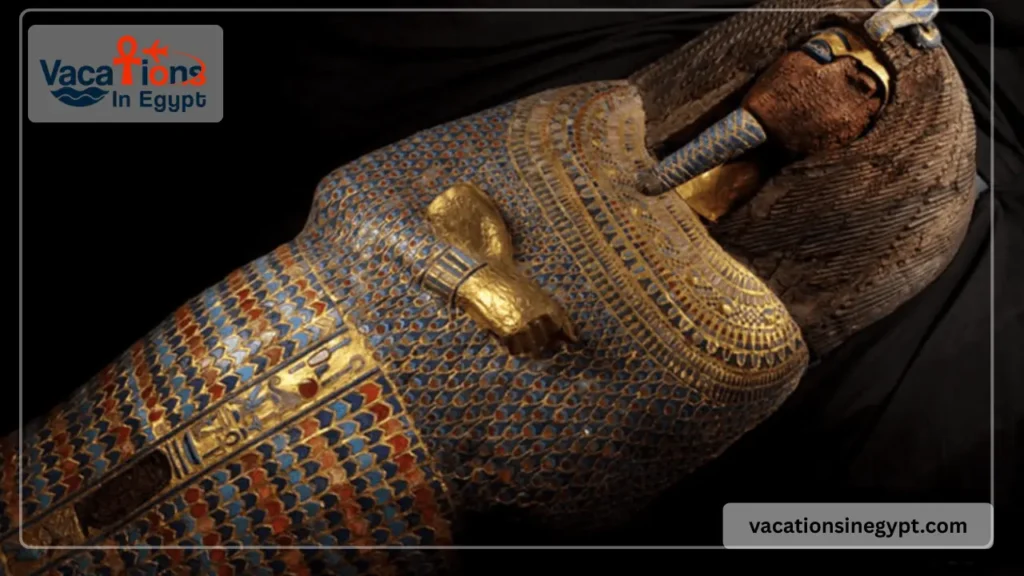
His royal tomb was discovered in 1907 in the Valley of the Kings, though his mummy was not definitively identified there.
Historical Importance
Akhenaten remains one of the most fascinating figures in ancient history because:
- He attempted a radical religious transformation
- He reshaped Egyptian art
- He shifted political and religious power structures
- He introduced one of the earliest known experiments in monotheism
Today, historians continue to debate whether he was:
- A visionary religious reformer
- A political idealist
- Or a ruler whose religious focus weakened Egypt’s empire
Either way, his reign represents one of the most dramatic cultural shifts in ancient Egyptian civilization.