Egypt’s identity is built on monumental architecture concentrated along the Nile Valley — a corridor of ancient sites spanning more than 1,000 kilometres and 5,000 years of history. For first-time visitors trying to understand which Egypt famous places deserve priority, three landmarks stand above everything else: the Giza Pyramids outside Cairo, the Karnak Temple Complex in Luxor, and the Temple of Isis at Philae in Aswan.
The Great Pyramids of Giza: Egypt’s Most Iconic Landmark
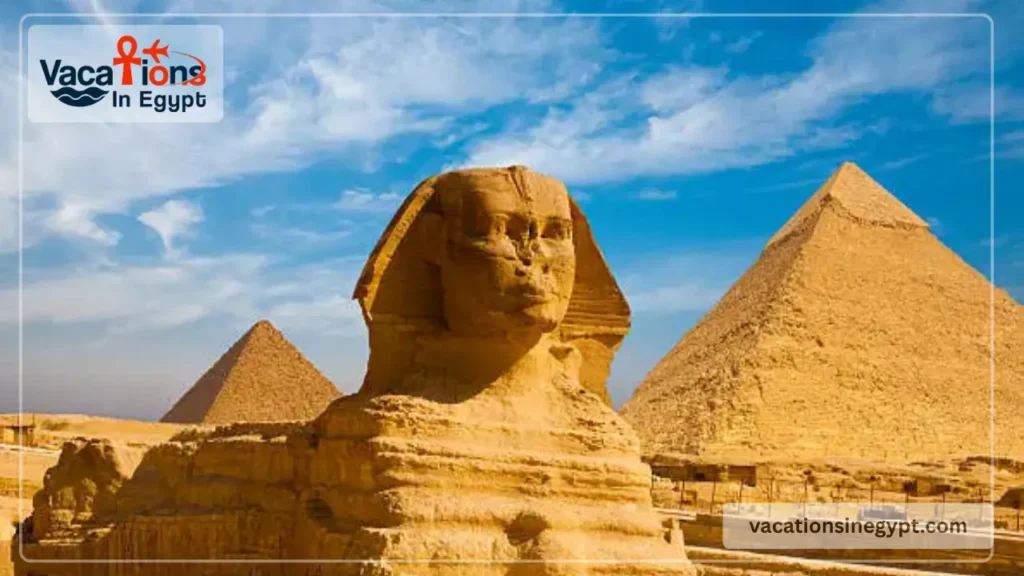
No list of Egypt famous places begins anywhere else. The Giza Plateau, on the outskirts of Cairo, holds the only surviving wonder of the ancient world — a feat of engineering that has never been fully explained and has never stopped astonishing visitors.
The complex centres on two defining structures. The Great Pyramid of Khufu is the largest and oldest of the three pyramids, built with a precision that modern construction struggles to replicate. The Great Sphinx, carved from a single limestone outcrop, stands guard over the entire plateau with a quiet authority that photographs consistently fail to capture.
Giza, however, is part of a longer story. Understanding the evolution from the stepped pyramid at Saqqara to the smooth-sided perfection at Giza gives the whole complex far greater meaning. A thorough overview of the pyramids in Egypt before your visit turns a visual spectacle into a genuine historical journey.
Karnak Temple Complex: The Largest Ancient Religious Site on Earth
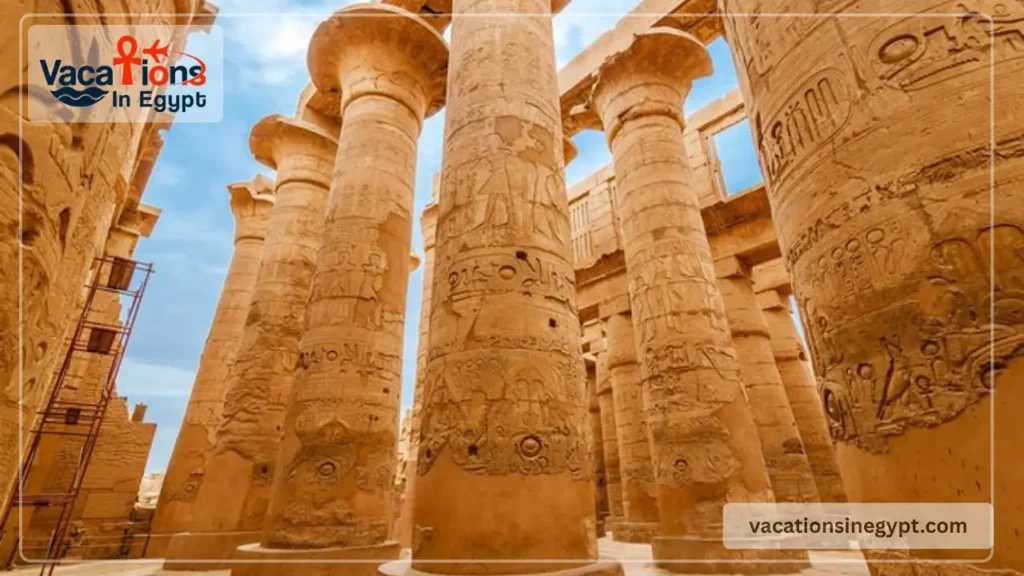
If the Pyramids define Egypt famous places for their scale as tombs, Karnak defines them for scale as a living place. Located in Luxor, the Karnak Temple Complex is not a single building but a vast open-air city of temples, chapels, pylons, and obelisks built and expanded by roughly 30 pharaohs over 1,500 years.
Two features stop visitors in their tracks. The Hypostyle Hall contains 134 massive sandstone columns arranged in 16 rows — walking through it feels less like visiting a ruin and more like moving through a forest of stone. The Sacred Lake, once used by priests for ritual purification, sits at the heart of the complex with a stillness that contrasts strikingly with the scale around it.
Where the Pyramids were built for the dead, Karnak was built for the living — a religious centre where daily ceremonies, festivals, and political declarations shaped Egyptian society for over a millennium. Visiting the Karnak Temple offers an entirely different dimension of ancient Egypt than anything Cairo provides.
Temple of Philae: The Most Scenic of Egypt’s Famous Places
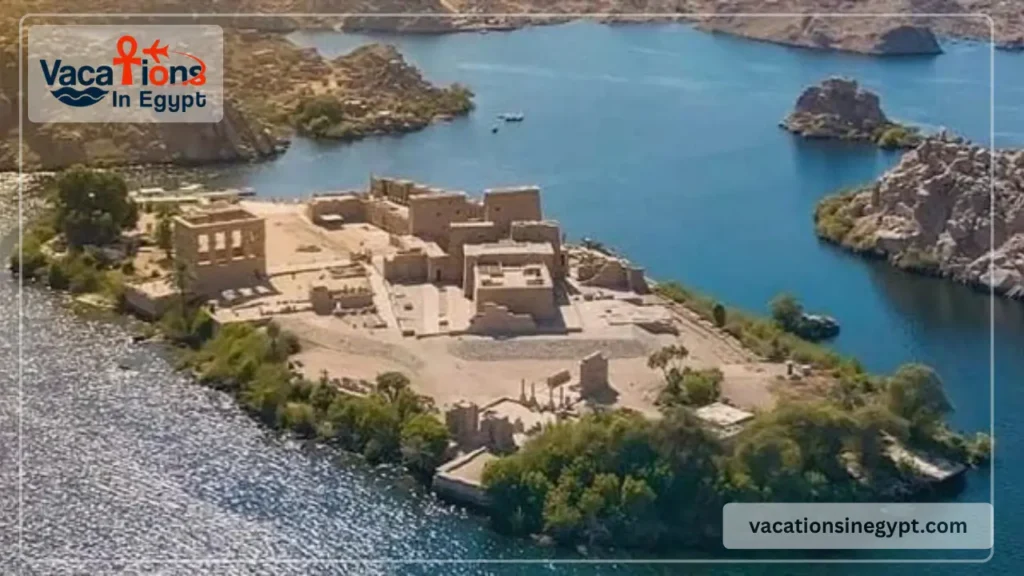
Travelling south to Aswan, both the landscape and the atmosphere shift. The desert becomes rockier, the Nile narrower, and the pace noticeably slower. The defining landmark here is the Temple of Isis at Philae — and it earns its place among Egypt’s famous places for reasons that have as much to do with setting as with history.
Unlike Karnak’s overwhelming scale, Philae is celebrated for its detailed relief carvings and its extraordinary island location. The entire complex was dismantled stone by stone and relocated to Agilkia Island in the 1970s to save it from the rising waters caused by the Aswan High Dam — one of the most ambitious archaeological rescue operations ever undertaken. Reaching it by boat across the water at dusk, as the carvings catch the last light, is one of Egypt’s genuinely unforgettable moments. A visit to the Temple of Philae provides a quieter, more scenic counterpoint to the busy sites further north.
How to See All of Egypt’s Famous Places in One Trip
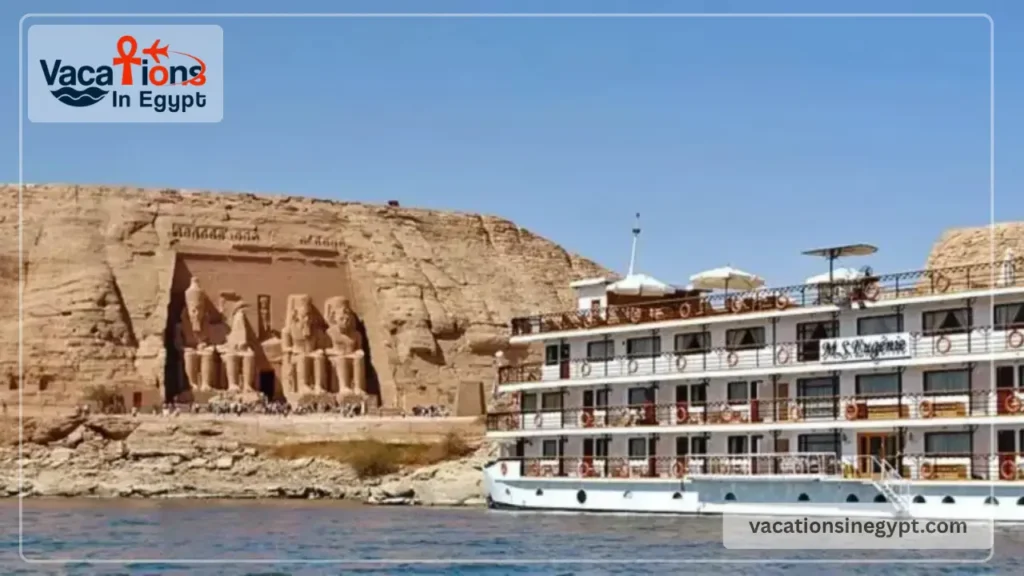
These three landmarks are spread across a considerable distance — Cairo in the north, Luxor roughly 650 kilometres south, and Aswan a further 200 kilometres beyond that. The most efficient way to connect them is a structured itinerary that follows the Nile logically.
The classic route runs Cairo to Luxor to Aswan. Domestic flights cover Cairo to Luxor or Aswan in around one hour, making it straightforward to avoid retracing your steps. Between Luxor and Aswan, A Nile cruise handles both transport and accommodation, letting you arrive in Aswan having already slept and eaten rather than having spent hours on a bus. A well-planned route through the best attractions across Egypt minimises travel time and maximises the hours you actually spend at the sites.
Expert Tips Before You Visit Egypt’s Famous Places

- Ticket combinations matter at Giza. The plateau entrance, pyramid interiors, and the Solar Boat Museum each require separate tickets. Decide in advance whether you want to go inside a pyramid — the queues and the interior experience are not for everyone, and knowing beforehand saves time and frustration.
- Sun protection is non-negotiable at open-air sites. Karnak and Philae offer very little shade. A hat, sunscreen, and a refillable water bottle are essential even in winter months.
- Photography rules vary by site. Mobile phones are generally free to use throughout. Professional cameras sometimes require an extra permit. Flash photography is prohibited inside tombs and enclosed spaces — both for preservation reasons and out of respect for other visitors.
- Footwear makes a genuine difference. Sand, uneven stone pavements, and long walking distances across all three sites make comfortable, closed-toe shoes a practical necessity rather than a preference.
For detailed logistics and expert guidance on planning a trip across these landmarks, the travel guides at VacationsInEgypt.com cover each site in depth.