Famous Sites in Egypt: The Pyramids, Luxor, and Abu Simbel Explained
Egypt’s history is vast — but its story can be understood through three landmarks that each represent a distinct chapter of ancient civilization. The famous sites in Egypt that travelers return to again and again are not just visually impressive; they are historically coherent. The Pyramids explain where it all began. Luxor’s temples show how that civilization sustained itself. Abu Simbel reveals what it looked like at the height of its power.
Understanding these three sites — and the order in which to visit them — is the clearest framework any traveler can bring to Egypt.
The Three Famous Sites in Egypt That Define the Country’s Story

Egypt has hundreds of ancient monuments, but three rise above the rest in historical significance and traveler impact:
- The Pyramids of Giza — the monumental beginning of Egyptian civilization
- Luxor Temple — the living intersection of religion, governance, and urban life
- Abu Simbel — the architectural expression of imperial confidence at its peak
Visited in sequence, these famous sites in Egypt stop feeling like isolated landmarks and start reading like chapters of the same civilization’s story.
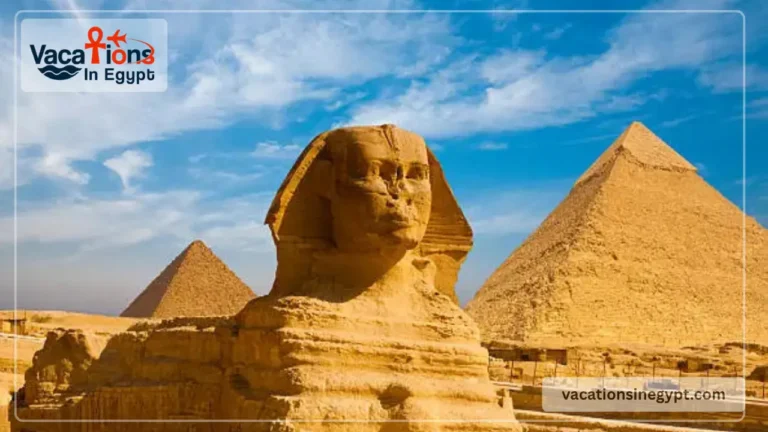
The Pyramids of Giza: Where Egypt’s Story Begins
Why the Pyramids Remain the Most Famous Sites in Egypt
No other monument on earth carries the same combination of age, scale, and immediate symbolic clarity. The Pyramids of Giza have anchored the top of every famous sites in Egypt list for centuries — and for specific, explainable reasons:
- They represent the earliest expression of centralized royal power and engineering ambition in ancient Egypt
- Their visual logic is immediately accessible to first-time visitors, regardless of historical background
- They establish the belief systems — divine kingship, afterlife preparation, monumental commemoration — that shaped every temple and tomb built afterward
Exploring the story behind the Pyramids in Egypt before your visit means that when you arrive at Luxor or Abu Simbel, you already understand the religious and political foundations those later monuments were built on.
Luxor Temple: Where Religion Met Everyday Life
What Makes Luxor Temple Historically Unique
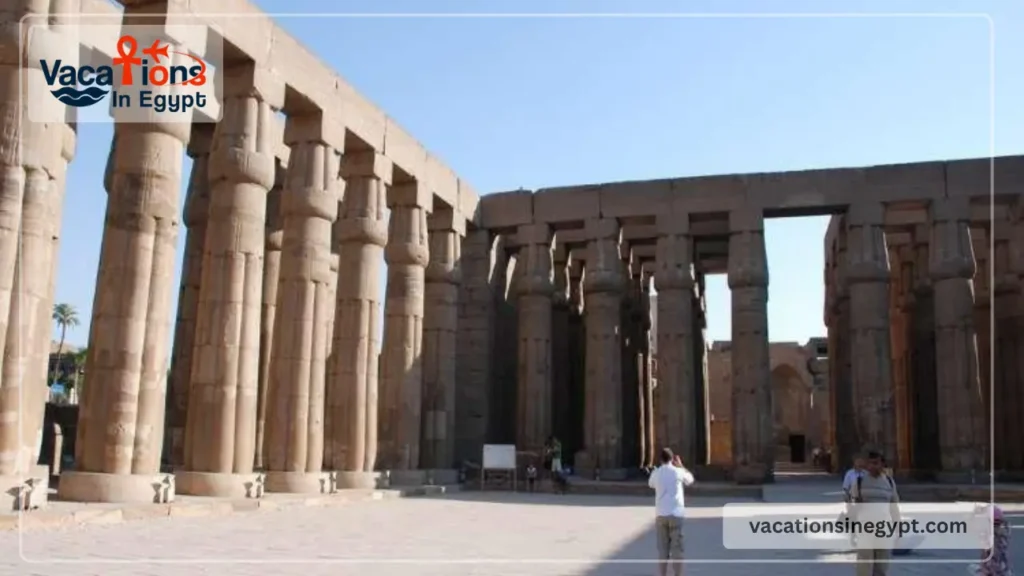
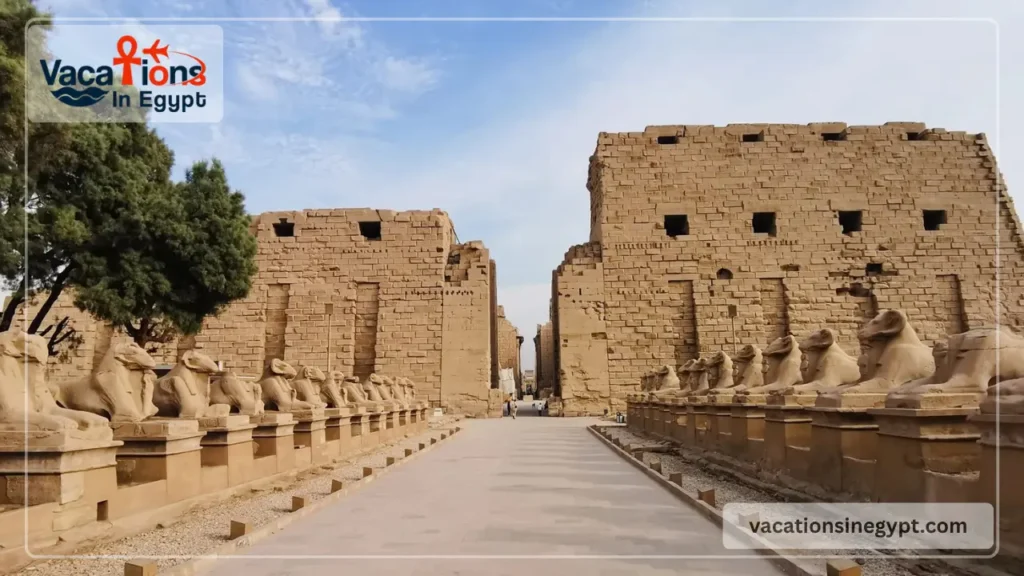
Most ancient Egyptian temples were built at a remove from daily life — set apart by geography, by restricted access, or by ceremonial function. Luxor Temple was different. Built at the heart of ancient Thebes, one of Egypt’s most important cities, it functioned as a meeting point between the sacred and the civic.
Visiting Luxor Temple reveals a dimension of ancient Egyptian religion that remote sites cannot:
- Public religious processions passed through and around the temple as part of annual festivals
- Kingship and divine authority were performed here before the city’s population, not just in private ritual
- Later rulers — including Alexander the Great and Roman emperors — added to the structure, making it a record of Egypt’s connections with the wider ancient world
Where the Pyramids explain how Egyptian civilization was founded, Luxor Temple shows how it was maintained across centuries of change.
Abu Simbel: Architecture as Power
Why Abu Simbel Is Considered a Masterpiece Among Famous Sites in Egypt
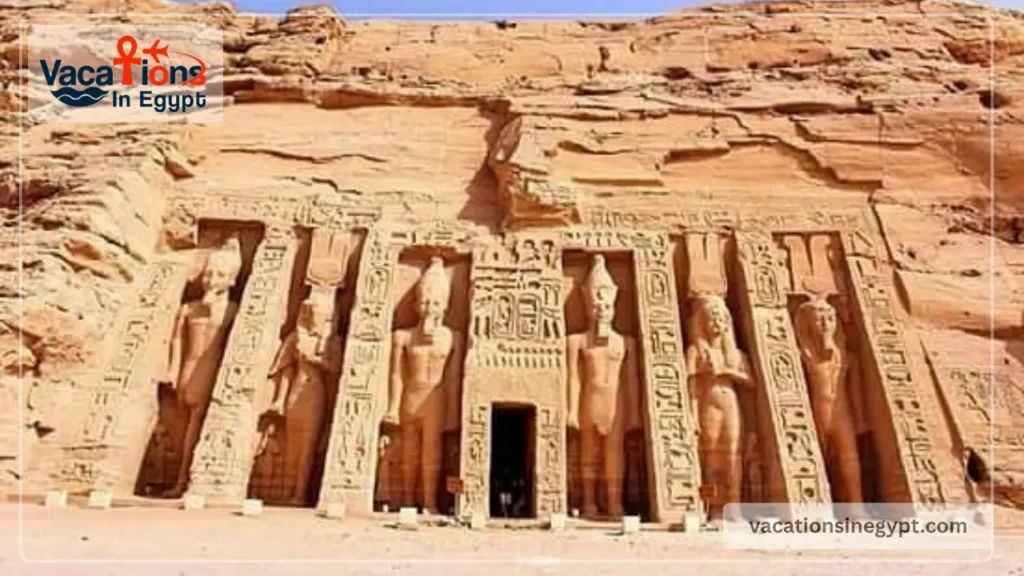
Abu Simbel stands apart from every other famous site in Egypt in one critical respect: it was designed not just for worship, but for intimidation. Commissioned by Ramesses II and carved directly into a sandstone cliff near Egypt’s southern frontier with Nubia, the temple was a deliberate statement of imperial strength — directed at rivals, neighboring kingdoms, and the gods simultaneously.
Understanding the meaning behind the Temple of Abu Simbel transforms what might otherwise seem like a remote archaeological site into one of the most politically sophisticated structures in the ancient world:
- Its colossal facade — four seated figures of Ramesses II, each over 20 meters tall — was engineered to be visible and overwhelming from a distance
- Its interior is aligned so that twice a year, sunlight penetrates the inner sanctuary and illuminates the statues of the gods within
- Its location on Egypt’s southern border was a calculated choice: a monument that marked the boundary of the empire and demonstrated what lay beyond it
Abu Simbel is where ancient Egyptian architecture became diplomacy.
How These Famous Sites in Egypt Connect Into One Narrative

Seeing Egypt as an Evolving Civilization, Not a Collection of Monuments
The most common mistake travelers make in Egypt is treating its sites as a checklist of unrelated landmarks. Visited with their historical sequence in mind, these three famous sites in Egypt tell a single, coherent story:
- The Pyramids — Egypt’s origins: divine kingship, early religion, and the foundations of a civilization
- Luxor Temple — Egypt’s continuity: how religion, governance, and urban life sustained that civilization across a thousand years
- Abu Simbel — Egypt’s peak: the expression of imperial confidence, territorial power, and architectural mastery at their height
This progression makes each site more meaningful, not less. By the time you reach Abu Simbel, the Pyramids no longer feel like a distant memory — they feel like the beginning of the same sentence.
How to See All Three Famous Sites in One Journey
Realistic Pacing Makes the Difference

Combining the Pyramids, Luxor, and Abu Simbel in a single trip is entirely possible — but the itinerary structure matters more than most travelers expect. Routes that work best:
- Move gradually from north to south — Cairo and Giza first, then Luxor, then Aswan and Abu Simbel
- Use internal flights or Nile cruise segments to reduce overland travel fatigue between regions
- Build in rest days between intense visits — especially around Luxor, where the volume of significant sites can be overwhelming if rushed
An extended route like this 15-day Egypt tour covering Cairo, Luxor, and Abu Simbel demonstrates how all three landmark sites can be connected without compressing the experience into something that feels like a sprint.
Practical Tips for Visiting Egypt’s Famous Sites
From local travel experts who know these routes well:
- Visit in historical sequence — the Pyramids first, Luxor second, Abu Simbel last; the order reinforces understanding at every step
- Fewer sites per day, not more — one well-absorbed site is worth three rushed ones
- Abu Simbel rewards an early start — the temple is best visited in the morning before group tours arrive and before afternoon heat peaks
- Luxor needs at least two days — the east and west banks each deserve their own focused visit
- Context matters more than coverage — understanding why a site was built is more valuable than seeing ten sites you can’t explain
Final Thoughts
The famous sites in Egypt are famous for a reason — but the reason is not just their age or scale. It is what they collectively explain about one of the longest-running civilizations in human history. The Pyramids, Luxor Temple, and Abu Simbel each mark a distinct moment in that story, and visiting them in order transforms a sightseeing trip into a genuine historical journey.
The destination guides and multi-day itineraries on this site are built around exactly this logic — connecting Egypt’s most famous landmarks in a sequence that makes each one more meaningful than it would be on its own.