King Cheops, known in ancient Egyptian as Khufu, was the second pharaoh of the Fourth Dynasty during the Old Kingdom of Egypt. He ruled around 2589–2566 BC, and is best known as the builder of the Great Pyramid of Giza, one of the Seven Wonders of the Ancient World.
The name Cheops comes from Greek sources, particularly the writings of Herodotus, who claimed that Khufu ruled for 50 years. Modern historians, however, agree that this figure is exaggerated, and that his reign likely lasted about 24 years.
Historical Background of King Khufu
Khufu was the son of King Sneferu, the founder of the Fourth Dynasty, and Queen Hetepheres I. Under his reign, royal power reached an exceptional level, reflecting a highly organized and centralized state capable of managing massive resources and labor forces.
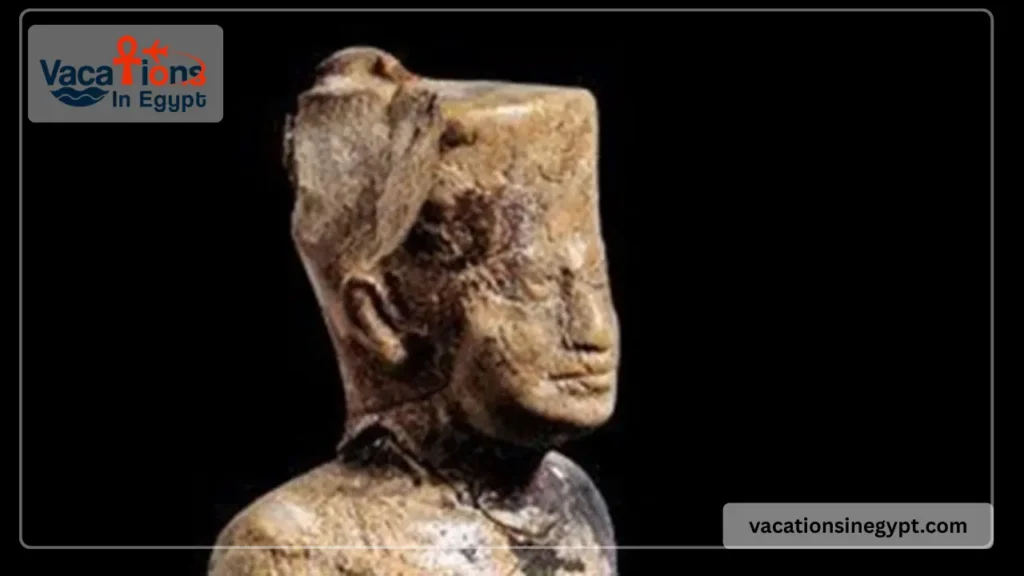
Despite his historical importance, very little is known about Khufu’s personal life. Only one small ivory statue, about 9 cm tall, has been discovered, making it the only confirmed representation of this powerful king.
Personal Biography and Family
Royal marriages in ancient Egypt often occurred within the royal family to preserve divine bloodlines. Brother-sister marriages were socially acceptable among royalty.
King Khufu had several wives and many children:
- Queen Meritites I:
Children included Kawab I, Djedefhor, and Meresankh II. - Queen Henutsen:
Mother of Khafre (Khefren), Menkaure’s lineage, Khufukhaf, and Khamerernebty I. - Queen Noubet (Nubih) and other wives:
Their children included Djedefre, Hetepheres II, Akhkhaf, and Kanefer.
Succession did not pass directly to his eldest son; instead, his son Djedefre succeeded him.
What Did King Khufu Do for Egypt?
The greatest achievement of King Khufu was the construction of the Great Pyramid, a project that demonstrated extraordinary administrative control, engineering skill, and social organization.
Contrary to popular belief, the pyramid was built by paid laborers, not slaves. Archaeological evidence shows that skilled workers were housed, fed, and medically cared for during construction.
King Khufu’s Construction Achievements
The Great Pyramid of Giza
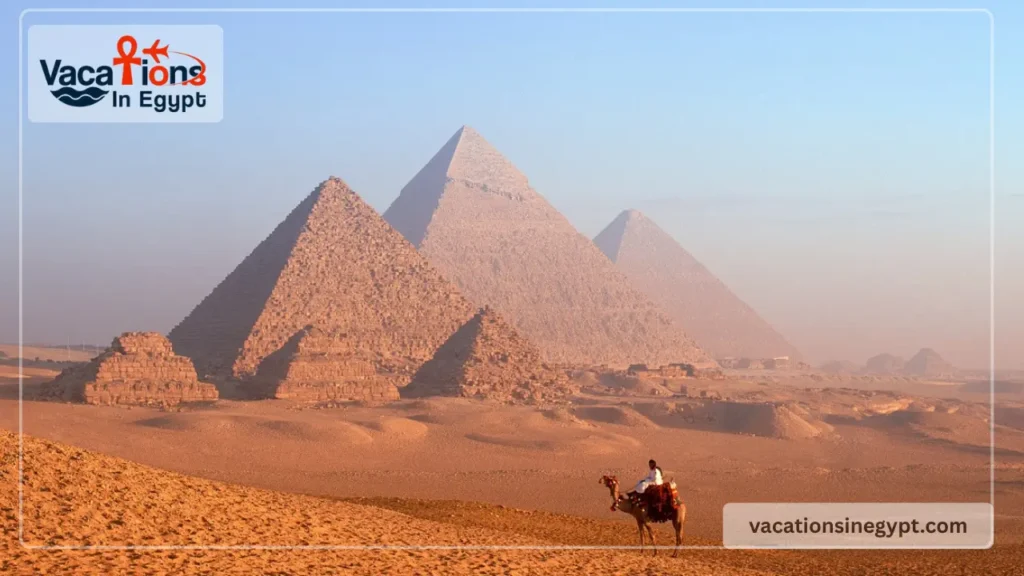
- Height originally: 146 meters
- Built with over 2.3 million limestone blocks
- Construction completed around 2570 BC
- Inner core stones with polished outer casing stones (now mostly lost)
The pyramid complex included:
- A mortuary temple on the eastern side
- Causeways and subsidiary pyramids
- Boat pits surrounding the monument
This architectural complex remains unmatched in scale and precision in ancient Egyptian history.
The Pyramid from the Inside
The interior of the Great Pyramid contains:
- Descending and ascending passages
- The Queen’s Chamber
- The King’s Chamber with a granite sarcophagus
- An unfinished subterranean chamber of unknown purpose
The precision of alignment and internal engineering continues to amaze modern scientists.
Khufu Statues and Artistic Evidence
Very few statues of King Khufu exist. The most famous is:
- A small ivory statue housed in the Egyptian Museum in Cairo
- Wearing the Red Crown of Lower Egypt
- Inscribed with his royal name (cartouche)
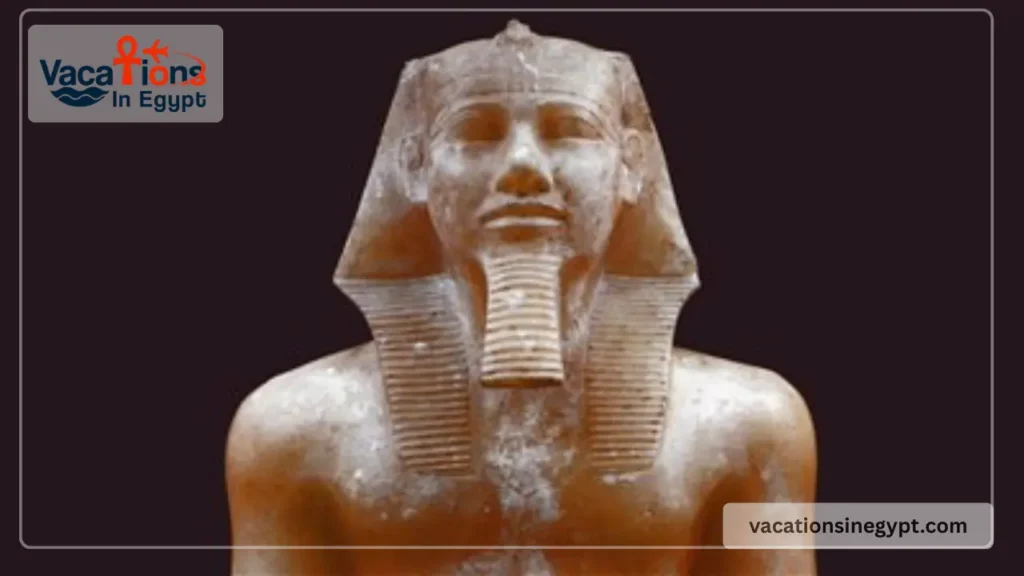
Most known statues attributed to him are miniature, emphasizing the mystery surrounding his reign.
The Khufu Ship (Solar Boat)
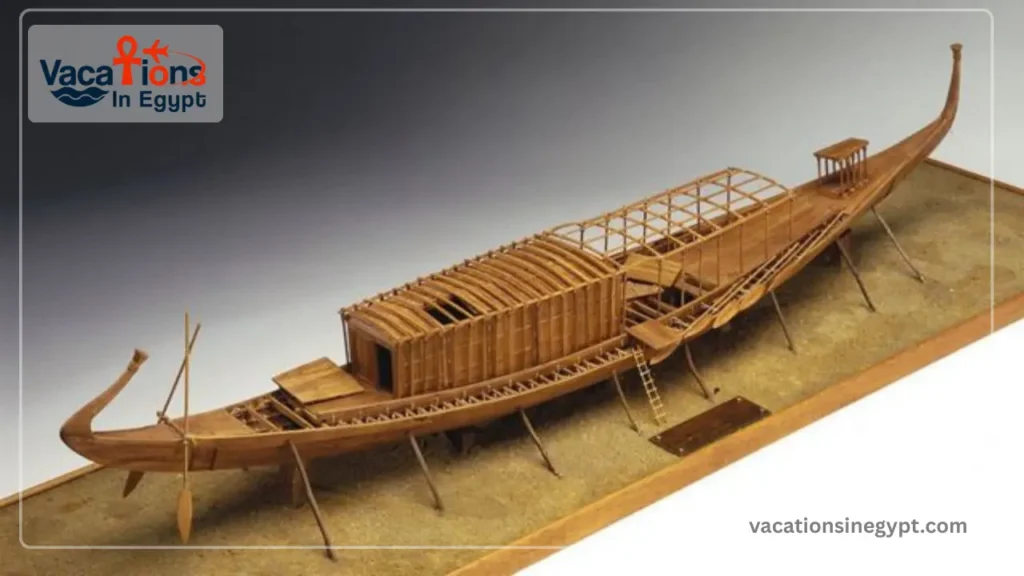
One of the most remarkable discoveries of the 20th century was the Khufu Ship, the oldest intact wooden boat in the world.
- Found in a sealed pit near the Great Pyramid
- Length: approximately 43 meters (140 feet)
- Constructed from cedar wood
The ship likely served a ritual and symbolic purpose, transporting the king’s soul with the sun god Ra, and may also have been used during his lifetime for ceremonial journeys along the Nile.
Khufu’s Tomb and Burial Mystery
Although the Great Pyramid was built as Khufu’s tomb, his mummy has never been found. Ancient texts suggest underground chambers were prepared, but the burial itself remains one of history’s greatest mysteries.
Historical Significance of King Cheops
King Khufu represents the peak of royal authority in the Old Kingdom. His reign marked a climax in:
- State organization
- Architectural ambition
- Religious and administrative power
Although later traditions portrayed him as a harsh ruler, modern archaeology presents a more balanced view, emphasizing his role as a master organizer and visionary leader.
Conclusion
While Egypt is home to many pyramids, the Great Pyramid of King Khufu (King Cheops) stands above all others in scale, precision, and historical importance.
A visit to the Giza Plateau is not just a journey through ancient monuments—it is a direct encounter with one of humanity’s greatest achievements, and a lasting testament to the genius of ancient Egyptian civilization.