With over 13 centuries of history woven into its columns, the Mosque of Amr ibn al-As holds the prestigious title of being the oldest mosque in Egypt and the entire continent of Africa.
Its origins date back to 642 AD, a pivotal moment in history when the Arab army founded Fustat, the first Islamic capital of Egypt. Today, Fustat is part of Old Cairo, and this mosque remains its beating heart. While the original mud-brick structure is long gone, the current edifice is a place of moving beauty, majesty, and profound spiritual significance.
The History: A Mosque Rebuilt Through Time
The story of the mosque is one of constant evolution. Work on the very first structure began in 641 AD, shortly after the Arabs founded the city. By the following year, the first call to prayer rang out.
However, as the Muslim population in Fustat grew, the mosque needed to expand. It is impossible to guess what the original building looked like today because it has been demolished, rebuilt, and expanded on numerous occasions:
- Early Expansions: It was rebuilt in 698 and 711, then extended again in 750 and 791.
- Defining Dimensions: The mosque did not acquire its current massive proportions until 827 AD, under the orders of Abd Allah ibn Tahir.
- Modern Era: The most recent major renovation took place in 1980, when an anonymous donor provided a significant sum to refurbish the entrance and the sanctuary, preserving its legacy for future generations.
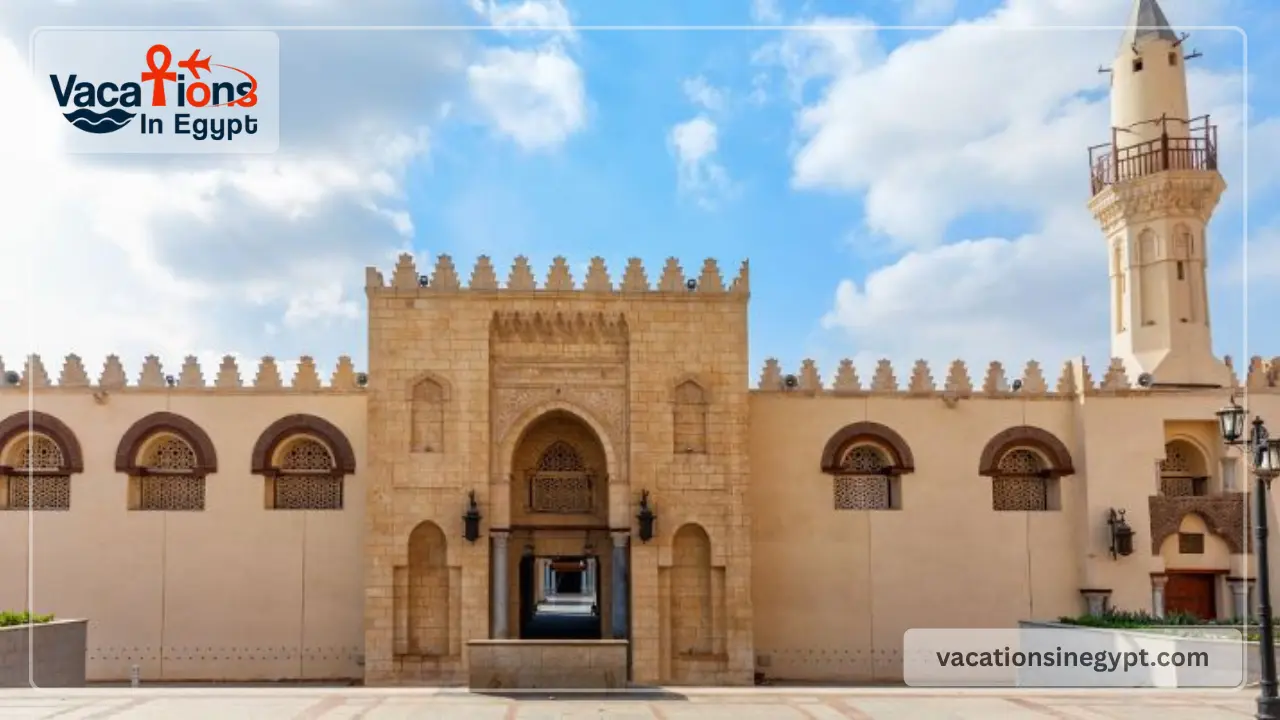
The Location: Built on a General’s Tent
The location of the mosque is no accident. It was named after General Amr ibn al-Aas, the victorious commander of the Rashidun army. Legend holds that the mosque was built on the exact spot where the general had pitched his tent (camp) during the siege of the Babylon Fortress.
According to tradition, when the army was preparing to leave, a dove was found nesting in the general’s tent. Amr declared the tent holy and ordered it to be left standing, and the mosque was eventually built around this site.
Inside the mosque, in one of the quiet corners, lies the tomb believed to contain the remains of his son, Abdullah ibn Amr.
Who Was Amr Ibn Al-Aas?
There is no doubt that Amr ibn al-Aas is one of the most critical figures in Egyptian history. He was the commander who brought Islam to Egypt and the African continent in 640 AD under the Rashidun Caliphate.
His army arrived in the area of present-day Cairo with the specific aim of attacking the Babylon Fortress (which still stands today in Coptic Cairo) on the banks of the Nile. After a successful siege, he did not settle in the old capital of Alexandria but instead founded a new city, Fustat, centered around this very mosque.
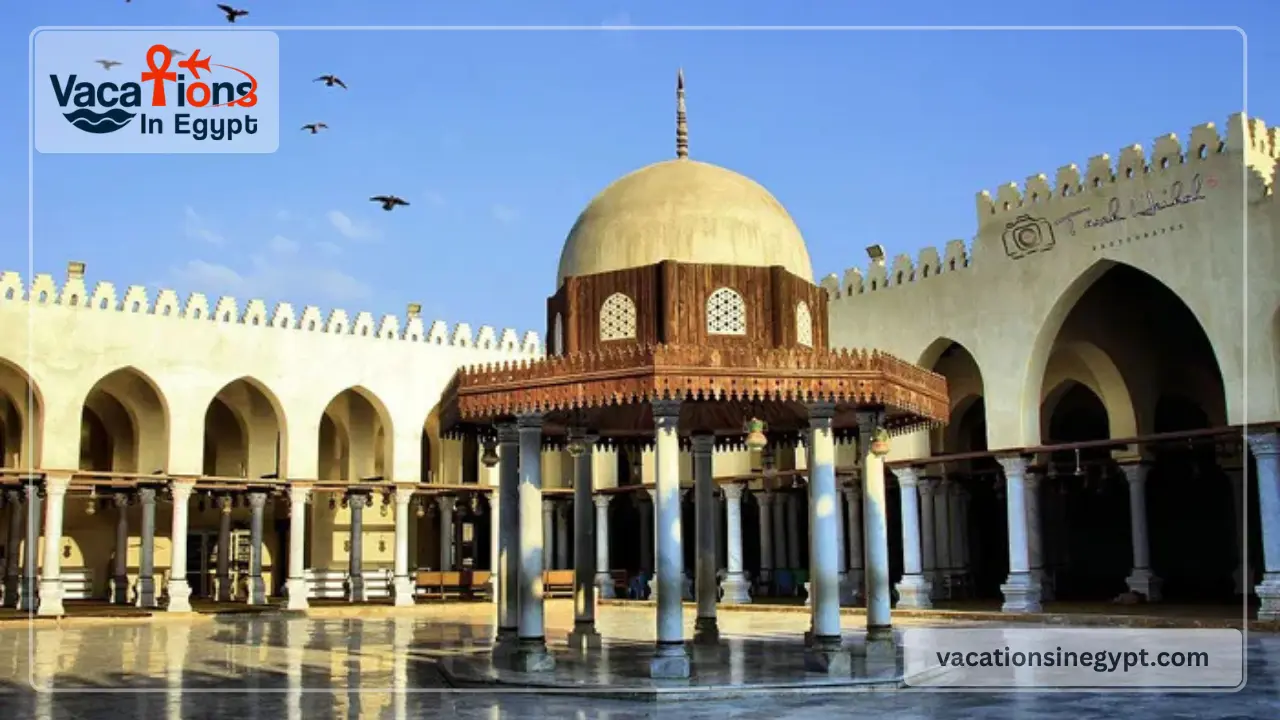
Visiting the Mosque Today
Today, the Amr Ibn Al Aas Mosque is an oasis of calm away from the noise of Cairo. It is characterized by its vast open courtyard and hundreds of columns.
- Accessibility: The mosque is open to the public and tourists.
- Best Time to Visit: It is best to visit between prayer times (particularly avoiding the Friday noon prayer) to explore the architecture freely.
- Dress Code: As with all mosques in Egypt, modest dress is required. Women will be asked to cover their hair, and shoes must be removed before entering.
Visiting this site is not just about seeing a building; it is about standing on the ground where the history of Islamic Egypt began.