


 Private & Historical tour in Egypt
 9 DAYS CAIRO SIWA OASIS AND NILE CRUISE
from$1,800.00
Private & Historical tour in Egypt  Private & Historical tour in Egypt
  Family Vacation Packages
  Private & Historical tour in Egypt
  Private & Historical tour in Egypt
  Adventure Tour
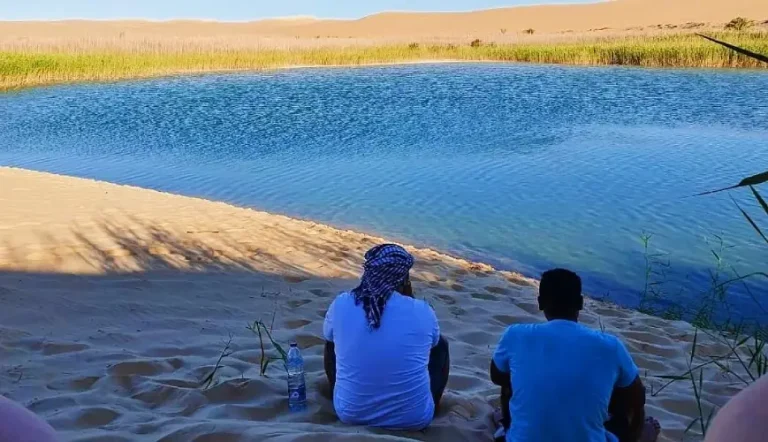
 Great Sand Sea, is the third largest accumulation of sand in the world, it is located in western Egypt, It is a mass of sand dunes, Parallel sand dune hills extend from north to south for hundreds of miles, It is a sandy region, located in North Africa, extending from western Egypt and eastern Libya. The area remains largely unknown and rarely visited. The oasis, caves, gems and landscapes.
It extends 600 kilometers between Siwa in the north and the Gilf el-Kebir Plateau. Nothing lives here except the wind, and nothing moves here except the sand. This sea of sand was certainly known to merchants traveling in caravans across the desert.
There is no doubt that the place seems devoid of life, but it has plants that only grow when it rains, and the climate there is dry and extremely hot.
In fact, tourists visit the Great Sand Sea to see the huge and vast sand dunes and enjoy the experience of the Siwa Oasis trip and the splendor of the Sand Sea. You can also go on a safari, and for all lovers of nature and wildlife, you should visit the place and enjoy the natural wonders and extreme environments of the Earth.
It consists of layers of shifting sand over a layer of limestone and over a large amount of groundwater. This is the reason for this great movement. Despite this, there is a demand for tourists to see the natural landscape of the area and practice sand skiing.
the area offers opportunities for deep desert safaris, allowing visitors to explore more remote areas and see the full scope of the beauty of the place.
Very large dune fields, greater than 48 square miles (125 sq km) are called “sand seas,”
Most beaches get their sand from rocks on land. Over time, rain, ice, wind, heat, cold, and even plants and animals break rock into smaller pieces.
The Great Sand Sea is an approximately 72,000 km2 (28,000 sq mi) sand desert in the Sahara between western Egypt and eastern Libya in North Africa. Most of the area is covered by sand dunes.
Yes, but it is a highly regulated area. Due to its remote nature and proximity to the border, travelers usually need to go with a licensed desert guide and obtain specific security permits. Most expeditions depart from the Siwa Oasis or Bahariya Oasis.
One of the most unique features of this region is a rare natural glass found scattered among the dunes. Scientists believe it was formed nearly 26 million years ago by a meteorite impact or aerial burst that melted the sand into high-purity silica glass. It was even used in Tutankhamun's famous pectoral jewelry.
Build your own private tour to Egypt — one detail at a time.