


 Alexandria Day Tours
 El Alamein Day Tour from Alexandria
from$75.00
Alexandria Day Tours Commonly known as the British Memorial, the El Alamein War Cemetery is an unforgettable landmark. Specifically, it serves as the final resting place for the vast majority of soldiers who fought and died during the pivotal battles of late 1942. Within this field of eternal rest, visitors can observe roughly 7,240 tombstones arranged in neat rows amidst well-maintained desert flora. Furthermore, the site features a commemorative plaque that identifies key locations across the historic battlefield.
Regarding the scale of loss, there are approximately 12,000 soldiers whose bodies were never recovered; consequently, their names are inscribed upon the memorial walls to ensure they are never forgotten. For those planning a visit, the site remains one of the primary tourist attractions in the region and is open to the public daily from 7:00 am to 5:00 pm.
Inaugurated on October 24, 1954, the cemetery stands as a profound testament to a major turning point in modern history. While the site houses the remains of nearly 20,000 soldiers, the memorial additionally honors 50,000 personnel listed as missing in action. Because of the fierce clashes between Allied and Axis powers, the German Afrika Korps was eventually defeated, thereby altering the entire course of the war in the Western Desert.
Behind the scenes, the construction and upkeep of these grounds are managed by the Commonwealth War Graves Commission (CWGC). Founded in 1917 by Major General Sir Fabian Arthur Gulston Ware, this intergovernmental organization represents nations such as the UK, Canada, Australia, and India. Today, the CWGC is responsible for nearly 2,500 cemeteries across 153 countries; as a result, the high standards of maintenance at El Alamein are mirrored globally.
Although the site is unified in purpose, it is divided into three distinct sections, each reflecting unique national architectural styles:
The Commonwealth Cemetery: Designed by Sir John Hubert Worthington, it contains 7,367 victims. Notably, it was inaugurated in the presence of Field Marshal Bernard Montgomery.
The Italian Cemetery: In contrast, this section—designed by Paolo Cascia Dominioni—houses 4,634 soldiers. Moreover, it includes a plaque dedicated to 38,000 missing personnel.
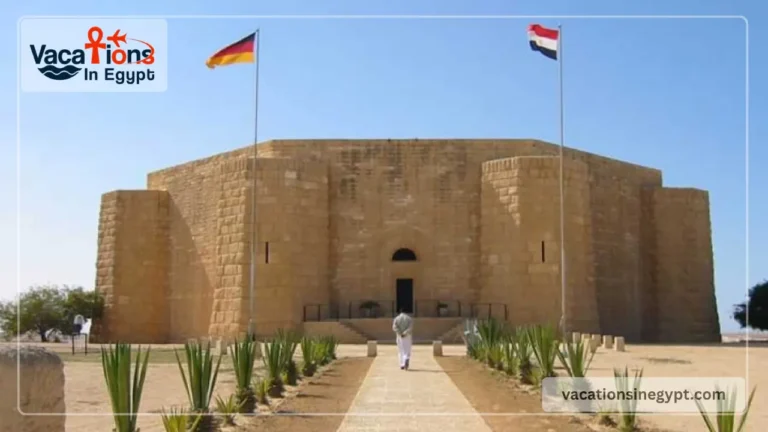
The German Cemetery: Finally, built like a castle atop a hill, this site holds 4,280 soldiers. Interestingly, it includes a dedicated chamber for 80 unknown soldiers.
Ultimately, the Battle of El Alamein favored General Montgomery’s forces over General Rommel’s, yet this victory came at a staggering cost. Specifically, the Allies lost 13,000 soldiers, while the Axis forces suffered 15,000 casualties and 30,000 prisoners.
Even decades later, the area bears the scars of conflict. For instance, it is estimated that 20 million mines remain scattered across the region. Despite ongoing clearance efforts by the Egyptian government, this “hellish field of mines” serves as a tragic reminder of the war. Nevertheless, every year international delegations gather here to honor the fallen and reflect on this pivotal moment in global history.
The cemetery is situated on the north coast of Egypt, approximately 130 kilometers west of Alexandria. It sits along the main Alexandria-Marsa Matruh road, marking the site of some of the most pivotal battles of the Western Desert Campaign in World War II.
The cemetery contains the graves of 7,240 Commonwealth soldiers, of whom 815 remain unidentified. Additionally, the Alamein Memorial within the grounds honors nearly 12,000 soldiers whose remains were never found or who were buried at sea.
No, admission to the Commonwealth War Cemetery is free of charge. It is maintained by the Commonwealth War Graves Commission (CWGC) and is open to the public during daylight hours for quiet reflection and tribute.
Yes. It is highly recommended to use the CWGC "Find War Dead" database online before your visit. By entering a name or service number, you can find the exact plot, row, and grave number to make your pilgrimage more focused.
The memorial is a series of cloisters that bear the names of soldiers from the land and air forces of the Commonwealth who died during the campaigns in Egypt, Libya, and Tunisia but have no known grave. It serves as a permanent testament to the scale of sacrifice during the North African campaign.
Build your own private tour to Egypt — one detail at a time.