


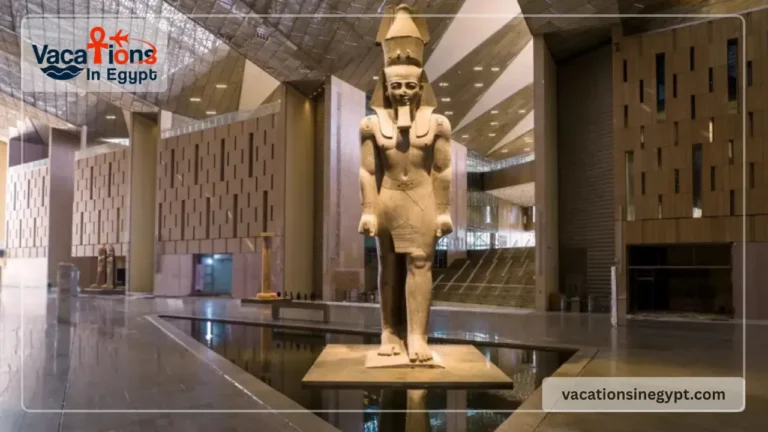
 Private & Historical tour in Egypt
 7 Days Cairo, Luxor, Aswan & Abu Simbel
from$1,100.00
Private & Historical tour in Egypt 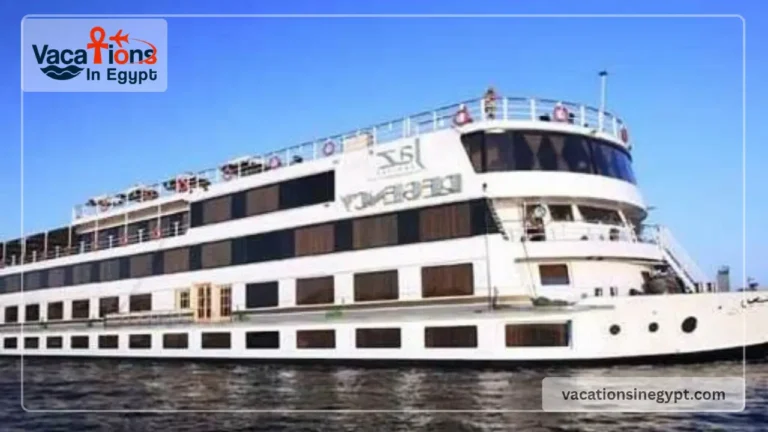 Private & Historical tour in Egypt
 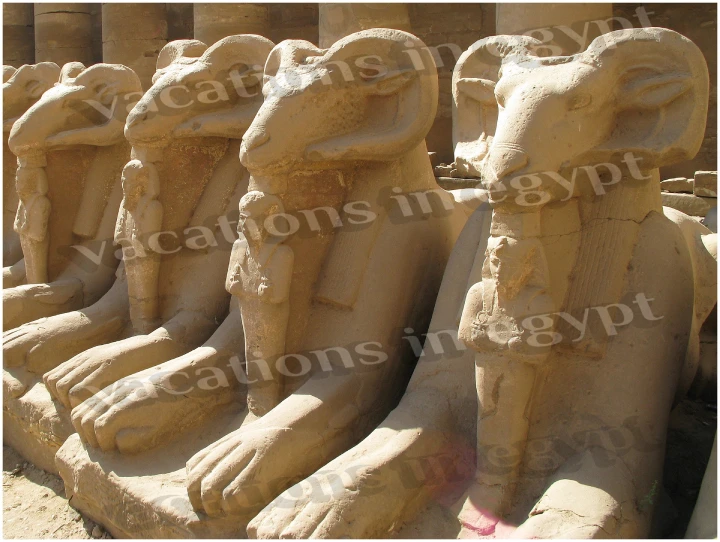 Nile Cruise Tour
 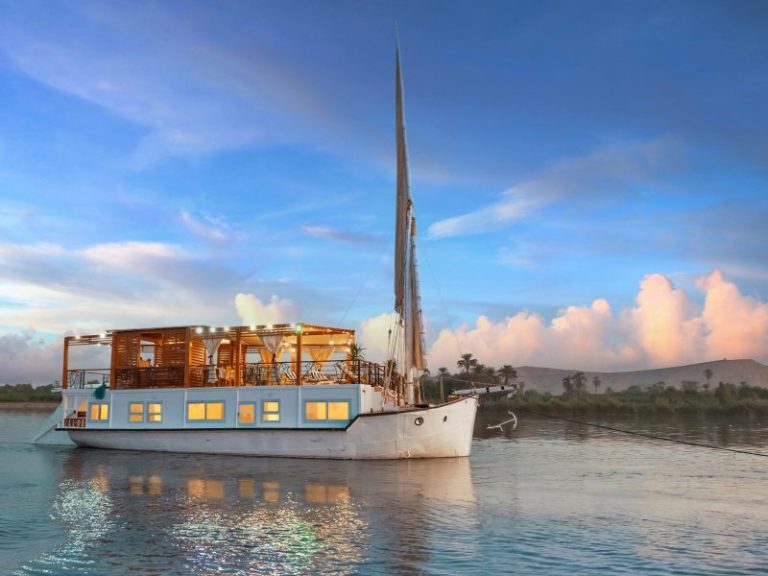 Nile Cruise Tour
  Private & Historical tour in Egypt
 Luxor Museum, Inaugurated in 1975 and located in front of the Nile in a rectangular building, in Luxor Museum illumination plays a fundamental role in the exhibition of its artifacts to highlight them in an atmosphere of gray tones and without natural illumination.
The two floors of the museum house pieces that correspond to the findings of the temples and necropolis of the Theban region. In our tour we see statues of kings and high military officials both standing and seated, in which we can appreciate variations in style, as well as cube statues; fragments of reliefs and paintings of temples and tombs; defensive weapons used by the army: axes, arrows, shields; sarcophagi; canopic vases; stelae; writing and measuring tools, all belonging mostly to the Middle and New Kingdoms.
The Luxor Museum is one of the most modern museums in Egypt. Although it is not as large as the Egyptian Museum in Cairo, the tourist can enjoy it better because it is certainly better conditioned and illuminated. Located on the ledge, halfway between the temples of Luxor and Karnak, also the Museum has a small but select collection of pieces from the end of the Ancient Empire to the Mamluk era, but most of it comes from Temples and cemeteries of Luxor.
The Luxor Museum is one of the most modern museums in Egypt. Although it is not as large as the Egyptian Museum in Cairo, the tourist can enjoy it better because it is certainly better conditioned and illuminated. Located on the ledge, halfway between the temples of Luxor and Karnak, the Luxor Museum has a small but select collection of pieces from the end of the Ancient Empire to the Mamluk era, but most of it comes from Temples and cemeteries of Luxor.
Piece No. 223 One of the most interesting pieces in the museum is the wall of Akhenaton. It is a set of small sandstone blocks called (talatat) or “three”, probably because its height and length were about three sections. They were part of Amenhotep IV’s contribution to the Temples of Karnak before he changed the name to replace Akhenaton, and left Thebes to Tall El Amarna, or Akhetaton. After his death, his buildings were demolished and the blocks of about forty thousand were used to fill the ninth pylon of Karnak. They were found in the late 1960s. The fragment shows Akhenaton with his wife Nefertiti and scenes of temple life. This is the only example we have for the decoration of a temple of Aten.
The "stars" of the collection include the mummies of Pharaohs Ahmose I and Ramesses I, the massive head of Akhenaten, and the Luxor Cachette statues, which are considered some of the best-preserved ancient Egyptian sculptures ever found.
Absolutely. While the Cairo Museum is famous for its sheer volume, the Luxor Museum is celebrated for its quality over quantity. The items are brilliantly lit, labeled clearly, and displayed in a modern, spacious environment that allows you to appreciate the artistry of the New Kingdom without the crowds.
The museum is conveniently located on the Corniche el-Nil, overlooking the Nile River in the heart of Luxor. It is situated halfway between the Luxor Temple and the Karnak Temple complex, making it an easy stop via taxi or a scenic walk along the riverfront.
Yes, photography is generally allowed, but you may need to purchase a photography permit at the ticket office if you are using a professional camera. Standard smartphone photography for personal use is usually permitted, but the use of flash is strictly prohibited to protect the artifacts.
The museum often operates with a "split shift" or late-night hours, typically opening from 9:00 AM to 1:00 PM and then again from 5:00 PM to 9:00 PM. The evening hours are highly recommended, as the museum is beautifully lit at night, providing a very atmospheric experience.
Build your own private tour to Egypt — one detail at a time.