
The Pyramids of Giza
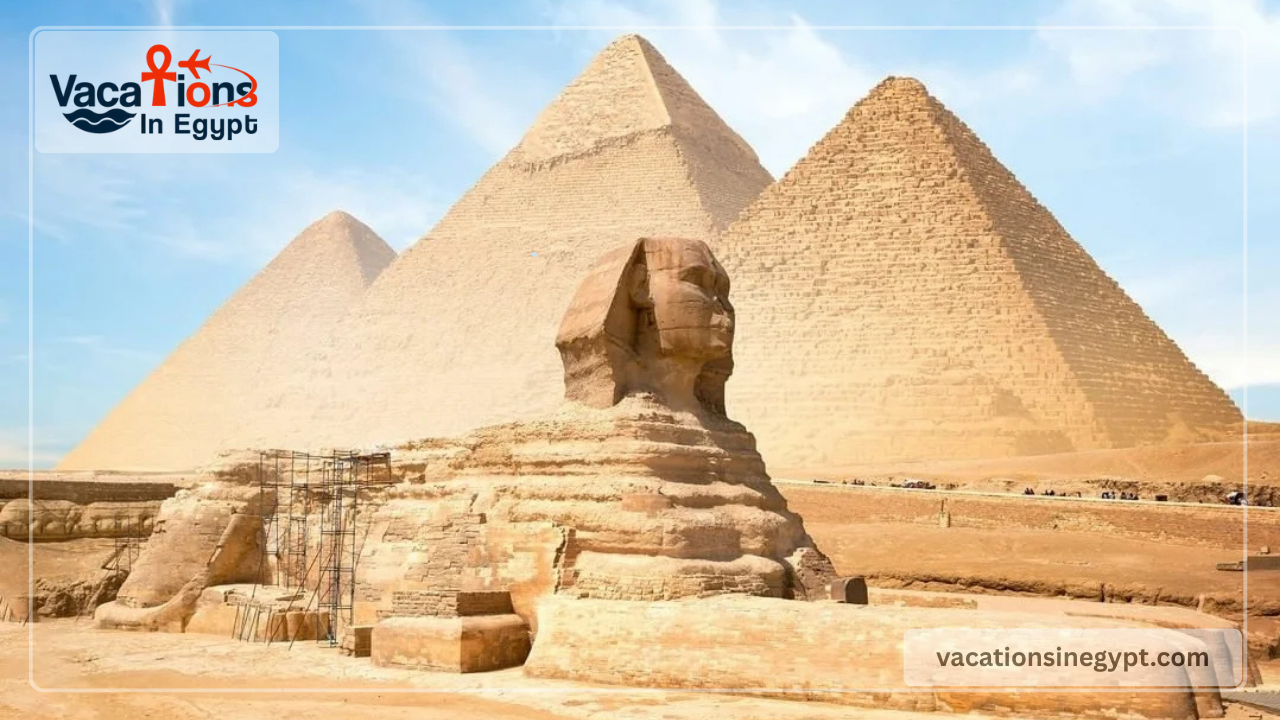
The first image that comes to mind when we think of Egypt may be the Pyramids of Giza, also known as the Pyramids of Egypt, because they are the most iconic symbol of ancient civilization. These are the three aligned pyramids and the Great Sphinx of Giza—the only one of the seven wonders of the ancient world that still stands today.
These are three funerary structures built under the orders of different pharaohs at different times. Upon their death, the rulers were mummified and laid to rest inside the pyramids, surrounded by their most precious objects and food, placed specifically to accompany them on their journey to the afterlife.
Although historians and archaeologists do not agree on the exact date of their construction, it is estimated that work began around 2500 BC, making them the oldest preserved monuments in Egypt.
While there are many minor pyramids, the three main and world-famous ones are those of Cheops, Khafre, Menkaure, and the Great Sphinx of Giza.
The Three Main Pyramids
Pyramid of Cheops
The largest of all, named the Great Pyramid of Giza. It is 140 meters high, with a base of 230 meters, representing a perimeter of almost 1 km. It was the tallest building on Earth for 3,800 years, until surpassed in the 14th century by the spire of Lincoln Cathedral in England.
Pyramid of Khafre
The second largest, measuring 136 meters high. Built to house Pharaoh Khafre, son of Khufu, it is the only pyramid that still retains part of its ancient white limestone cladding at its upper end.
Pyramid of Menkaure
The smallest of the three, standing 66 meters high. Like the others, it consists of a central structure surrounded by a wall and high temple, plus another low temple with auxiliary pyramids. It also incorporates architectural elements later used in future Egyptian dynasties.
What to Do at the Pyramids of Giza
Guided tour: Essential for making the most of your visit. You can book in advance or on arrival, but it is recommended to include hotel transportation.
Enter a pyramid: Not suitable for claustrophobic visitors, but entering a pyramid offers a once-in-a-lifetime experience through narrow passageways and dark chambers.
Camel ride: Local guides offer camel rides and photo opportunities at variable prices. If uninterested, do not engage, as it may be taken as agreement.
Original photos: The desert light and plateau perspective allow for creative and unique photography.
Dinner and night show: Night tours with light and sound shows, sometimes including dinner, let you enjoy the pyramids after dark.
How to Get to the Pyramids of Giza
Located 18 km from Cairo, tours typically depart from the city via vans, buses, taxis, or private cars. It is recommended to book a tour with hotel pickup, a guided visit, and return transport.
The Pyramids of Giza


 Duration
 Availability
 Duration
Availability
Duration
Availability

 Duration
Availability
Duration
Availability
 Duration
Availability
Duration
Availability
 Duration
Availability
Duration
Availability
 Duration
Availability
Duration
Availability
 Duration
Availability
Duration
Availability

 Duration
Availability
Duration
Availability
 Duration
Availability
Duration
Availability
 Duration
Availability
Duration
Availability
 Duration
Availability
Duration
Availability
 Duration
Availability
Duration
Availability
 Duration
Availability
Duration
Availability