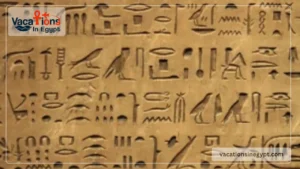

Eye Of Horus Symbol
The Eye of Horus Symbol is one of the most powerful and recognizable symbols of Ancient Egypt. Rooted deeply in Egyptian mythology, this sacred eye represented protection, healing, divine order, and cosmic balance. For thousands of years, it appeared in temples, tombs, jewelry, and amulets, symbolizing safety and restoration in both life and the afterlife.
Who Was Horus?
The Falcon God Behind the Eye of Horus Symbol
Horus was one of the most important gods in ancient Egyptian belief. He was the god of the sky, kingship, and divine protection, usually depicted with the body of a man and the head of a falcon. As the son of Isis and Osiris, Horus symbolized rightful rule and cosmic justice, making the Eye of Horus Symbol a direct extension of divine authority.

The Mythological Origin of the Eye of Horus Symbol
Horus, Isis, Osiris, and the Battle with Seth
The origin of the Eye of Horus Symbol lies in a dramatic myth. After Seth murdered Osiris, Horus fought his uncle to avenge his father. During the battle, Seth tore out Horus’s eye and shattered it into pieces, throwing them into the Nile. Later, the god Thoth recovered the fragments and restored the eye, transforming it into a symbol of healing, restoration, and completeness.
The Left Eye and the Right Eye
Moon, Sun, and Cosmic Balance in the Eye of Horus Symbol
In Egyptian belief, Horus’s left eye represented the moon, while the right eye symbolized the sun. The Eye of Horus Symbol commonly depicts the left eye, associated with cycles, renewal, and healing—reflecting the waxing and waning of the moon and the restoration of balance after chaos.
Eye of Horus Symbol Meaning in Ancient Egyptian Mythology
Within Egyptian mythology, the Eye of Horus Symbol stood for protection against evil, spiritual insight, health, and divine wisdom. It was believed to ward off negative forces and restore harmony wherever it appeared, making it one of the most widely used sacred symbols in ancient Egypt.
The Oudjat Eye Explained
Wholeness, Completion, and Healing Power
The Eye of Horus is also known as the Oudjat (Udjat) Eye, meaning “the complete one.” This name reflects the myth of the eye being restored after destruction. As the Oudjat, the Eye of Horus Symbol embodied healing, integrity, and the triumph of order over chaos.
The Eye of Horus Symbol and Sacred Fractions
Mathematical Meaning and the Role of Thoth
The Eye of Horus Symbol was once believed to form the basis of a fractional measurement system used for grain (the heqat). The eye contains six parts, each representing fractions:
½, ¼, ⅛, 1⁄16, 1⁄32, and 1⁄64—adding up to 63/64.
According to legend, the missing 1/64 was magically restored by Thoth, symbolizing that divine wisdom completes what human knowledge cannot.
Sensory and Spiritual Functions of the Eye of Horus Symbol
Sight, Smell, Hearing, Taste, Touch, and the Sixth Sense
Each fraction of the Eye of Horus Symbol was associated with a human
sense:
- Sight
- Smell
- Hearing
- Taste
- Touch
Ancient Egyptians even linked the remaining fraction to a sixth sense, reflecting spiritual perception and intuition—an early acknowledgment of unseen awareness.

Dreaming of the Eye of Horus Symbol
Spiritual Messages, Protection, and Inner Healing
Dreaming of the Eye of Horus Symbol often signifies a need for healing, guidance, or spiritual protection. Eyes watching from above may represent divine oversight or inner intuition, while damaged or bleeding eyes can symbolize deception or emotional harm, urging caution and self-reflection.
The Eye of Horus Symbol as an Amulet
Protection from Evil, Envy, and Negative Energy
One of the oldest Egyptian amulets, the Eye of Horus Symbol was worn for strength, health, and protection from the evil eye. Even today, it remains popular in jewelry and tattoos, believed to shield the wearer from envy, harm, and negative energies.
Eye of Horus Symbol and the Pineal Gland Theory
Coincidence or Advanced Ancient Knowledge?
Some researchers note a striking resemblance between the Eye of Horus Symbol and the human pineal gland. While mainstream scholars call it coincidence, others question whether ancient Egyptians possessed anatomical insights lost to time—especially considering their advanced embalming practices.
Eye of Horus Symbol vs Eye of Ra
Key Differences in Meaning and Energy
Though visually similar, the two symbols differ in meaning:
- Eye of Horus Symbol: healing, protection, balance, restoration
- Eye of Ra: power, wrath, destruction, solar force
The distinction lies not in form, but in symbolic energy.
The Background of the Egyptian Eye Symbol
The Role of the Eye of Horus Symbol in Daily Life and Beliefs
The Eye of Horus Symbol was deeply woven into daily Egyptian life. It appeared on coffins, ships, homes, and medical texts, reflecting its role as a guardian symbol ensuring safety, vitality, and divine favor.
The Eye of Horus Symbol in Modern Culture
Jewelry, Tattoos, Spirituality, and Global Influence
Today, the Eye of Horus Symbol transcends cultures. It appears in modern fashion, spiritual practices, tattoos, and art, symbolizing protection, awakening, and ancient wisdom across the world.
Why the Eye of Horus Symbol Still Matters Today
Protection, Vitality, and Timeless Power
The Eye of Horus Symbol endures because it speaks to universal human needs—healing, safety, balance, and meaning. From ancient temples to modern jewelry, its power remains timeless, reminding us that wisdom, once lost, can always be restored.