
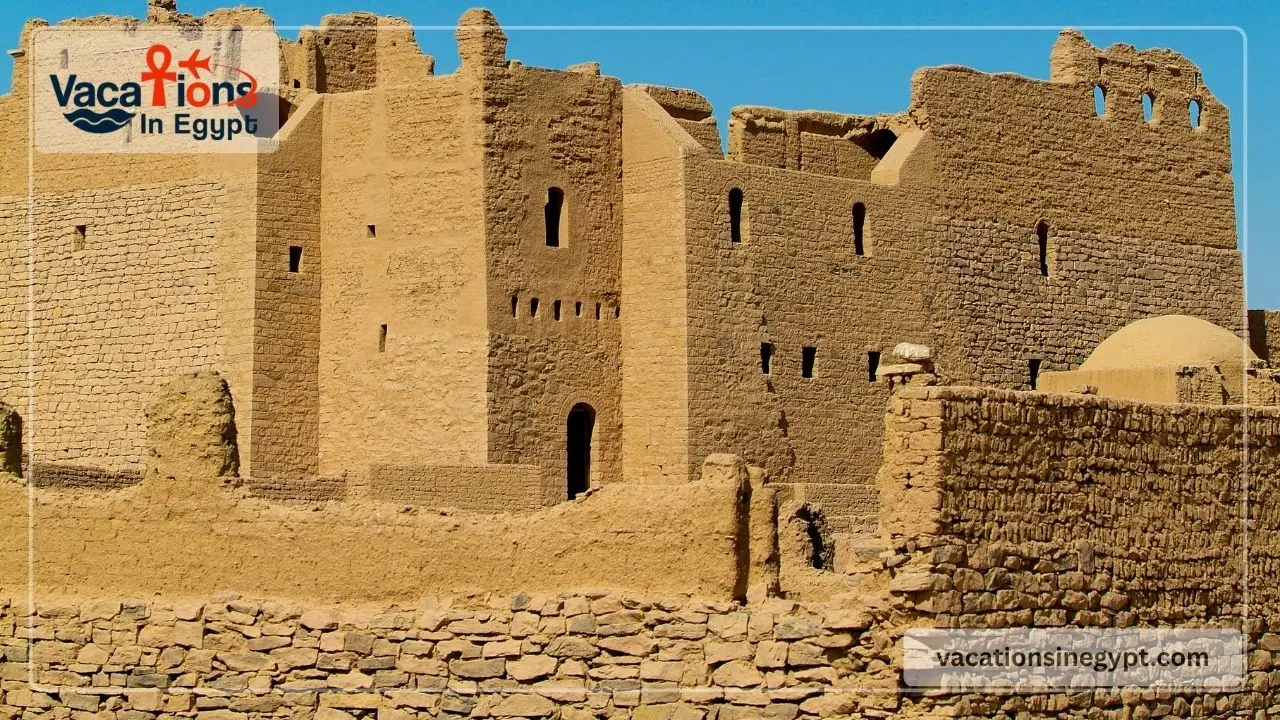
Monastery of Saint Simeon
Perched atop a hill on the West Bank of the Nile, opposite the city of Aswan, stands the majestic Monastery of Saint Simeon. Also known as the Monastery of Anba Hatre, this architectural marvel is not only the largest and best-preserved Coptic monastery in Egypt but also a striking example of ancient fortress architecture.
Located behind the famous Aga Khan Mausoleum, this historical site offers a rare glimpse into early Christian monastic life in Egypt. If you are a history enthusiast visiting Aswan, the journey across the sands to this fortress is an unforgettable experience.
| Key Detail | Information |
|---|---|
| Name | Monastery of Saint Simeon (Anba Hatre) |
| Location | West Bank of the Nile, opposite Aswan |
| Founded | 7th century (expanded in 10th century) |
| Significance | Largest and best-preserved Coptic monastery in Egypt |
| Best Time to Visit | Early morning or late afternoon |
A History of Survival and Solitude
The monastery was originally dedicated to Anba Hatre (Hidra), a local saint and anchorite who lived in the 4th century. It was later renamed after Saint Simeon. The history of the complex is a timeline of resilience:
- Origins: Founded in the 7th century, the monastery became a haven for Coptic monks seeking the meditative quiet of the desert.
- Expansion: It was significantly rebuilt and expanded in the 10th century. At its peak, the monastery housed hundreds of monks and could accommodate up to 300 pilgrims overnight.
- Abandonment: In 1173, the complex suffered damage during the incursions of Saladin (Salah al-Din). By the 13th century, it was finally abandoned, primarily due to the drying up of water supplies and constant raids by Bedouin tribes.
Despite centuries of neglect, the dry desert climate has preserved much of the structure, making it a fascinating destination for modern travelers.
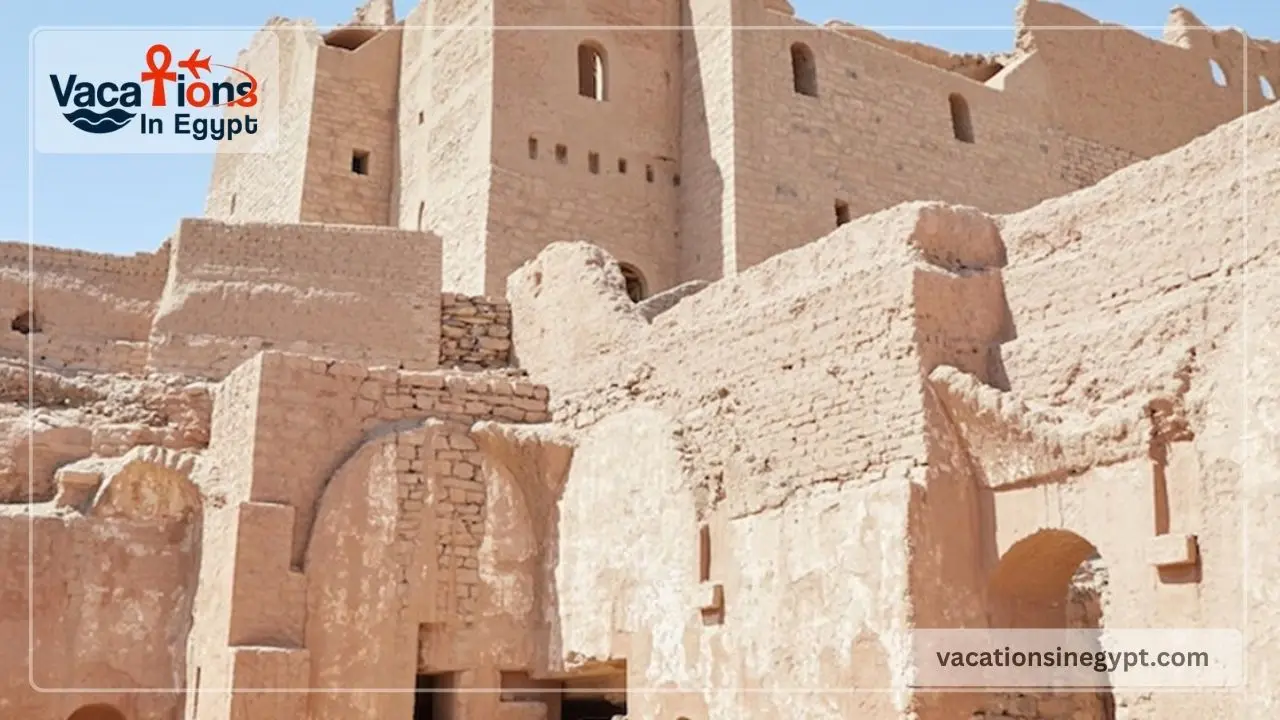
Exploring the Architecture
The monastery is surrounded by a massive trapezoidal wall of stone and mudbrick, standing 6 to 7 meters high. The complex is uniquely divided into two levels or terraces.
The Lower Terrace: The Place of Worship
Access to the lower level is through a gate in the east tower. This area was the spiritual heart of the monastery.
- The Basilica: The main church, built in the 10th century, features a three-aisled design. The central nave is covered by two domes.
- Ancient Frescoes: At the western end of the nave, you can still see the remains of vibrant Coptic wall paintings. The most famous is a fresco in the central niche depicting Christ in Glory, seated on a throne and surrounded by angels.
- The Grotto: At the end of the north aisle lies the rock-cut cave where Saint Anba Hatre famously lived and prayed.
The Upper Terrace: The Keep
A staircase leads to the upper terrace, dominated by a massive three-story Keep (Qasr). This fortified tower served as a permanent residence for the monks and a refuge during Bedouin attacks.
- Monks’ Cells: The central corridor is lined with cells. Inside, you can see the original mud-brick beds with raised stone headrests where the monks slept.
- Daily Life Facilities: The upper level reveals how self-sufficient the monastery was. It includes a bakery, salt basins, and an oil press.
- The Wine Press: A circular, two-story wine press remains intact. Grapes were pressed here, and the juice flowed through holes in the ceiling to basins below.
Unlike many other monasteries that relied on cisterns or wells, St. Simeon relied on water transport from the Nile, a logistical challenge that eventually contributed to its abandonment.
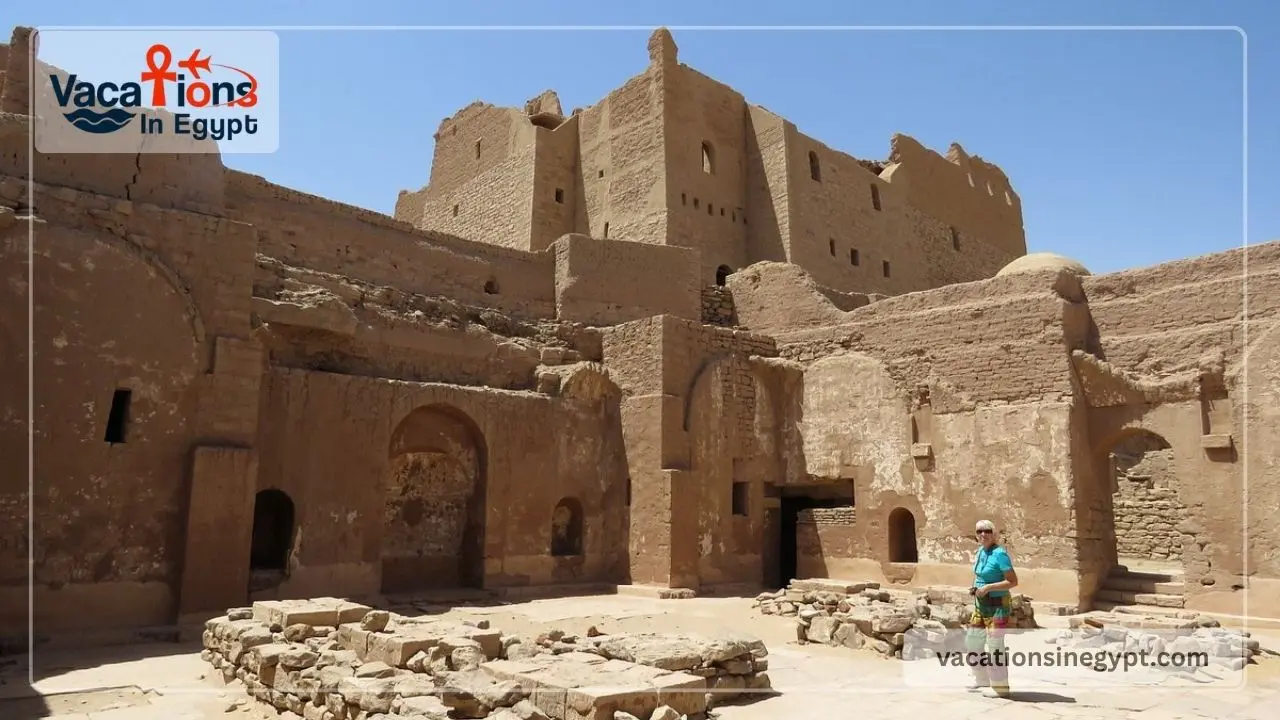
How to Visit the Monastery of St. Simeon
Visiting the monastery is an adventure in itself. Since it is located on the West Bank, you have a few exciting options to reach the gates:
- Camel Trek: The most popular way to visit is to take a boat to the West Bank and then hire a camel near the Tombs of the Nobles. The 15-minute ride up the desert slope to the monastery walls is iconic.
- Hiking: For the active traveler, you can hike up the sandy path. It takes about 25–30 minutes, but be sure to bring water and avoid the midday sun.
Best Time to Visit
The best time to explore the monastery is in the early morning or late afternoon. This allows you to avoid the intense heat of the Aswan sun and provides beautiful lighting for photography, especially as the shadows cast over the sand dunes.
Why You Should Add This to Your Aswan Itinerary
While the temples of Philae and Abu Simbel often steal the spotlight, the Monastery of St. Simeon offers something different: silence and atmosphere. It is a place where you can feel the solitude of the ancient monks.
If you are planning your vacation in Egypt, make sure to cross the Nile to Aswan’s West Bank. Discovering the blend of Egyptian and Hellenistic art, the history of Anba Hatre, and the stunning desert views makes St. Simeon a highlight of historical tourism in Egypt.