Egypt’s most famous sights sit within reach of Cairo and neighbouring Giza, from the first pyramids ever built to the old mosques, churches, and bazaars of the historic city. This guide covers the top tourist attractions in Egypt you can reach from the capital: the Step Pyramid at Saqqara, the Dahshur pyramids, the ancient city of Memphis, the Grand Egyptian Museum, Al-Azhar Mosque, Khan El Khalili, and more.
Is Cairo safe for tourists?
Yes. Cairo is generally very safe for visitors, and tourist police are stationed at the major historical sites and visitor areas. The main day-to-day nuisance is heavy traffic, a result of the city’s large population, so build extra time into your schedule for getting between sights.
Ancient pyramids at Saqqara and Dahshur
1. The Step Pyramid of Djoser (Saqqara)
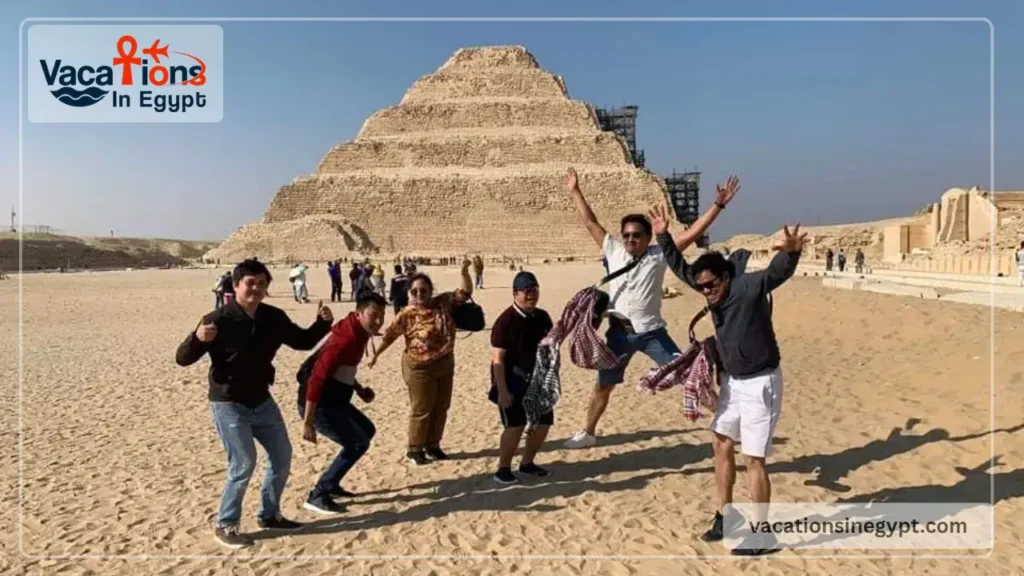
The Step Pyramid at Saqqara is the burial place of Djoser, a pharaoh of the Third Dynasty. It was the world’s first step pyramid and the start of Egypt’s long pyramid-building tradition.
2. The Dahshur pyramid complex
Dahshur sits at the southern end of Egypt’s pyramid field, which stretches down from Giza. The complex holds large tombs built for the queens and nobles of Memphis, up to the Thirteenth Dynasty. Two of Egypt’s best-preserved pyramids stand here, both raised during the reign of King Sneferu (reigned 2613 to 2589 BC), founder of the Fourth Dynasty.
3. The Red Pyramid of Dahshur
Sneferu built the Red Pyramid about two kilometres from the Bent Pyramid. It was the first true straight-sided pyramid in the world, and it takes its name from the pink limestone in its inner burial chambers. Inside are three small chambers with unusually high ceilings.
4. The Bent Pyramid of Sneferu
The Bent Pyramid, also called the Southern Pyramid, is one of Egypt’s stranger structures. Its angle changes noticeably partway up, most likely because the builders altered the design mid-construction. It is built of limestone, and the surrounding site includes a small temple with a shrine and a sub-pyramid.
Ancient history beyond the pyramids
5. The ancient city of Memphis
Memphis was founded around 3050 BCE by Menes, Egypt’s first pharaoh, and was the capital from the First Dynasty through the Eighth. It lies about 19 km south of Cairo on the west bank of the Nile. As the economic centre of the kingdom, it kept the title “the Balance of the Two Lands” even after other cities gained importance. Its patron god was Ptah, and the ruins still show how dominant the city once was.
Museums in Cairo
6. The Grand Egyptian Museum
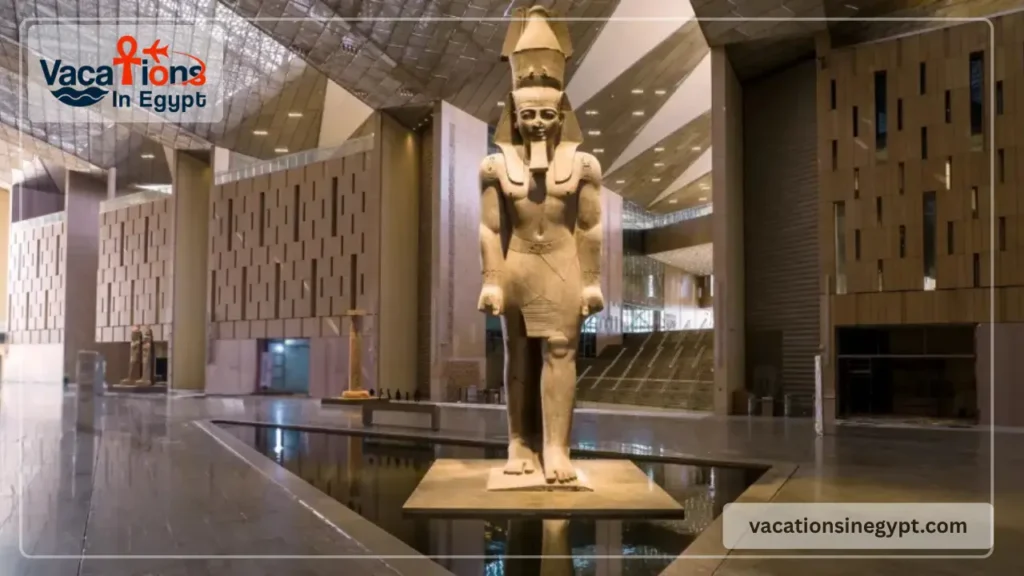
The Grand Egyptian Museum sits on the Giza Plateau and is one of the largest archaeological museums in the world. Work began in 2002, after an international architectural competition, and it now holds more than 100,000 artifacts. Highlights include:
- The Tutankhamun galleries, which display the young pharaoh’s treasures.
- The grand lobby and staircase at the main entrance.
- The Khufu Boat Museum, home to the ancient solar boat of Khufu.
- Outdoor gardens set around the museum.
Islamic Cairo: mosques, streets, and bazaars
7. Al-Azhar Mosque

Al-Azhar Mosque is in Islamic Cairo, near Bab Zuwayla, and is one of the city’s oldest and most important religious sites. It is also the second oldest continuously operating Islamic university in the world, and has been a centre of Islamic law and theology for more than a thousand years.
8. Khan El Khalili bazaar
Khan El Khalili is Cairo’s medieval-style market, a maze of narrow alleys lined with vendors selling spices, jewellery, textiles, antiques, and traditional crafts. Plan two to three hours to walk it properly, and go on a weekday morning if you want to avoid the biggest crowds.
9. Al-Muizz Street
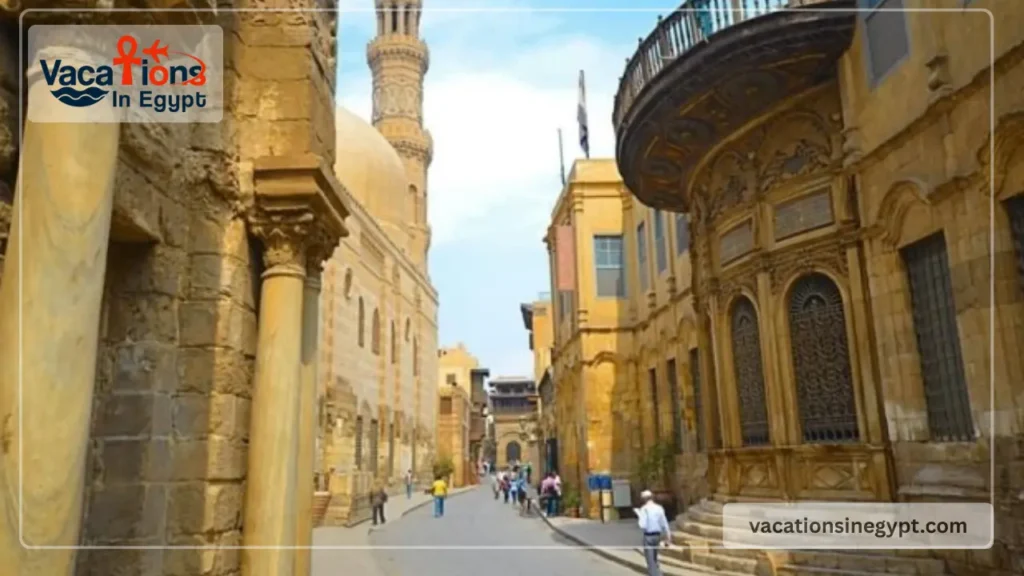
Al-Muizz Street takes its name from the Fatimid Caliph Al-Muizz and is often called the oldest street in the world with a continuous Islamic architectural character. Several well-known figures are tied to it: Saladin (Salah al-Din al-Ayyubi) lived here, the historian Al-Maqrizi called it home, the Nobel Prize-winning novelist Naguib Mahfouz was born on it, and Gamal Abdel Nasser went to school here.
Coptic Cairo: churches and ancient faith
10. The Hanging Church (El Muallaqa)
The Hanging Church, also known as the Church of the Virgin Mary, is one of Egypt’s oldest Christian sites. It was built on top of an old Roman fortress, with palm-tree trunks and layers of stone forming the floor of the chapel, and it is a strong example of early Christian architecture in Egypt.
11. The Ben Ezra Synagogue
The Ben Ezra Synagogue is the oldest synagogue in Egypt and one of the most historically important anywhere. Tradition holds that it stands on the spot where Moses called on God during the biblical plagues. Among scholars it is best known for its Geniza documents, stored there from 1041 and rediscovered after 1864, which are now kept mainly at Cambridge University Library.
Modern Cairo: the Zamalek neighbourhood
12. Zamalek
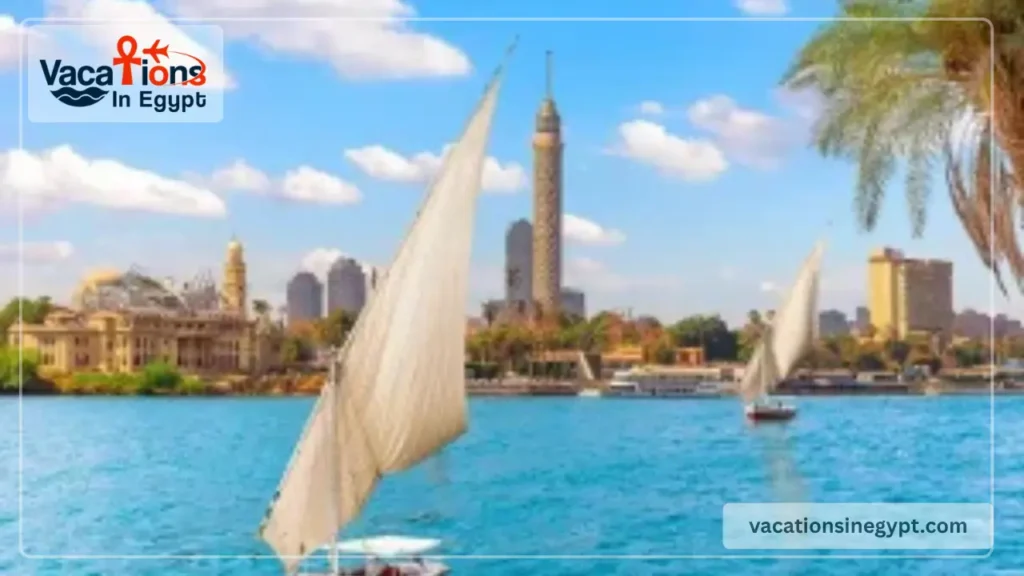
For a change of pace, cross to Zamalek, an upscale district on Gezira Island in the Nile. Its tree-lined streets are full of art galleries, boutique shops, and cafés. Find a spot by the river, order a traditional Egyptian tea or a shisha, and watch the Nile go by.
Tips for visiting Egypt’s top attractions
- Visit between October and April, when the weather is cooler and better for sightseeing.
- Use a reputable ride-hailing app or hire a licensed guide for the historical sites.
- Most sites allow photography, but check before taking photos inside monuments.
- Carry Egyptian pounds (EGP) for markets like Khan El Khalili.
- Dress modestly when you visit mosques, churches, and synagogues.
The Giza pyramids and the Great Sphinx
13. The Great Pyramid of Giza
The Great Pyramid is the largest of the three pyramids at Giza and the tomb of the pharaoh Khufu. It rose about 146 metres when it was finished and stayed the tallest structure built by humans for roughly 3,800 years. It is also the only one of the Seven Wonders of the ancient world still standing. Two more large pyramids sit beside it, built for Khufu’s son Khafre and his grandson Menkaure.
14. The Great Sphinx of Giza
The Great Sphinx sits just beside the pyramids, carved from a single ridge of limestone into a lion’s body with a human face. It is about 73 metres long and 20 metres high, and most Egyptologists link it to the pharaoh Khafre, around 2500 BC. It faces east, toward the sunrise.
Luxor: temples and royal tombs
Luxor sits on the Nile in southern Egypt, on the site of the ancient city of Thebes. It holds the largest concentration of temples and tombs in the country, which is why it is often called the world’s greatest open-air museum. Two or three days is enough to see the main sites without rushing.
15. Karnak Temple
Karnak is one of the largest religious complexes ever built, added to by pharaohs over more than 2,000 years. Its Great Hypostyle Hall is packed with 134 massive columns, and an avenue of ram-headed sphinxes leads toward the entrance.
16. Luxor Temple
Luxor Temple stands in the middle of the modern city, on the east bank of the Nile. An avenue of sphinxes once linked it to Karnak, and it is especially striking after dark, when the whole temple is lit.
17. The Valley of the Kings
Across the river on the west bank lies the Valley of the Kings, the burial ground of the New Kingdom pharaohs, roughly 1550 to 1069 BC. More than 60 tombs have been found here, cut deep into the rock and painted with scenes of the journey to the afterlife. The most famous is the tomb of Tutankhamun, found by Howard Carter in 1922. A standard ticket usually lets you enter three tombs, with a separate ticket for Tutankhamun.
18. The Temple of Hatshepsut
Also on the west bank is the temple of Hatshepsut, built for one of Egypt’s few female pharaohs. It rises in wide terraces against the cliffs at Deir el-Bahari. On the way you pass the Colossi of Memnon, two seated statues of the pharaoh Amenhotep III.
Aswan and Abu Simbel
Aswan is Egypt’s southern gateway, a calmer city on a wide, scenic stretch of the Nile. It is the base for visiting Abu Simbel and the temples that were rescued when the Aswan High Dam was built.
19. Abu Simbel
Abu Simbel is a pair of temples that Ramesses II had carved into a sandstone cliff in the 13th century BC, near what is now the Sudanese border. Four seated statues of the pharaoh, each about 20 metres tall, front the Great Temple. When the Aswan High Dam threatened to flood the site, a UNESCO campaign cut the temples into more than 2,000 blocks and rebuilt them on higher ground between 1964 and 1968. Twice a year, in February and October, the rising sun still reaches the innermost chamber.
20. Philae Temple
The temple of Philae was dedicated to the goddess Isis and sits on an island reached by boat near Aswan. Like Abu Simbel, it was taken apart and rebuilt on higher ground, moved to Agilkia Island between 1972 and 1979 to save it from the rising Nile.
21. The Aswan High Dam and Lake Nasser
The Aswan High Dam holds back the Nile just south of the city. Completed in 1970, it controls the river’s yearly flood and generates hydroelectric power. The reservoir behind it, Lake Nasser, is one of the largest artificial lakes in the world.
Alexandria: Egypt’s Mediterranean city
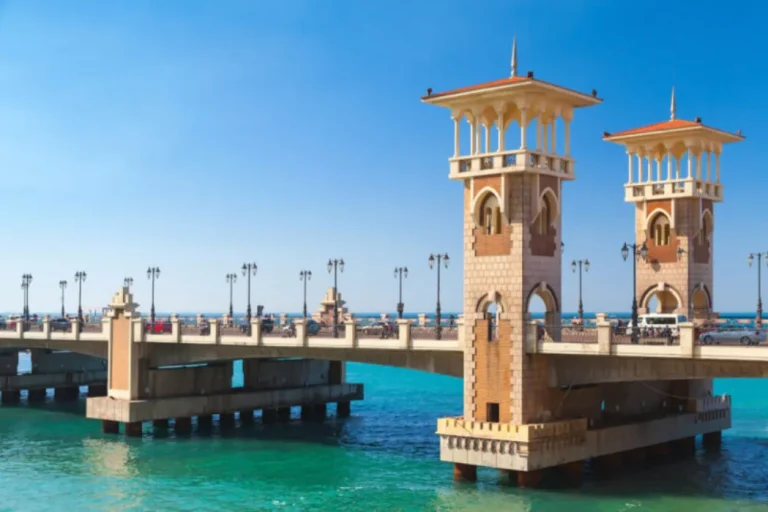
Alexandria sits on the Mediterranean coast in the north, about two hours from Cairo by fast train. Founded in the time of Alexander the Great, it has a Greek and Roman past that sets it apart from the rest of Egypt, along with a long seafront corniche and a strong seafood tradition. You can see the main sights in a single day, though an overnight stay is more relaxed.
22. Bibliotheca Alexandrina
The Bibliotheca Alexandrina is a modern library built in tribute to the ancient Library of Alexandria, once the greatest centre of learning in the ancient world. Its tilted, disc-shaped roof is a landmark on the seafront, and inside it holds millions of books along with museums and exhibition spaces.
23. The Citadel of Qaitbay
The Citadel of Qaitbay is a 15th-century sea fort on the Eastern Harbour, built by Sultan Qaitbay on the spot where the ancient Lighthouse of Alexandria once stood. Its walls and towers look out over the Mediterranean, and late afternoon is the best time for the views.
24. The Catacombs of Kom El Shoqafa
The Catacombs of Kom El Shoqafa are a Roman-era burial complex dug several levels below the street and reached by a long spiral staircase. The carvings mix Egyptian, Greek, and Roman styles, a reminder of how many cultures met in the city.
The Red Sea coast
25. Hurghada and Sharm El Sheikh
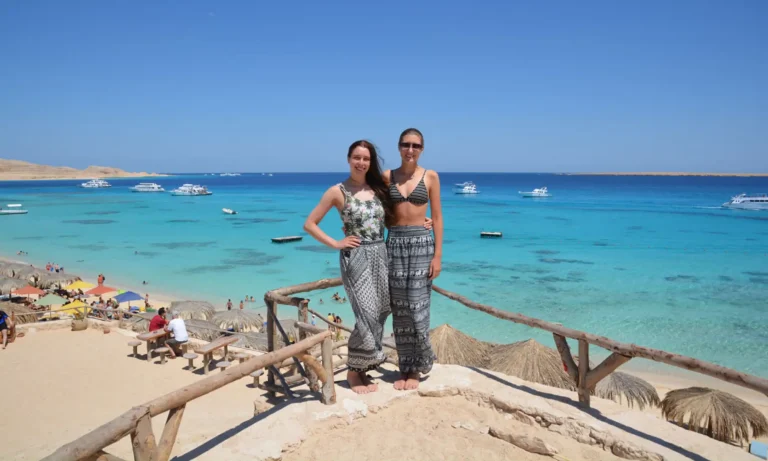
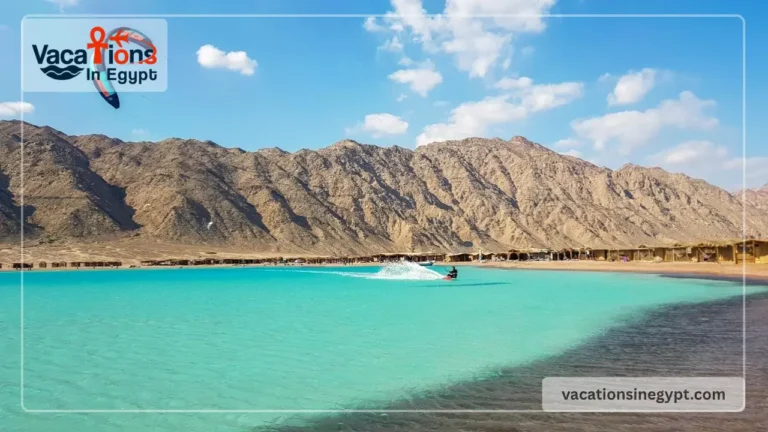
Egypt’s Red Sea coast is the country’s main beach and diving region, and its reefs are among the best in the world for snorkelling and scuba diving. Hurghada, on the mainland, and Sharm El Sheikh, on the Sinai Peninsula, are the two largest resort towns, both with easy access to the water and to protected reef areas nearby.
Cruising the Nile
26. A Nile cruise between Luxor and Aswan
A Nile cruise is one of the classic ways to see the south. Boats run between Luxor and Aswan and stop at temples along the river, so you can reach several of the main sites without long road trips. Most cruises last three to four nights.
Frequently asked questions
Is Cairo safe for tourists?
Yes. Cairo is generally very safe, with tourist police stationed at the main historical sites. Heavy traffic is the biggest inconvenience, so allow extra travel time between sights.
What is the best time to visit Egypt?
October through April, when temperatures are cooler and more comfortable for sightseeing.
How long should I spend at Khan El Khalili?
Plan two to three hours, and visit on a weekday morning to avoid the largest crowds.
What are the top tourist attractions in Egypt near Cairo?
The Step Pyramid at Saqqara, the Dahshur pyramids, the ancient city of Memphis, the Grand Egyptian Museum, Al-Azhar Mosque, Khan El Khalili, Al-Muizz Street, the Hanging Church, the Ben Ezra Synagogue, and the Zamalek neighbourhood.
Where is Abu Simbel?
Abu Simbel is in the far south of Egypt, near the border with Sudan, about 280 km south of Aswan. Most visitors reach it by road or a short flight from Aswan.
Can you visit Alexandria as a day trip from Cairo?
Yes. Alexandria is about two hours from Cairo by fast train, so a long day is enough for the library, the catacombs, and the Citadel of Qaitbay. Staying overnight lets you enjoy the seafront in the evening.
How many days do you need to see the top attractions in Egypt?
Plan on about a week for Cairo and Giza, Luxor, and Aswan, with a few extra days if you want to add Alexandria or the Red Sea.
Planning your trip
Most of these attractions sit in and around Cairo and Giza, so you can see several of them over a few days from a single base in the city. Sort out your transport and a guide for the pyramid sites, keep some cash on hand, and dress for the places you plan to enter.