Most visitors to Cairo spend their evenings on a Nile dinner cruise or resting at their hotel. That is understandable — the days are long and the landmarks are exhausting. But those who make the effort to explore Islamic Cairo after sunset consistently describe it as the highlight of their entire trip.
This is where Cairo stops performing for tourists and simply becomes itself.
The back alleys of Khan el-Khalili, the candlelit mirrors of El Fishawy Cafe, and the illuminated stone facades of El Muizz Street are not attractions in the conventional sense. They are a living, breathing neighborhood where a thousand-year-old city still goes about its evening the way it always has. According to local travel experts at VacationsInEgypt.com, dedicating a full evening to this part of the city is one of the best decisions any Cairo visitor can make.
Here is what to expect — and how to experience it properly.
Khan el-Khalili — Go Past the Main Street
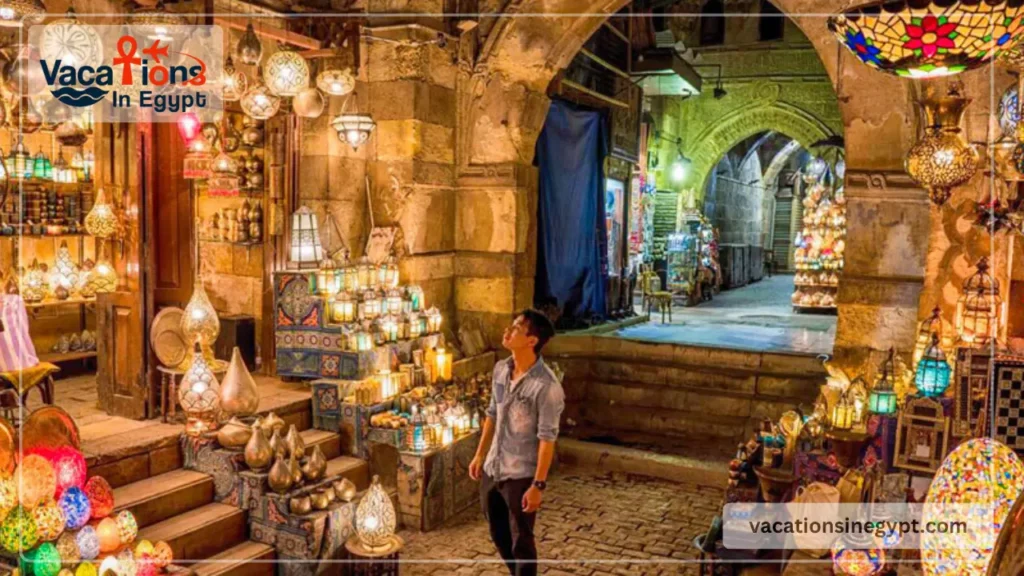
Most visitors to Khan el-Khalili never see the real thing. The main tourist thoroughfare is lined with imported trinkets, persistent vendors, and souvenir shops that could exist in any city. It is not where the interesting Cairo is.
Turn off the main street and walk a few minutes into the side alleys. The atmosphere changes immediately.
The Craftsmen’s Quarter
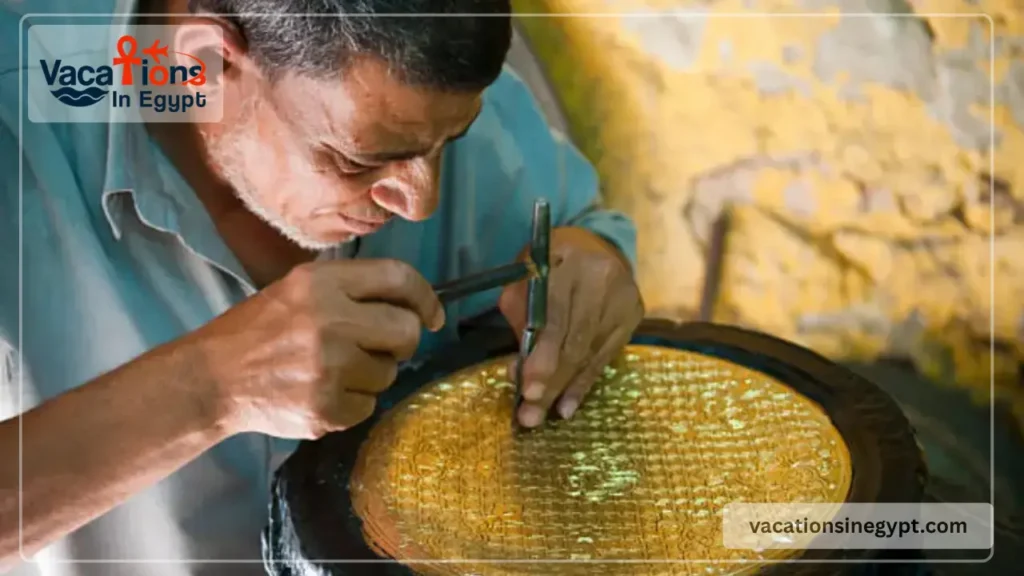
Hidden inside the labyrinth are workshops that have operated continuously since the 14th century. Coppersmiths hammer intricate patterns into serving trays. Lantern makers weld brass into elaborate geometric shapes. Textile workers stitch the vivid appliqué fabric used in Egyptian tents and celebrations.
The noise, the dust, and the smell of spices and sawdust are completely authentic — and because the artisans here are focused on their work, the constant sales pressure of the main street disappears entirely. You can watch, photograph, and browse without feeling like a target.
For a practical guide on what to look for and what to buy, the Khan el-Khalili Bazaar guide on VacationsInEgypt.com is a useful starting point.
El Fishawy Cafe — The Oldest Seat in Cairo
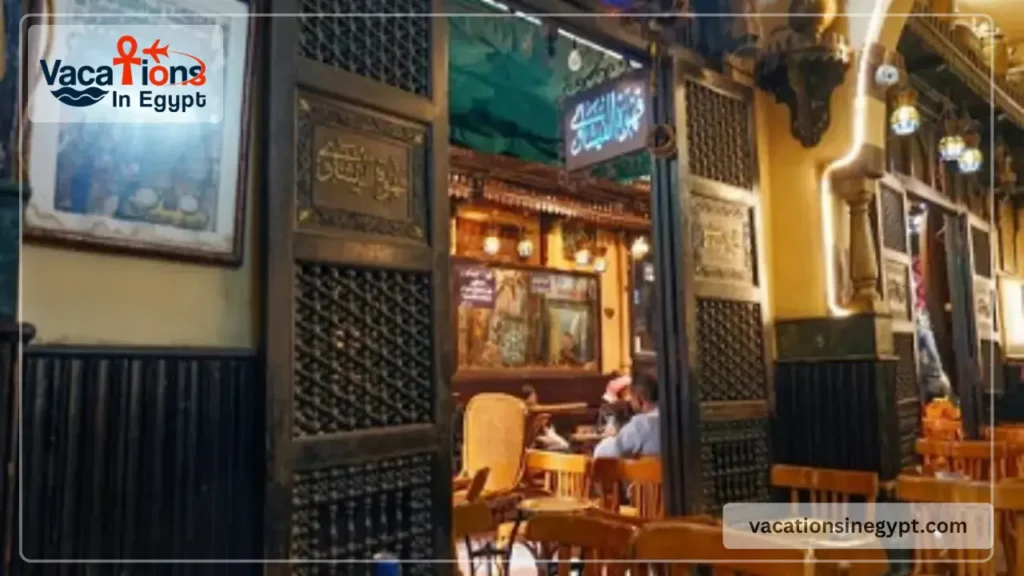
If there is one place in Cairo where you must sit down and simply exist for an hour, it is El Fishawy Cafe.
Opened in 1797, El Fishawy is the oldest coffeehouse in Cairo and one of the most atmospheric spaces in the entire city. The interior is dark and narrow, lined with massive antique mirrors and worn wood paneling that have absorbed more than two centuries of conversation. Writers, politicians, Nobel laureates, and ordinary Cairenes have all passed through the same cramped alleyway entrance.
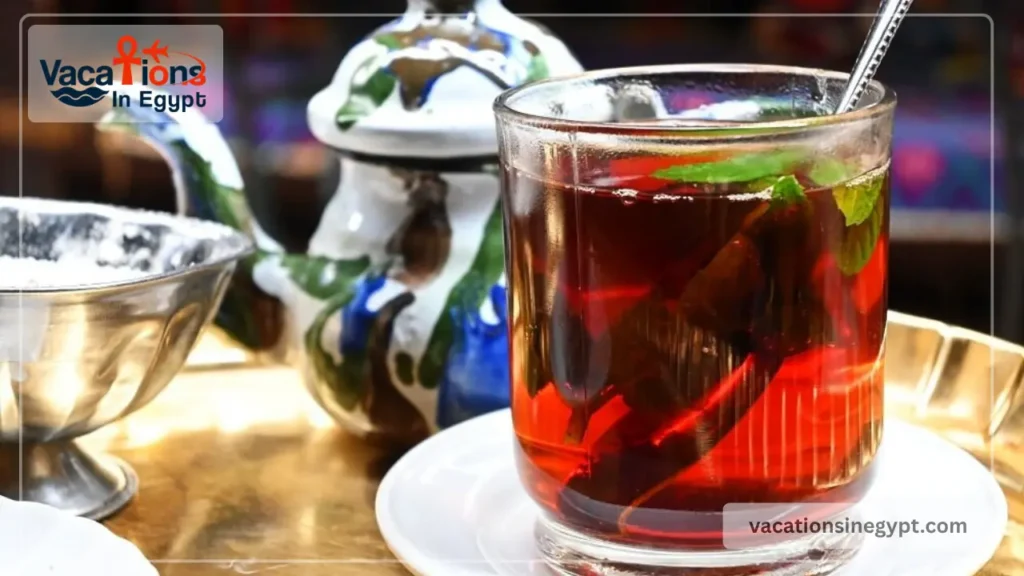
It is not a quiet place. It is loud, smoky, and perpetually crowded — which is precisely the point. Order a shai bil na’na (mint tea, served hot and sweet in a small glass) and watch the evening unfold around you.
You will sit shoulder-to-shoulder with locals, vendors, tourists, and people who have been coming here their entire lives. That mix is exactly what makes it irreplaceable.
El Muizz Street — A Thousand Years in One Kilometer
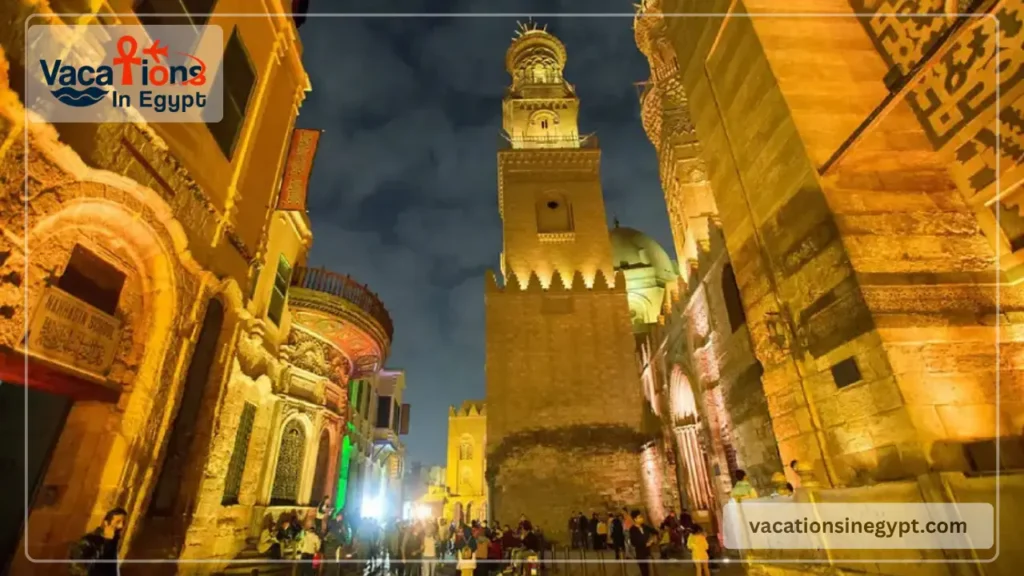
Directly across from the bazaar, El Muizz Street runs for roughly one kilometer through the historic heart of Islamic Cairo. It is pedestrian-only, largely traffic-free, and contains the highest concentration of medieval Islamic architecture anywhere in the world.
During the day it is impressive. At night it is extraordinary.
The Egyptian government has installed sophisticated uplighting along the entire length of the street, illuminating Fatimid gates, Mamluk mosque complexes, and Ottoman public fountains in warm golden light against the night sky. Walking the street after dark feels genuinely cinematic — and unlike the bazaar, the northern end of El Muizz Street can be surprisingly quiet and unhurried, even on busy evenings.
Plan at least 45 minutes to walk it properly. The El Muizz Street guide on VacationsInEgypt.com covers the specific monuments worth stopping at along the route.
How to Navigate Islamic Cairo Without Getting Lost

The single biggest barrier to enjoying this part of Cairo is the fear of disorientation. The streets are genuinely winding, Google Maps loses accuracy quickly in the narrower alleys, and the area is large enough that getting turned around is easy.
The neighborhood is generally safe for tourists, but navigating it confidently is a different matter. A local guide makes a significant difference — not just as a historian but as a navigator who knows the shortcuts, the unmarked rooftop viewpoints, and how to move efficiently between the bazaar, the cafe, and the street without backtracking.
For a structured route that connects all three areas in a single seamless evening, the Islamic Cairo Walking Tour from VacationsInEgypt.com is worth considering.
Practical Tips Before You Go
On bathrooms: Public restrooms in this area are rare and often poorly maintained. Use the facilities at El Fishawy or the nearby Naguib Mahfouz Cafe, and tip the attendant.
In the bazaar, friendly negotiation is part of the local culture and adds to the fun of the experience. Many visitors begin enjoy finding a fair middle ground through polite conversation. At cafés and restaurants with fixed menus — including El Fishawy — prices are clearly set, allowing guests to relax and enjoy the atmosphere without the need to bargain.
On dress: Islamic Cairo is a traditional, working neighborhood. Covered shoulders and knees are appreciated everywhere and required to enter any of the mosques along El Muizz Street.
On timing: Arrive around sunset and plan to stay for two to three hours. The area peaks in atmosphere between 7pm and 10pm, when locals come out for their evening and the lighting on El Muizz Street is at its best.
On the cats: Cairo has an enormous street cat population, and Khan el-Khalili is no exception. They are generally friendly but best admired from a distance.