
Queen Cleopatra VII: The Last Pharaoh of Ancient Egypt
Queen Cleopatra VII: The Last Pharaoh of Ancient Egypt
It is fantastic to discover the fascinating life of Queen Cleopatra VII — her rise to power, legendary romances with Julius Caesar and Mark Antony, political genius, and enduring legacy as the last ruler of ancient Egypt.
Who Was Queen Cleopatra?
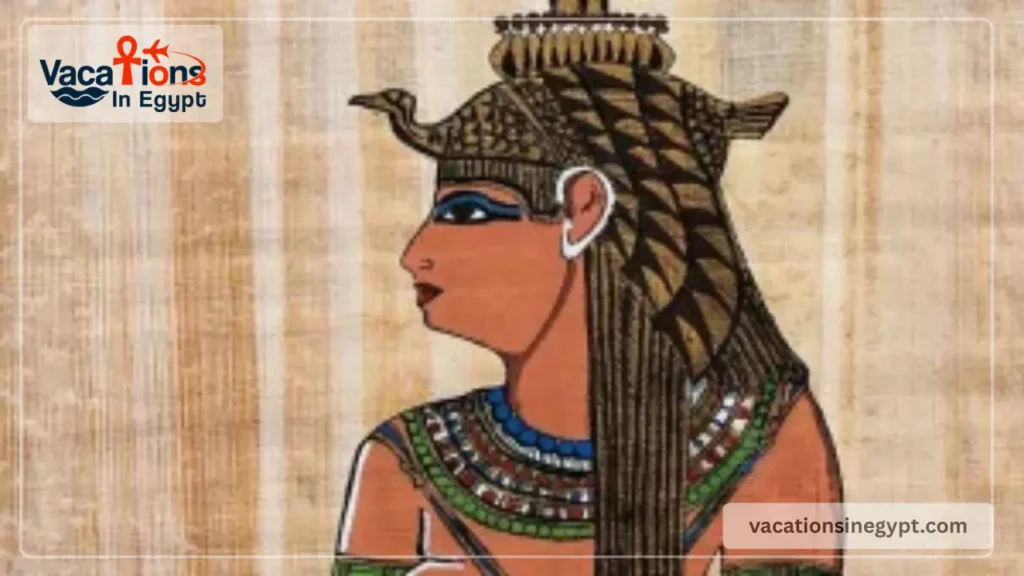
Queen Cleopatra VII is arguably the most famous woman in ancient history. Renowned for her sharp intellect, political mastery, and magnetic charisma, she ruled Egypt at one of the most turbulent moments in the ancient world. As the last active ruler of the Ptolemaic Kingdom, Cleopatra fought fiercely to preserve Egypt’s independence against the rising tide of Roman power — and her story continues to captivate the world more than two thousand years later.
Early Life and Origins
Cleopatra was born in 69 BCE in Alexandria, Egypt, into the Macedonian Greek dynasty founded by Ptolemy I Soter — a general of Alexander the Great who had ruled Egypt since 323 BCE. Her father, Ptolemy XII Auletes, struggled to maintain his throne amid political instability and rebellion, giving the young Cleopatra an early education in the realities of power.
Despite her Greek heritage, Cleopatra set herself apart from her predecessors in a remarkable way: she became the first member of the Ptolemaic dynasty to learn the Egyptian language, along with several others. She was deeply studied in literature, philosophy, and statecraft — qualities that would define her reign.
It is worth noting that the classical image of Cleopatra as a conventional beauty may be somewhat misleading. Coin portraits depict a striking, lively face with strong features — suggesting that her legendary allure owed far more to her intelligence and personality than to conventional looks alone.
Rise to Power
At eighteen, Cleopatra ascended to the throne alongside her younger brother Ptolemy XIII, as was customary in Ptolemaic tradition (royal siblings often ruled as co-regents and ceremonial spouses to preserve dynastic purity). The partnership quickly fractured. Ptolemy XIII’s advisors grew hostile toward Cleopatra’s independent ambitions, eventually forcing her out of Egypt.
Rather than accept exile, Cleopatra raised her own army in Syria and marched back to reclaim her kingdom — a bold move that set the stage for one of history’s most consequential encounters.
Cleopatra and Julius Caesar
In 48 BCE, the Roman general Julius Caesar arrived in Alexandria amid the Roman civil war. Cleopatra, knowing that Ptolemy XIII’s forces would prevent a direct meeting. famously had herself smuggled into Caesar’s private chambers — wrapped in a linen sack, or perhaps a carpet, depending on the source. Caesar was immediately captivated.
Their alliance was both romantic and deeply political. Cleopatra saw in Caesar the military muscle needed to restore her to the throne; Caesar gained a loyal, strategically vital ally in Egypt. Together, they defeated Ptolemy XIII, and Cleopatra was reinstated as queen. The pair had a son, Caesarion (Ptolemy XV), believed to be Caesar’s child.
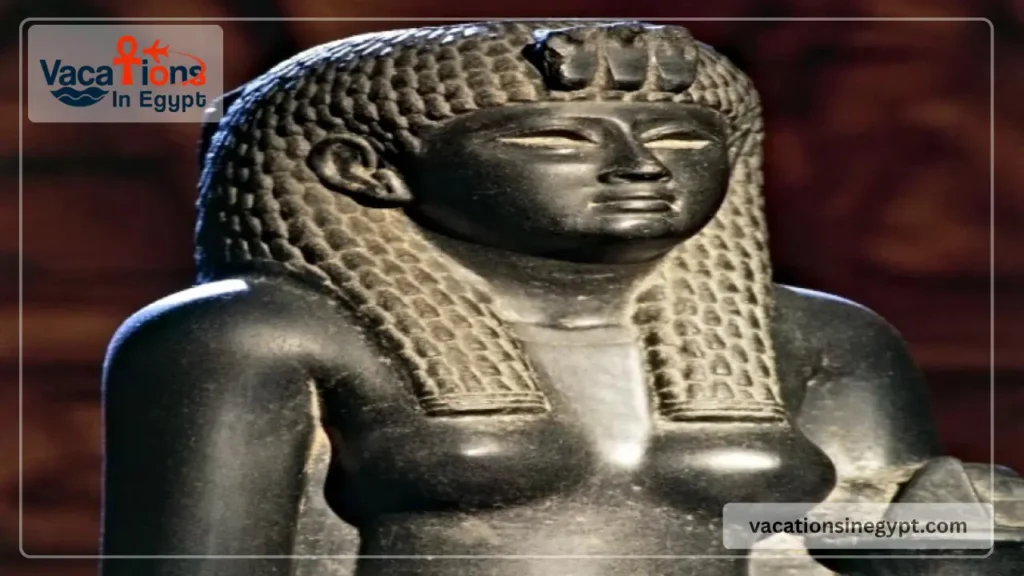
When Cleopatra traveled to Rome in 46 BCE to live with Caesar, her presence caused considerable controversy. Caesar erected a golden statue of her in the Temple of Venus Genetrix — a gesture that outraged many Romans. Her fashion and distinctive hairstyle became so fashionable among Roman women that statues of them have since been mistaken for Cleopatra herself.
Caesar’s assassination in 44 BCE shattered this alliance. Cleopatra fled Rome, never to return.
Cleopatra and Mark Antony
Following Caesar’s death, power in Rome was divided among a triumvirate. By 41 BCE, Cleopatra had forged a new alliance with Mark Antony, one of Rome’s most powerful generals and rulers of the Eastern Empire. Their relationship was equally political and intensely personal.
In addition to, Antony needed Egypt’s vast wealth to fund his military campaigns, particularly his planned invasion of Parthia. In return, he offered Cleopatra military protection and significant territorial gains — including parts of modern-day Syria, Lebanon, and the fertile balsam orchards of Jericho. Together, they formed a partnership that was as theatrical as it was powerful.
The couple was legendary for their extravagance. During the winter of 41–40 BCE, they reportedly founded a drinking society in Alexandria called the “Inimitable Livers” — hosting nightly feasts, elaborate games, and contests. They were even said to disguise themselves and roam the streets of Alexandria playing pranks on locals.
Antony and Cleopatra eventually married and had three children together: the twins Alexander Helios and Cleopatra Selene, and a son, Ptolemy Philadelphus.
The Donations of Alexandria and the Road to War
In 34 BCE, following Antony’s military campaigns in Armenia. the couple held a grand ceremony in Alexandria known as the “Donations of Alexandria.” Before a packed gymnasium, seated on golden thrones on a silver platform, Antony and Cleopatra distributed vast territories of the Eastern world among their children — a direct challenge to Rome’s authority.
In Rome, Octavian (Caesar’s heir and Antony’s rival) watched carefully. He seized on Antony’s will, which reportedly requested burial in Egypt alongside Cleopatra, and used it as propaganda. Rumors spread that Antony intended to relocate the Roman capital to Alexandria. By 32 BCE, the Roman Senate had stripped Antony of his powers and formally declared war on Cleopatra.
The Battle of Actium and the Fall of Egypt
On September 2, 31 BCE, the decisive confrontation came at the Battle of Actium, a naval engagement off the coast of Greece. Cleopatra personally commanded hundreds of Egyptian warships alongside Antony’s fleet. Despite their combined forces, Octavian’s navy overwhelmed them. The pair fled to Egypt in defeat.
Octavian pursued them to Alexandria. As his forces closed in, Antony received a false report that Cleopatra had died. Devastated, he fell on his own sword. Surviving just long enough to be carried to Cleopatra’s mausoleum, he died in her arms.
Cleopatra, now a prisoner in all but name and unwilling to be paraded through Rome as a trophy of Octavian’s victory, took her own life on August 10 or 12, 30 BCE. She was 39 years old. Classical historians believed she died from the bite of an asp — a symbol of divine royalty in Egypt — though some scholars suggest she may have used a different form of poison. The true circumstances of her death remain unknown. The location of her tomb has never been found.
With her death, the Ptolemaic dynasty ended, and Egypt became a province of Rome. Octavian had Caesarion — Cleopatra’s son by Caesar and a potential rival — executed. He himself went on to become Augustus, the first Emperor of Rome.
Cleopatra’s Legacy
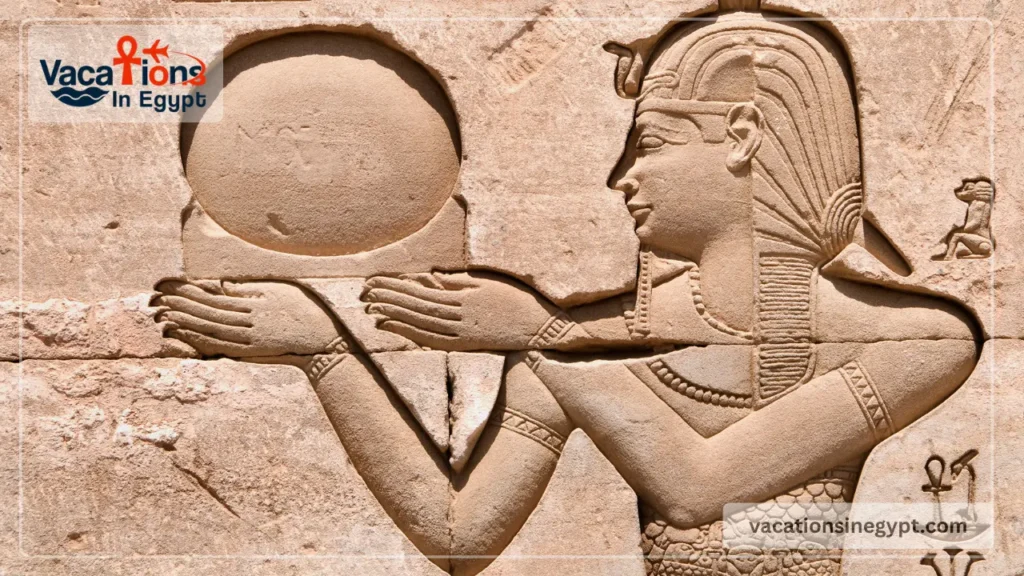
First, Cleopatra’s influence extended far beyond her own lifetime. Unlike the vast majority of Egypt’s hundreds of queens, whose names and monuments were buried beneath the sands of history, Cleopatra’s story survived — partly because she lived in an age of written records, and partly because she played such a central role in the rise of the Roman Empire.
Then, Octavian, in writing his own autobiography and shaping Rome’s official narrative, could not erase Cleopatra from the story — she was too integral to it. Her intelligence, ambition, and refusal to be subjugated have made her an enduring symbol of female power in the ancient world.
Finally, Her image has been reimagined in literature, art, theatre, and cinema across every era since — from Shakespeare’s Antony and Cleopatra to Hollywood blockbusters. She remains one of the most written-about, debated, and celebrated figures in all of human history.
Key Facts About Queen Cleopatra
- Fact Detail
- Full name Cleopatra VII Philopator
- Born 69 BCE, Alexandria, Egypt
- Died August 30 BCE, Alexandria, Egypt (age 39)
- Dynasty Ptolemaic (Macedonian Greek)
- Reign 51–30 BCE
- Languages spoken Egyptian, Greek, Latin, and several others
- Children Caesarion (by Julius Caesar); Alexander Helios, Cleopatra Selene II, Ptolemy Philadelphus (by Mark Antony)
- Successor None — Egypt became a Roman province