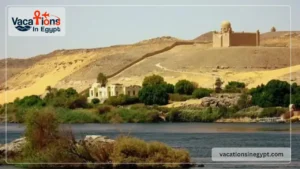

King Narmer
King Narmer was an ancient Egyptian pharaoh of the Early Dynastic Period. Historians identify him as the founder of the First Dynasty and the legendary unifier of Egypt around 3050 BC. Most Egyptologists believe that Narmer is the same historical figure as Menes, a name frequently cited in later records as the first human king of Egypt.
The Identity and Reign of King Narmer
Often referred to by the Greeks as Menes, King Narmer’s reign is believed to have lasted for 62 years. He married Queen Neithhotep of Naqada, a union that likely helped solidify peace between different regions.
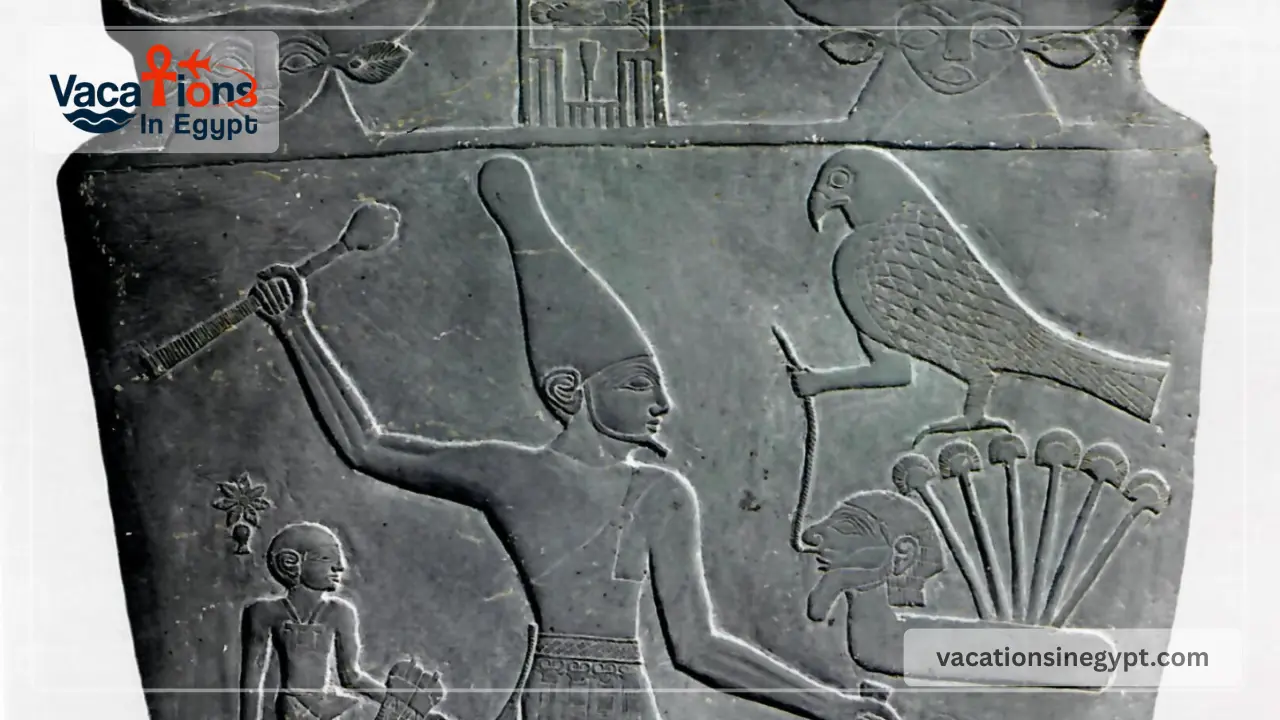
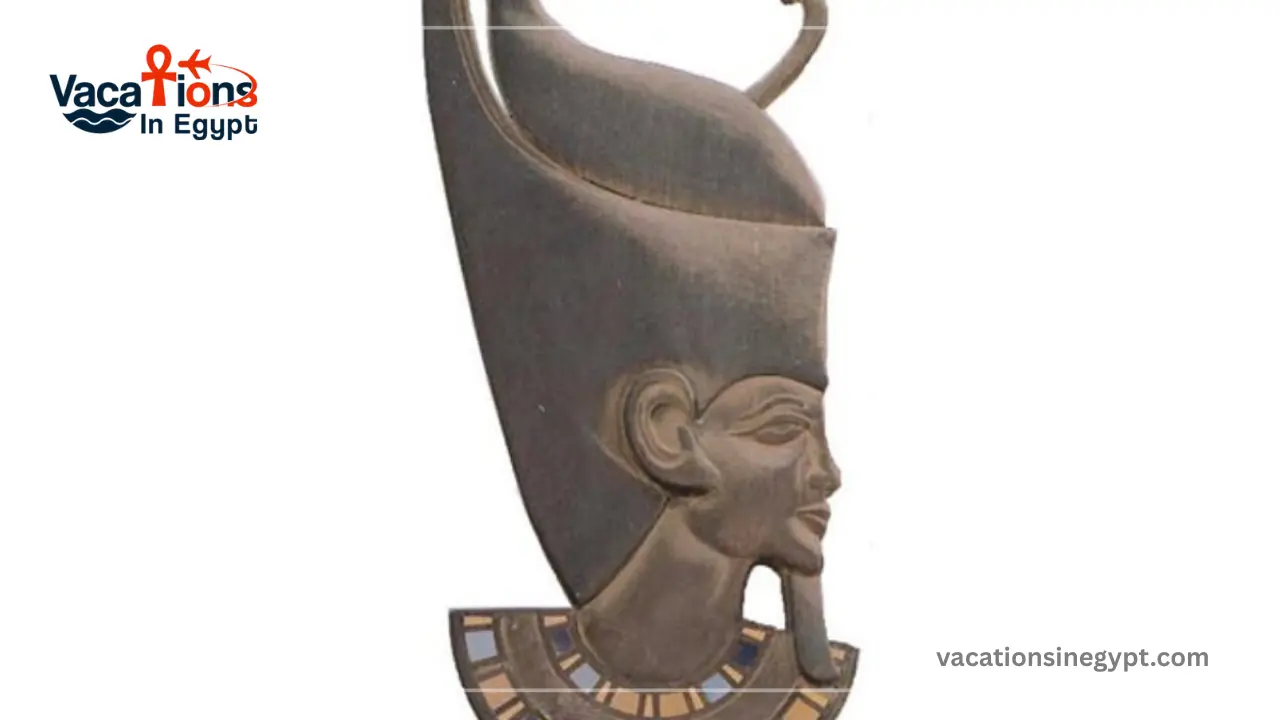
Narmer is best known as the “Unifier of Egypt.” In ancient depictions, he appears wearing the White Crown (Hedjet) of the South while attacking an enemy, and later wearing the Red Crown (Deshret) of the North. This imagery serves as a powerful testimony to his military success in annexing the Kingdom of the North (Lower Egypt) to the Kingdom of the South (Upper Egypt).
The Palette of King Narmer
One of the most significant artifacts in history is the Palette of King Narmer. Discovered by British archaeologists and currently housed in the Egyptian Museum in Cairo, this siltstone shield-shaped palette measures approximately 64 cm.
The palette provides a wealth of information:
- The Double Crown: It depicts the achievements of King Narmer wearing the combined crown of Upper and Lower Egypt (the Pschent), symbolizing total rule.
- The Imagery: The top of the stela features bull heads, often interpreted as the goddess Hathor. The central scenes depict the king as a warrior smiting his enemies, representing the triumph of order over chaos.
- Name Association: It contains some of the earliest hieroglyphic inscriptions, specifically the serekh (a royal crest) bearing Narmer’s name (a catfish and a chisel).
Egypt During the Era of King Menes
Following the unification, King Narmer (Menes) established a new capital city: Memphis. Located hundreds of kilometers north of Thinis, Memphis was founded as a show of force and control over Lower Egypt. To protect the city, he ordered the construction of a massive dam to divert the Nile and formed a lake.
His era was marked by significant advancements:
- Expansion: He launched military campaigns into neighboring regions, such as Nubia and Canaan.
- Culture: There was a surge of interest in the arts, the development of writing, and improvements in agriculture.
- Religion: Temples were constructed, including a temple dedicated to the god Ptah in Memphis.
Archaeological Facts and Evidence
Archaeological data confirms the widespread influence of King Narmer. His name has been found on cylinder seals and pottery across the Nile Valley, the eastern Nile Delta, and even the desert regions.
Interestingly, evidence extends beyond Egypt’s borders. Roughly twenty serekhs (royal seals) attributed to Narmer have been discovered in southern Canaan, indicating active trade or military presence.
The Tomb of King Narmer
King Narmer was buried in the royal cemetery at Umm el-Qa’ab in Abydos. His tomb consists of two chambers lined with mud bricks. Historically, it was reinforced and painted white, marking the final resting place of one of Egypt’s greatest kings.
Conclusion
King Narmer remains a pivotal figure in human history. By establishing the First Dynasty, building Memphis, and leaving behind the iconic Narmer Palette, he set the foundation for the social, political, and artistic development of Ancient Egypt.
Frequently Asked Questions
Who was King Narmer?
Are King Narmer and Menes the same person?
What is the Narmer Palette?
Where is King Narmer’s tomb located?
What city did King Narmer found?
Who was King Narmer’s wife?
Why is King Narmer often called a "Warrior King"?
- Your Ultimate Guide to the Best Places to Visit and Fun Things to Do in Egypt
- Things To Visit in Cairo
- Christmas and New Year in Egypt
- Traveling to Egypt during Ramadan
- Unveiling the Legacy of King Ramses
- Catacombs of Kom El shoqafa
- Ankh Meaning in Christianity
- El Fishawy Cafe
- Amr Ibn Al Aas Mosque
- National Museum of Alexandria