Muhammad Ali Pasha
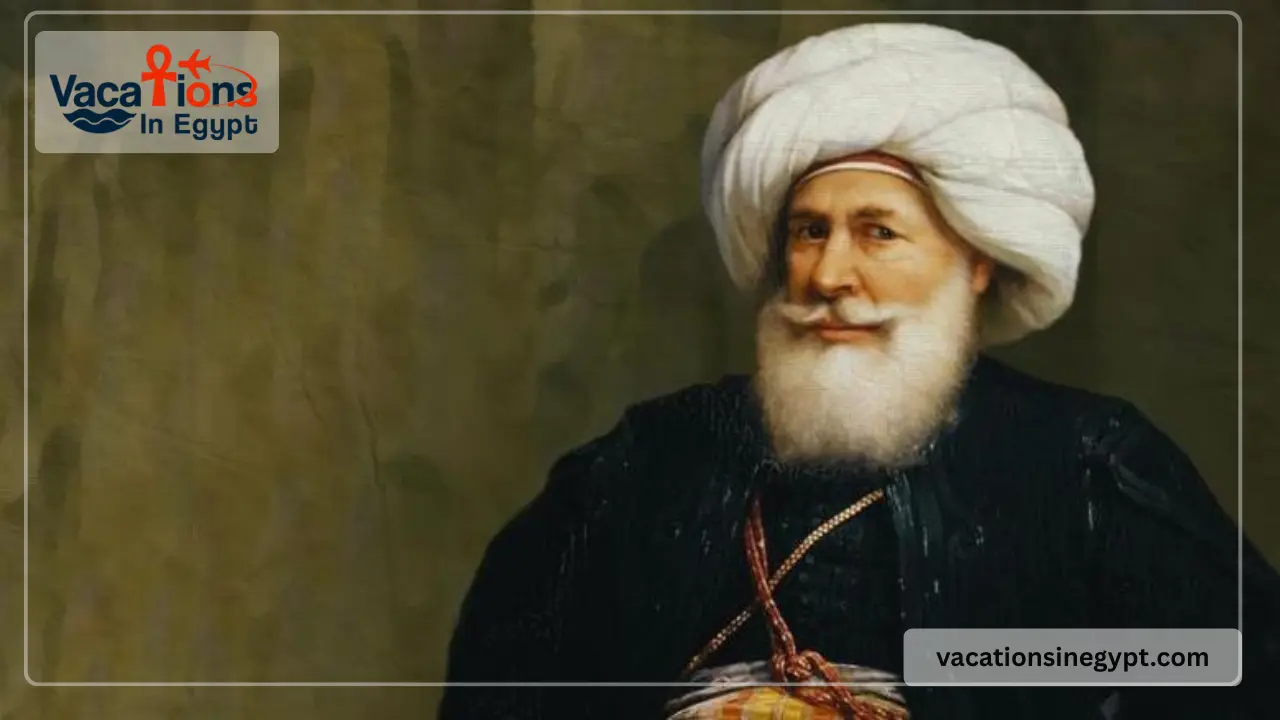
Muhammed Ali Pasha was the founder of modern Egypt and the ruler who established a powerful dynasty that governed Egypt until King Ahmed Fouad II. He arrived in Egypt as an officer in the Ottoman (Turkish) army around 1800 and gradually rose to become the undisputed ruler of the country.
Born in Kavala in 1769, Muhammed Ali Pasha was of Turkish origin and spoke Turkish as his first language. His father, Ibrahim Agha, played an important role in shaping his early life. Muhammed Ali gained military and political experience in the European provinces of the Ottoman Empire, especially during the conflicts among the Ottoman, Russian, and Austrian empires in the Balkans. This experience later helped him rule Egypt with remarkable skill.
Muhammed Ali Pasha and His Family

Muhammed Ali Pasha had a large family and several wives. His most well-known wife was Amina Nasrati, his first wife, with whom he had five children. Among them was Ibrahim Pasha, his successor and one of the most important military leaders of the era.
Although historical records confirm many children from different wives, Ibrahim Pasha remained the most prominent figure within Muhammed Ali Pasha’s family and political legacy.
Arrival in Egypt and Rise to Power
Muhammed Ali Pasha arrived in Egypt in 1800 as part of the Ottoman military forces sent to restore order after years of instability. Egypt at that time was officially under Ottoman rule but was effectively controlled by the Mamluks.
Through intelligence, strategic alliances, and political maneuvering, Muhammed Ali Pasha managed to position himself as the strongest power in the country. In 1805, he was officially appointed Ottoman viceroy (Wali) of Egypt, marking the beginning of his long reign.
The French Campaign and Power Vacuum
In 1798, Napoleon Bonaparte invaded Egypt, defeating the Mamluk army at the Battle of the Pyramids. However, the destruction of the French fleet by the British navy in the Mediterranean forced Napoleon to abandon Egypt and return to France.
This created a major power vacuum. Muhammed Ali Pasha returned to Egypt in 1801 and participated in the struggles among the French, the British, and the Ottomans. Ultimately, the French were expelled, and Muhammed Ali emerged as the most powerful figure in Egypt.
The Decline of the Mamluks
The Mamluks were Muhammed Ali Pasha’s greatest rivals. At first, he skillfully shifted alliances—sometimes supporting the Mamluks against the Ottomans and at other times siding with the Ottomans.
Once he secured his position, Muhammed Ali Pasha launched a decisive campaign against the Mamluks, weakening their power and removing them as a political threat. This struggle reshaped Egypt’s political landscape forever.
Taking Full Control of Egypt
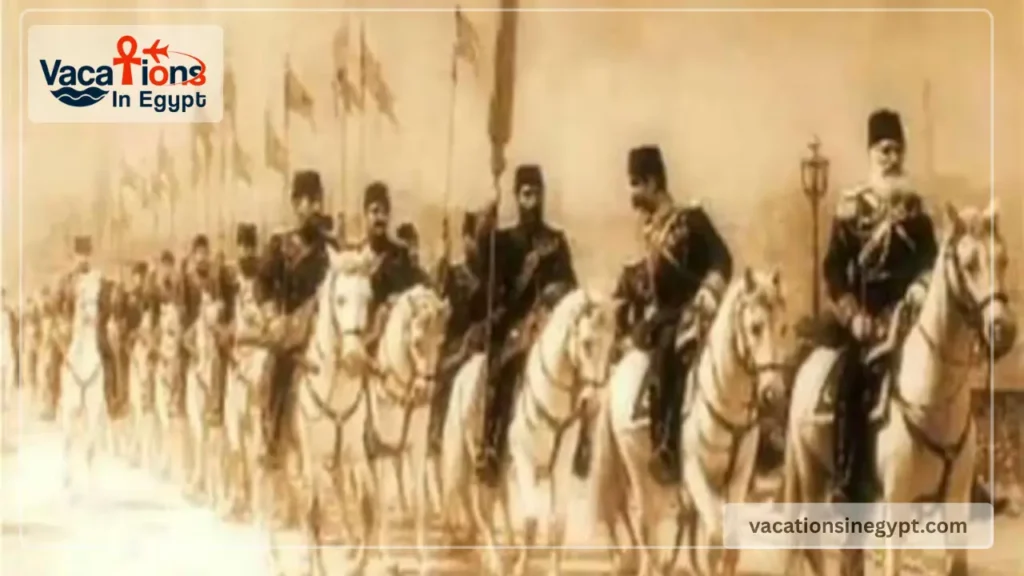
After becoming viceroy in 1805, Muhammed Ali Pasha consolidated power by eliminating rival governors and confronting both Ottoman interference and Mamluk resistance. By this time, he had become the main authority in Egypt and ruled the country until his death.
His leadership marked the beginning of a centralized state with strong military, economic, and administrative institutions.
Military Campaigns and the Greek War of Independence
At the request of Sultan Mahmud II, Muhammed Ali Pasha sent his forces to fight the Greeks during the Greek War of Independence. Although his army and navy were initially strong, European powers—Great Britain, France, and Russia—intervened in support of the Greek revolutionaries.
After realizing the danger posed by European naval forces, Muhammed Ali Pasha withdrew from direct military confrontation and focused instead on strengthening Egypt internally.
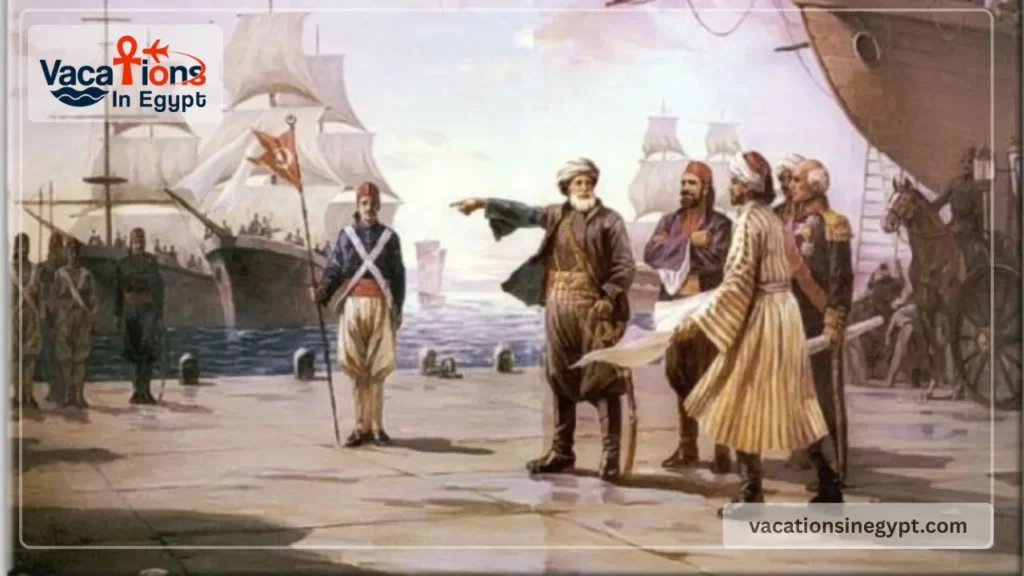
The Reign of Muhammed Ali Pasha
During his reign, Muhammed Ali Pasha worked relentlessly to secure his authority. He confronted British interference, dismantled rival military groups, and maintained firm control over Egypt.
One of the most decisive events of his rule was the elimination of the Mamluks, whom he saw as a constant threat to stability and reform.
The Citadel Massacre of 1811
In 1811, Muhammed Ali Pasha carried out one of the most famous events in Egyptian history: the Citadel Massacre.
The Mamluk leaders were invited to a ceremonial feast and military procession led by Shahin Bey at the Citadel of Cairo. As they were leaving, the gates were closed, and Albanian soldiers surrounded them. Nearly all the Mamluk leaders were killed, effectively ending their rule in Egypt.
Achievements of Muhammed Ali Pasha
Agricultural Reforms
Muhammed Ali Pasha reorganized agricultural lands and abolished the traditional land tenure system. He invested heavily in irrigation projects, which greatly improved agricultural productivity. He also established state monopolies over trade, strengthening Egypt’s economy.
Education and Military Schools
Education was a top priority for Muhammed Ali Pasha. He founded several modern schools, including:
- Engineer Khana School
- Al-Alsun School (School of Languages)
- Accounting School
He also established Egypt’s first modern military schools, creating a trained national army.
Founder of Modern Egypt
Muhammed Ali Pasha modernized Egypt’s infrastructure by building roads, ports, and factories. He developed the commercial system and strengthened state institutions.
Among his most famous architectural achievements is the Muhammed Ali Mosque, located inside the Citadel of Salah al-Din in Cairo. His reforms laid the foundation for the modern Egyptian state.

Death and Legacy
Muhammed Ali Pasha fell ill in 1848 and died in 1849. After his death, Ibrahim Pasha briefly assumed leadership.
Although he was not Egyptian by birth, Muhammed Ali Pasha is widely regarded as one of the greatest rulers in Egypt’s history. His political vision, reforms, and achievements continue to shape Egypt and are still studied and discussed today.