

The Ancient City of Petra
Petra is one of the most extraordinary archaeological sites in the world — an ancient city carved entirely into rose-red sandstone cliffs in southern Jordan. Known as the “Rose-Red City,” it was the thriving capital of the Nabataean Kingdom more than 2,000 years ago and remains Jordan’s most visited and treasured destination.
A UNESCO World Heritage Site and one of the New Seven Wonders of the World, Petra draws millions of visitors each year with its towering rock-cut facades, intricate hydraulic engineering, and a sense of mystery that no other place on Earth quite matches.
Where Is Petra Located?
Petra is situated in southern Jordan, nestled within a narrow desert valley east of Wadi Araba — the rift valley stretching between the Dead Sea and the Gulf of Aqaba. Its dramatic, hidden geography made it both a natural fortress and a vital hub along ancient trade routes, including the legendary Silk Road.
The History of Petra
The Nabataean Kingdom
Petra’s story begins with the Nabataeans, an ancient Arab people who settled the region over 2,000 years ago. Masterful engineers and traders, they carved an entire city into the surrounding sandstone mountains, building temples, tombs, and an advanced water management system that allowed the city to flourish in an arid desert environment.
At its peak, Petra was a major crossroads of commerce, connecting Arabia, Egypt, and the Mediterranean world.
Conquest and Legacy
Over the centuries, Petra changed hands multiple times. The Romans annexed the Nabataean Kingdom in 106 AD, followed by the Byzantines and later Arab rulers. Each civilization left architectural and cultural imprints that layer the site with remarkable historical depth.
Rediscovery by the Western World
Petra vanished from Western knowledge for nearly 300 years until 1812, when Swiss explorer Johann Ludwig Burckhardt disguised himself as a pilgrim and persuaded a local guide to lead him to the site. He secretly documented what he found and suggested that these were the ruins of ancient Petra — a discovery that astonished the world.
Top Sites to Visit in Petra

1. The Siq
The main entrance to Petra is a dramatic 1.2-kilometer-long canyon with towering rose-colored walls that rise up to 80 meters on either side. Walking through the Siq is an unforgettable experience, and it also reveals ancient Nabataean water channels carved into the rock face.
2. The Treasury (Al-Khazneh)
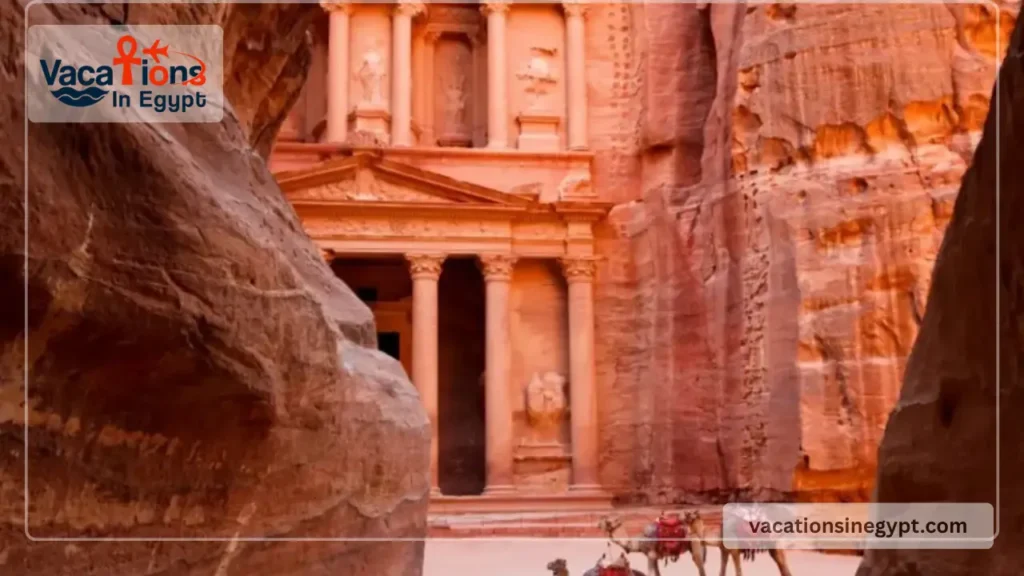
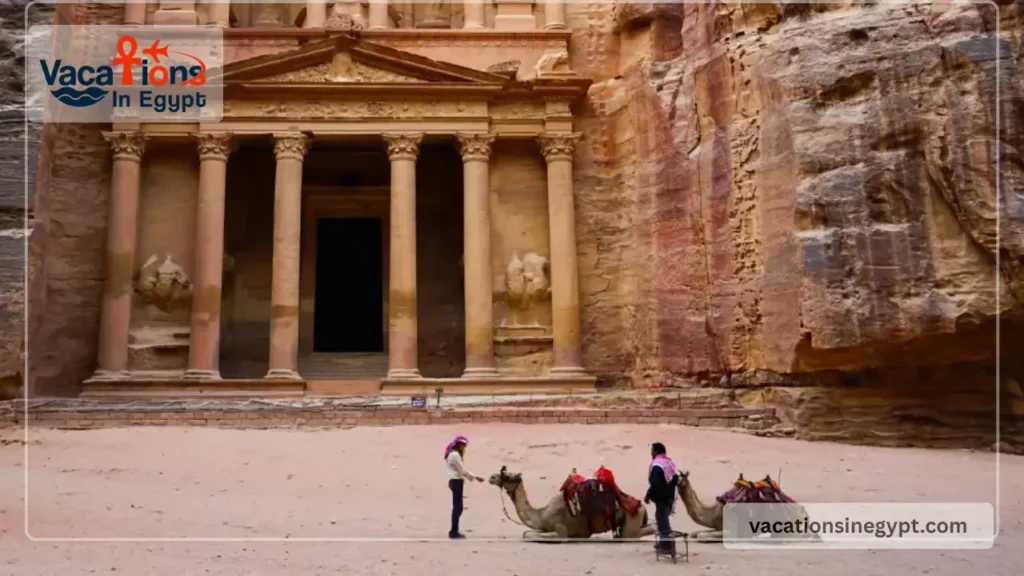
Petra’s most iconic monument, Al-Khazneh (The Treasury) emerges suddenly at the end of the Siq with a breathtaking ornate facade. This rock-cut temple — possibly a royal tomb — is one of the most photographed structures on the planet and a symbol of Jordan itself.
3. The Monastery (Al-Deir)
Larger than the Treasury and reached via a climb of over 800 steps, Al-Deir is a massive rock-cut temple offering sweeping panoramic views of the surrounding desert landscape. Its sheer scale and isolation make it one of Petra’s most impressive monuments.

4. The Roman Theatre
Built by the Nabataeans and later enlarged by the Romans, this 8,000-seat amphitheatre is carved directly into the hillside. It stands as powerful evidence of Petra’s cultural richness and civic life in antiquity.
5. The Royal Tombs
A series of monumental facades cut into the cliff face, the Royal Tombs — including the Urn Tomb, Silk Tomb, and Corinthian Tomb — offer a fascinating window into Nabataean funerary culture and elite society.
6. The Colonnaded Street & Royal Quarter
This ancient city center features a colonnaded Roman-era street flanked by ruins of palaces, temples, and sanctuaries. It provides a vivid picture of everyday life in Petra at the height of its power.
Best Time to Visit Petra
✅ Best March – May Mild temperatures, wildflowers, sunny days
✅ Good September – November Pleasant autumn weather, fewer crowds
⚠️ Hot June – August Very high temperatures; bring extra water
❄️ Cool December – February Cold nights, occasional rain; quieter
Spring (March to May) is widely considered the ideal time to visit. Temperatures are comfortable for walking, the desert landscape comes alive with wildflowers, and the light is perfect for photography.
How to Get to Petra
Petra is accessible from several directions:
- From Amman: A 3–3.5 hour drive south via the Desert Highway or the scenic King’s Highway.
- From Aqaba: Approximately 2 hours north by car.
- From Egypt (Sharm El-Sheikh): Roughly 4 hours by car after crossing into Jordan.
The nearest town is Wadi Musa, which sits right at the entrance to Petra and offers a wide range of hotels, restaurants, and services for visitors.
Quick Facts About Petra
- 📍 Location: Wadi Musa, Ma’an Governorate, Jordan
- 🏛️ Type: Archaeological city and UNESCO World Heritage Site
- 🗿 New Seven Wonders of the World: Designated in 2007
- 🏗️ Built by: The Nabataeans, circa 4th century BC
- 📐 Area: Approximately 264 km²
- 🌐 Annual visitors: Over 1 million per year