Ancient Egyptian Civilization
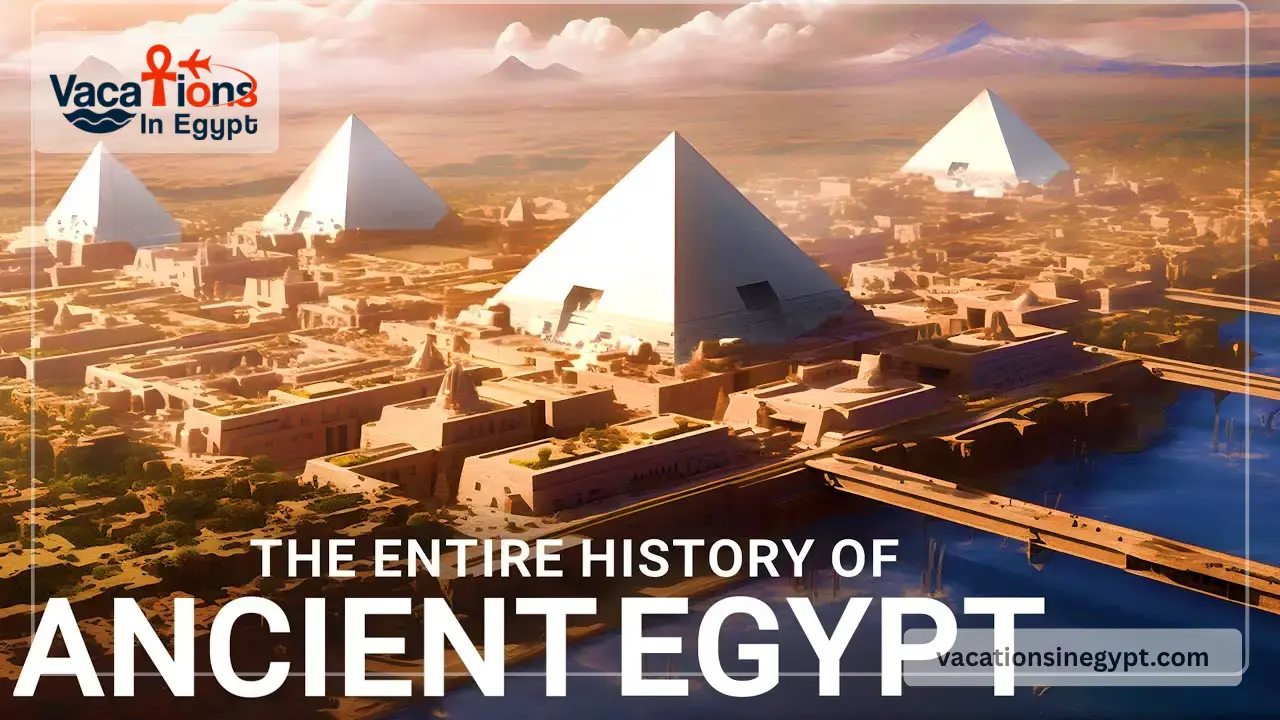
Few civilizations in human history have captured the imagination quite like Ancient Egypt. Rising along the fertile banks of the Nile River in northeastern Africa, Egyptian civilization emerged around 3200 BC with the political unification of Upper and Lower Egypt — and went on to shape art, science, language, and architecture for millennia.
From the awe-inspiring pyramids of Giza to the mysteries of hieroglyphic writing, Ancient Egypt left a legacy that continues to fascinate scholars and travelers alike.
1. The History of Ancient Egypt
The Predynastic Period (Before 3200 BC)
Before the pharaohs, Egypt was a land in transition. The climate was less arid than today, and the Nile Valley supported abundant wildlife and vegetation. Early Egyptians gradually shifted from nomadic lifestyles toward settled communities, developing a succession of cultures — the Badari, Amratian, and Naqada — each marked by advances in agriculture, animal husbandry, and technology. The Naqada culture ultimately gave rise to a symbolic writing system that would evolve into hieroglyphics.
The Early Dynastic Period (c. 3200–2686 BC)
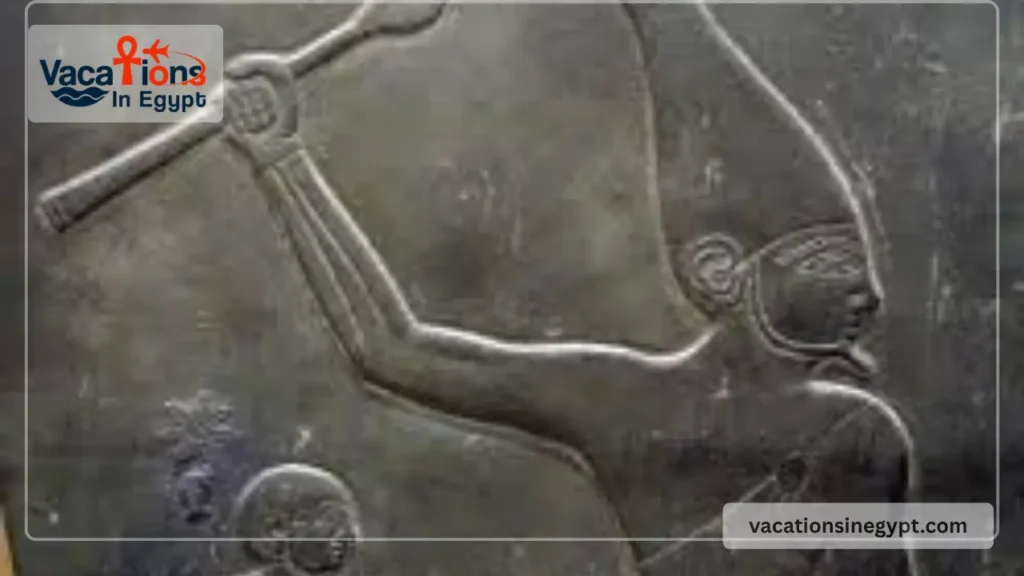
Around 3200 BC, King Menes — believed by many scholars to be the pharaoh Narmer — united Upper and Lower Egypt, establishing the world’s first centralized nation-state. He founded a capital at Memphis around 3150 BC, and the institution of pharaonic rule was born. The pharaoh’s authority over land, labor, and resources became the cornerstone of Egyptian society, with royal tombs and temples built to honor and commemorate their divine rule.
The Old Kingdom & First Intermediate Period (c. 2686–2055 BC)
The Old Kingdom was the age of pyramid building and administrative power. However, the centralized state eventually weakened. Provincial governors grew increasingly autonomous, and a combination of food shortages, political disputes, and small-scale civil wars led to the collapse of central authority. This era — the First Intermediate Period — paradoxically saw a cultural flourishing in the provinces, as local rulers adopted new artistic styles and governed with independence.
The Middle Kingdom (c. 2055–1650 BC)
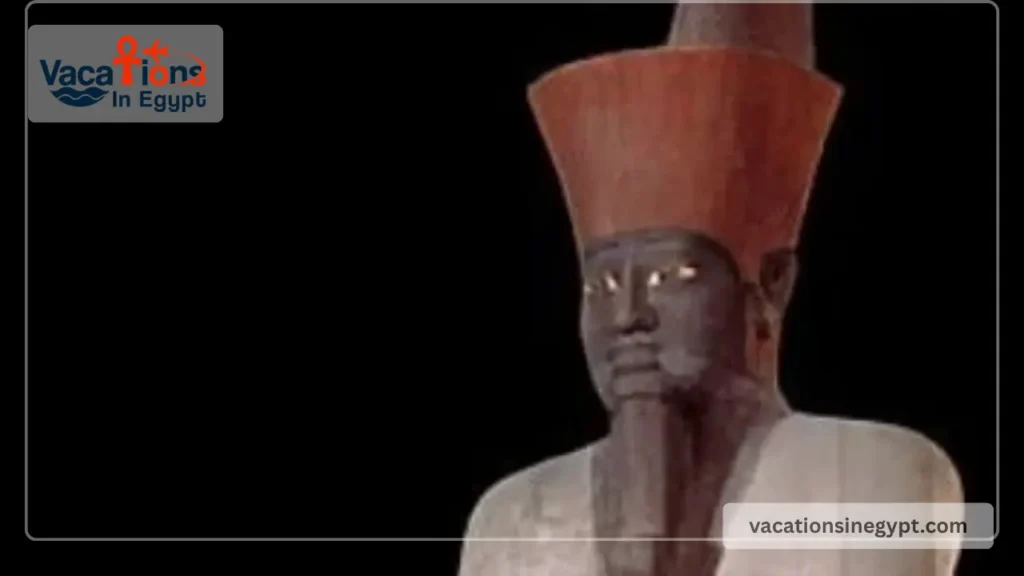
Order was restored when Mentuhotep II defeated rival rulers and reunited Egypt, ushering in the Middle Kingdom — a period of cultural renaissance and economic prosperity. However, the reign of Amenemhat III introduced economic tensions through overambitious construction projects and poor Nile floods, eventually destabilizing the kingdom and opening the door to foreign influence.
The Second Intermediate Period & the Hyksos (c. 1650–1550 BC)
Around 1650 BC, the Hyksos — a foreign Asian people — seized control of the eastern Delta, forcing the Egyptian government to retreat to Thebes. After nearly a century of occupation and a 30-year military struggle led by pharaohs Seqenenre II and Kamose, Pharaoh Ahmose I finally expelled the Hyksos, paving the way for Egypt’s golden age.
The New Kingdom (c. 1550–1070 BC)
The New Kingdom represents the height of Egyptian power and prestige. Pharaohs including Thutmose I, Thutmose III, and Hatshepsut expanded Egypt’s borders into Syria and Nubia, secured vital trade resources, and launched massive building campaigns at sites like the Temple of Karnak. Queen Hatshepsut’s reign was particularly notable — featuring trade expeditions to the land of Punt, colossal obelisks, and a magnificent mortuary temple.
The Third Intermediate Period (c. 1070–664 BC)
Following the death of Ramesses XI, Egypt fragmented once more. The north was controlled from Tanis, while Theban priests effectively governed the south. Libyan chieftains rose to dominance, followed by the Kushite dynasty from the south. By 700 BC, the Assyrian Empire had begun its assault, eventually invading Egypt between 671 and 667 BC and occupying key cities including Memphis and Thebes.
The Late Period & Persian Conquest (664–332 BC)
The Saite kings of the Twenty-sixth Dynasty briefly reunified Egypt with the help of Greek mercenaries, establishing a navy and reviving economic and cultural life. However, in 525 BC, the Persian invasion under Cambyses II brought Egypt under Achaemenid rule. Despite isolated revolts, Egypt was never able to permanently free itself from Persian control.
The Ptolemaic Dynasty (332–30 BC)
Alexander the Great conquered Egypt in 332 BC, and after his death, the Ptolemaic dynasty took control. The Ptolemies built new temples in the Egyptian style, portrayed themselves as pharaohs, and founded Alexandria — which became one of the greatest centers of learning and culture in the ancient world. Egyptian and Greek traditions merged to create hybrid gods such as Serapis.
Roman Egypt (30 BC–7th Century AD)
Egypt became a Roman province in 30 BC after Augustus Caesar defeated Mark Antony and Cleopatra VII at the Battle of Actium. Egypt became Rome’s most important grain supplier, and Alexandria grew into a major hub on the eastern trade route. Over time, Christianity spread throughout Egypt, eventually replacing traditional pagan worship. Hieroglyphic writing faded, temples were converted into churches, and the ancient religious culture gradually disappeared.
2. Government, Economy & Society in Ancient Egypt
Administration and Governance
The pharaoh held absolute authority over Egypt, governing through a sophisticated bureaucracy. The country was divided into 42 administrative regions, each overseen by a local chief answerable to the vizier. Temples served not only as places of worship but as centers of national wealth storage and redistribution.
Economic System
Ancient Egypt’s economy was centrally planned and tightly controlled. Workers were compensated in grain, and prices were standardized across the country. A barter system using grain and deben weights operated for centuries before coins were introduced from abroad in the 5th century BC.
Social Structure
Egyptian society was highly stratified, organized as follows from the top down: pharaoh, priests and nobility, scribes and officials, skilled craftsmen and artists, farmers, and at the lowest rung, slaves — though evidence of slavery in Egypt remains limited. The elite “white skirt class” of scribes and officials wielded significant cultural and administrative influence.
The Legal System
Justice in Ancient Egypt was guided by the concept of Maat — cosmic order, truth, and balance. Local disputes were settled by councils of elders called the Kenbet, while serious cases were handled by the vizier or pharaoh directly. Punishments ranged from fines and beatings to exile and death, and oracles played a notable role in legal proceedings.
Agriculture and Natural Resources
Egypt’s agricultural success depended entirely on the annual flooding of the Nile, which deposited rich, fertile silt across the valley floor. Farmers cultivated surplus crops that fed a growing population and funded monumental construction projects. Egypt was also rich in natural resources including gold, copper, limestone, granite, sandstone, and semi-precious stones — all of which fed the country’s building, art, and trade industries.
Trade and Commerce
Egypt was a major trading civilization. It maintained active trade relationships with Nubia, Palestine, Anatolia, and Mediterranean nations, importing gold, incense, bronze, and timber. The Nile itself served as a natural highway, moving goods including grain, linen, and papyrus throughout the country and beyond.
3. Language and Writing in Ancient Egypt
The Egyptian Language
Ancient Egyptian belongs to the Afro-Asiatic language family, closely related to Berber and Semitic languages. It holds the distinction of having one of the longest documented histories of any language on Earth — written records span from 3200 BC to the Middle Ages. The language evolved through several stages: Old Egyptian, Middle Egyptian, Late Egyptian, Demotic, and finally Coptic, which is still used in the Coptic Orthodox Church today.
The Writing System
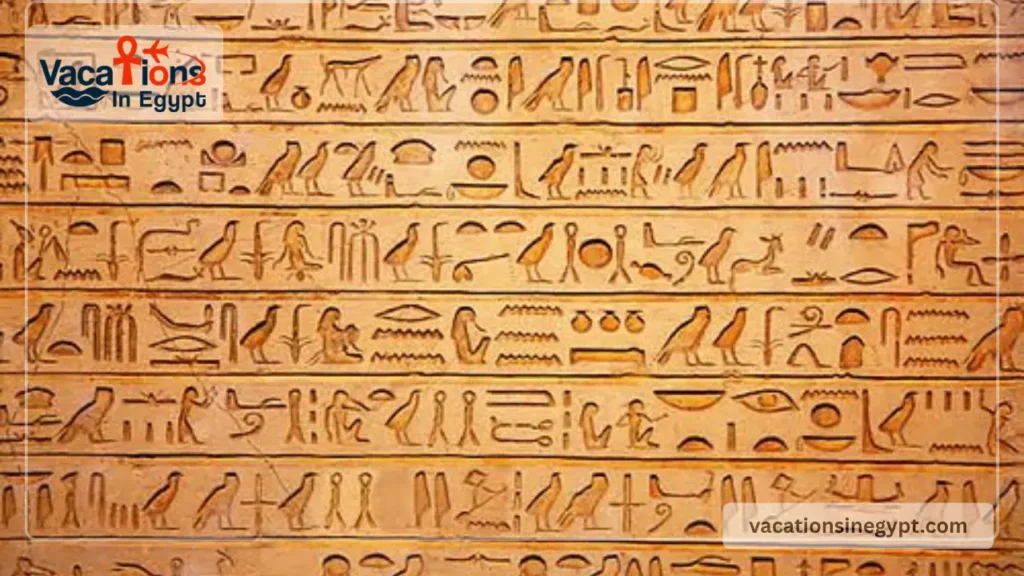
Ancient Egyptian writing is one of the most recognizable in the world. Hieroglyphs — a formal system of around 800 symbols — date back to 3200 BC and were used primarily on stone monuments and religious texts. For everyday writing, Egyptians used a faster cursive script called hieratic, written on papyrus. A later, simplified script called demotic eventually replaced hieratic for common use.
The famous Rosetta Stone (196 BC), inscribed in three scripts — hieroglyphic, demotic, and Greek — was the key that allowed scholars, particularly Jean-François Champollion, to decipher hieroglyphics in the 19th century.
Literature
Ancient Egyptian literature is rich and varied. The Pyramid Texts are among the oldest religious writings in the world. The Story of Sinuhe, written in Middle Egyptian, is considered a masterpiece of ancient literature. The sage Ptahhotep produced some of the earliest known writings on ethics and human conduct, shaping moral philosophy for generations.
4. Culture and Daily Life in Ancient Egypt
Daily life in Ancient Egypt revolved around family, faith, and the rhythm of the Nile. Most Egyptians were farmers, living in simple mud-brick homes and working the land. Personal cleanliness was highly valued — Egyptians bathed regularly in the Nile and wore simple white linen clothing.
Women wore jewelry, wigs, and cosmetics, while music and dancing were central to social and religious life. Popular instruments included flutes, lutes, harps, and percussion. Board games like Senet and Mehen were enjoyed across social classes, and wealthy Egyptians pursued hunting and boating for recreation.
Family structure was traditional — mothers cared for children while fathers provided financially — but Egyptian women enjoyed relatively significant legal rights compared to many ancient societies.
5. Architecture and Monuments of Ancient Egypt
The Pyramids
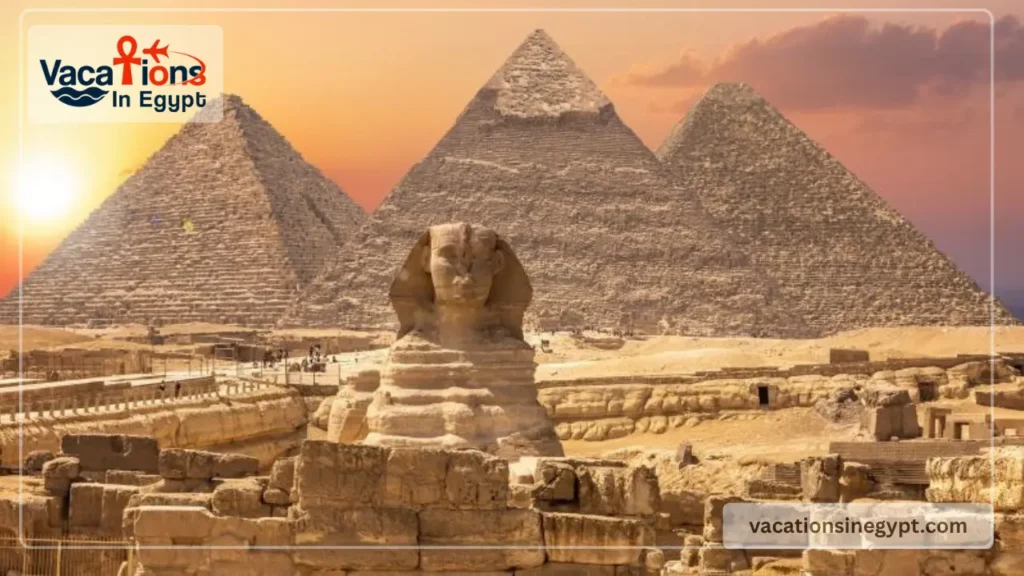
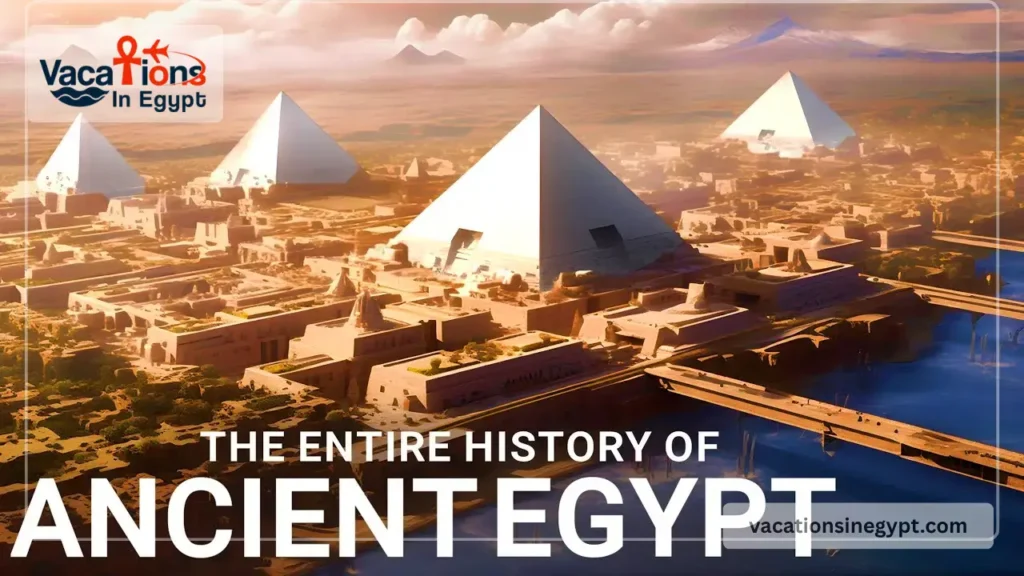
The pyramids are Ancient Egypt’s most iconic achievement. Built as royal tombs, they were constructed from limestone with a precise square base, filled with treasures and provisions for the pharaoh’s afterlife. Egypt built approximately 138 pyramids of varying sizes. The largest — the Great Pyramid of Khufu at Giza — remains one of the Seven Wonders of the Ancient World and the only one still standing.
Temples

Egyptian temples served as homes for the gods, falling into two categories: cultus temples dedicated to specific deities, and funerary temples built to honor deceased pharaohs. Over time, temples grew into vast complexes, expanded by successive pharaohs. The Temple of Karnak at Thebes is among the largest religious complexes ever built.
6. Key Achievements of Ancient Egyptian Civilization
Ancient Egypt’s contributions to human knowledge are extraordinary and enduring. Among the most significant:
- Writing: Invention of hieroglyphic and demotic scripts
- Mathematics and Engineering: Precision geometry used to build pyramids and temples
- Astronomy: Development of a solar calendar and early zodiac system
- Agriculture: Advanced irrigation methods along the Nile
- Medicine: Early medical texts documenting surgical procedures and remedies
- Art and Architecture: A distinctive artistic style sustained for over 3,000 years