The Majestic Pyramids of Cheops
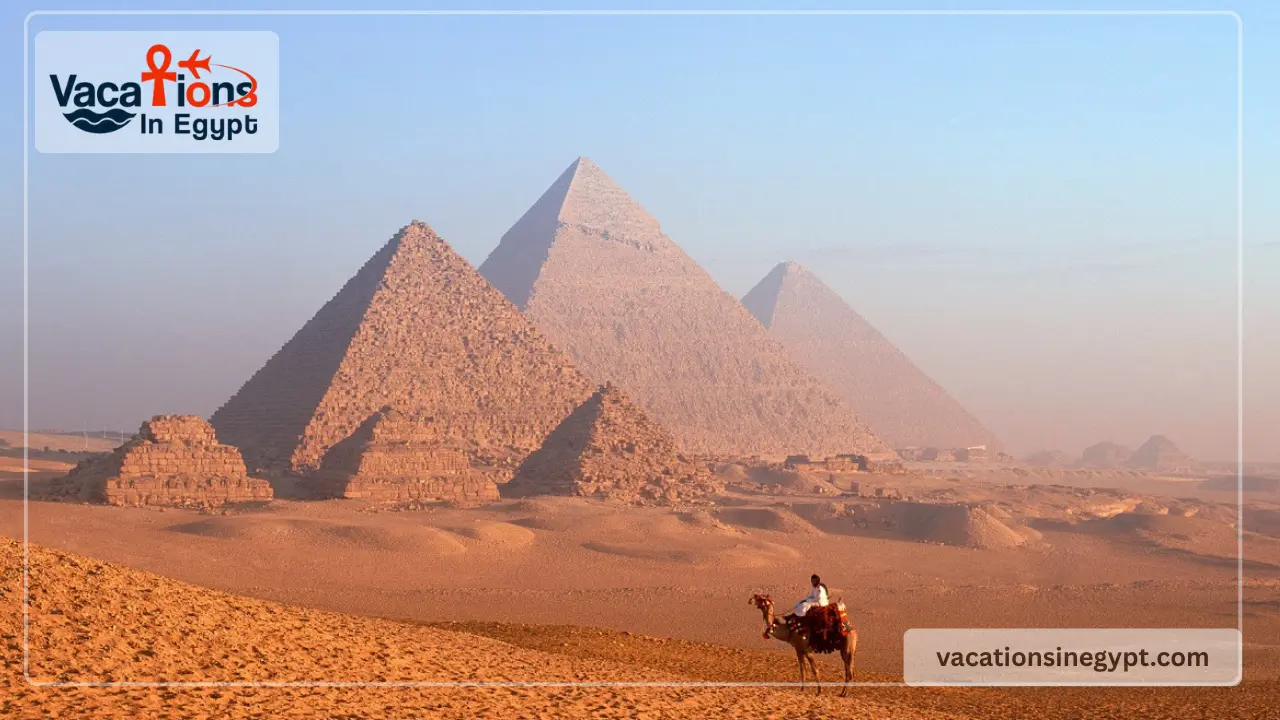
Standing on the edge of the Sahara Desert just outside Cairo, the Pyramid of Cheops — also known as the Great Pyramid of Giza or the Pyramid of Khufu — is the oldest and largest of the Seven Wonders of the Ancient World, and the only one still standing. Built over 4,500 years ago, it continues to astonish architects, engineers, archaeologists, and travelers alike with its sheer scale, precision, and enduring mystery.
This complete guide covers the history, construction, interior, secrets, and visitor information for one of humanity’s greatest achievements.
Who Built the Pyramid of Cheops?
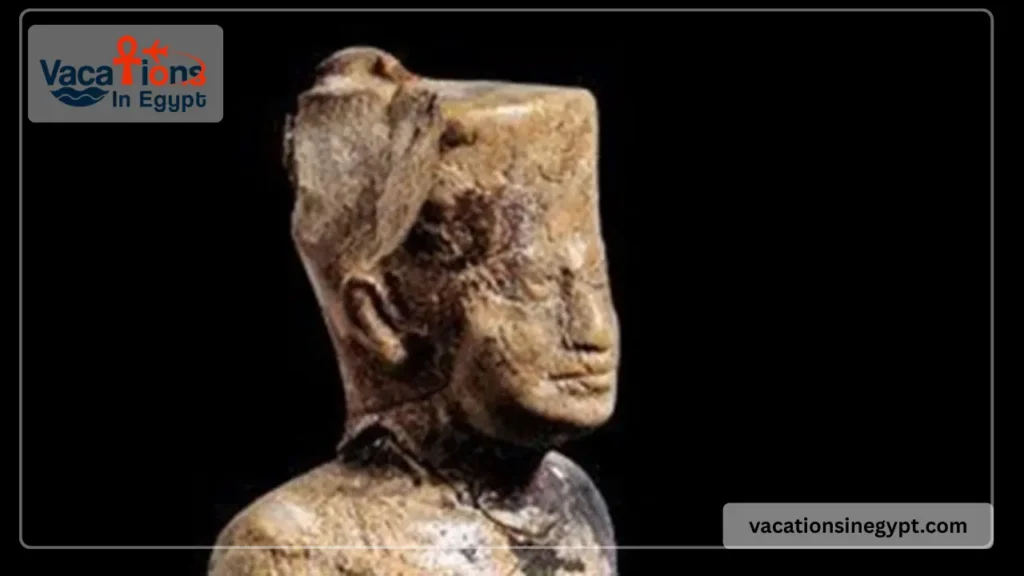
The Pyramid of Cheops was built during the reign of Pharaoh Khufu (known in Greek as Cheops), the second pharaoh of Egypt’s Fourth Dynasty, who ruled around 2589–2566 BC. Khufu commissioned the pyramid as his royal tomb — an eternal monument designed to house his remains and preserve his legacy for eternity.
Construction is estimated to have taken approximately 20 years, employing tens of thousands of workers. Contrary to the long-held myth of slave labor, modern archaeological evidence strongly suggests the pyramid was built by a skilled, organized, and well-fed workforce of Egyptian laborers, many of whom were permanent employees of the state.
The Pyramid of Cheops was the crowning achievement of an architectural evolution that began with Khufu’s father, Pharaoh Sneferu, who built the Bent Pyramid and the Red Pyramid at Dahshur — the first true smooth-sided pyramids in Egyptian history. Khufu took those advances and pushed them to their absolute limit.
The Dimensions: Just How Big Is the Pyramid of Cheops?
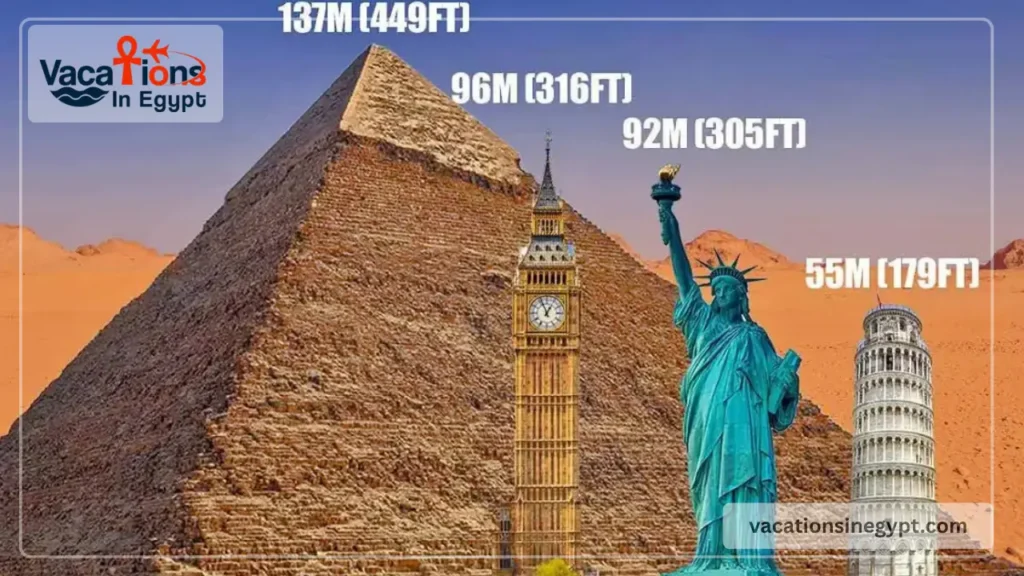
The scale of the Pyramid of Cheops is genuinely difficult to comprehend until you stand beside it.
- Original height: 146.5 meters (481 feet) — the tallest structure on Earth for over 3,800 years, a record it held until the completion of Lincoln Cathedral in England in the 14th century
- Current height: 138.5 meters (455 feet) — reduced slightly over millennia due to erosion and the removal of its outer casing stones
- Base length: approximately 230 meters (755 feet) on each side
- Base area: over 53,000 square meters — equivalent to roughly 10 football fields
- Estimated number of stone blocks: 2.3 million
- Average weight per block: 2.5 tons
- Total estimated weight: approximately 6 million tons
Perhaps most remarkable of all is the precision of its construction. The base of the Pyramid of Cheops is level to within just 2.1 centimeters across its entire 230-meter width — an engineering feat that challenges even modern standards.
How Was the Pyramid of Cheops Built?
The construction of the Pyramid of Cheops remains one of history’s most debated questions. The ancient Egyptians had no iron tools, no wheels capable of carrying such loads, and no cranes. Yet they quarried, transported, and positioned over two million stone blocks with extraordinary accuracy.
Most of the limestone used for the pyramid’s core came from a quarry located just south of the Giza Plateau. The high-quality white Tura limestone used for the outer casing was ferried across the Nile from quarries near modern-day Cairo. The pink granite used for interior chambers came from Aswan — over 800 kilometers away.
Leading theories suggest workers used sledges on wetted sand to reduce friction and transport blocks, and that a system of internal and external ramps allowed blocks to be raised to increasingly higher levels. Recent discoveries of an ancient workers’ harbor and administrative papyri at Wadi al-Jarf have shed new light on the logistics of this extraordinary project, describing how teams transported stone and supplies across Egypt.
What is certain is that the pyramid’s construction reflects an extraordinary degree of central planning, resource management, and technical expertise — achievements that speak to the political and economic power of Egypt’s Fourth Dynasty.
Inside the Pyramid of Cheops: The Internal Chambers
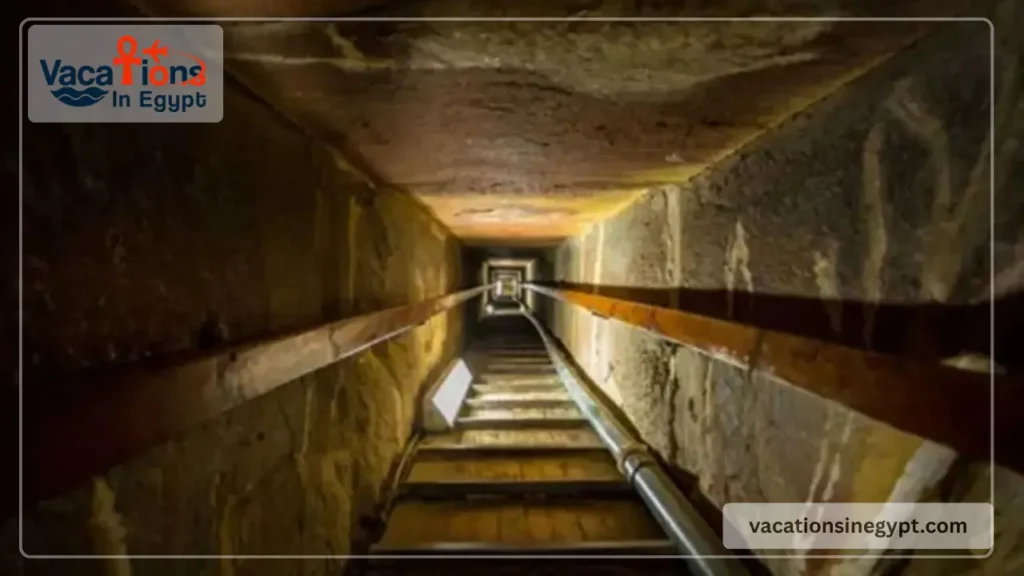
Unlike the solid stone exterior, the Pyramid of Cheops contains a fascinating network of internal passages, shafts, and chambers — each one raising new questions about the pharaoh’s beliefs and intentions.
The King’s Chamber
Located at the very heart of the pyramid, the King’s Chamber is a rectangular room built entirely from polished Aswan granite. It houses a large, lidless granite sarcophagus — the presumed original resting place of Pharaoh Khufu. Mysteriously, no mummy, treasure, or inscriptions were ever found inside. Whether the chamber was robbed in antiquity or Khufu was never actually buried here remains unknown.
The Queen’s Chamber
Situated below the King’s Chamber, the Queen’s Chamber (despite its name, almost certainly not built for a queen) is a smaller limestone room that may have served a religious purpose related to the pharaoh’s spiritual journey in the afterlife. Two narrow shafts extend from this chamber toward the pyramid’s exterior, their precise purpose still debated.
The Grand Gallery
Connecting the lower passages to the King’s Chamber, the Grand Gallery is one of the most architecturally impressive spaces in the pyramid — a soaring corbelled corridor nearly 9 meters high and 47 meters long. Its purpose may have been structural, ceremonial, or related to the original sealing of the King’s Chamber.
The Subterranean Chamber
Cut deep into the bedrock beneath the pyramid, this unfinished chamber may represent an abandoned original burial plan, a deliberate symbolic feature, or both. Its purpose remains one of the pyramid’s many unsolved puzzles.
The Mysteries of the Pyramid of Cheops
Even after centuries of study, the Pyramid of Cheops continues to yield new secrets.
The Precise Astronomical Alignment
The four sides of the Pyramid of Cheops are oriented almost perfectly to the four cardinal directions — north, south, east, and west — with an accuracy of less than 0.05 degrees. This level of precision required sophisticated astronomical observation, and researchers continue to debate exactly how it was achieved, with theories involving the stars, the sun, and careful use of shadow and shadow-casting tools.
The Hidden Void
In 2017, a team of scientists using muon tomography (a technique involving cosmic-ray particles) discovered a large, previously unknown void above the Grand Gallery within the pyramid. Measuring at least 30 meters long, this mysterious space has not yet been explored. Whether it is a structural feature, an undiscovered chamber, or something else entirely remains one of the most tantalizing open questions in Egyptology.
The Missing Capstone
Like most pyramids, the Pyramid of Cheops would originally have been topped with a pyramidion — a small capstone, likely gilded or sheathed in electrum, designed to catch the first light of the sun. This capstone has been missing for centuries. What happened to it, and whether it still exists somewhere, remains unknown.
The Pyramid of Cheops and Its Political Significance
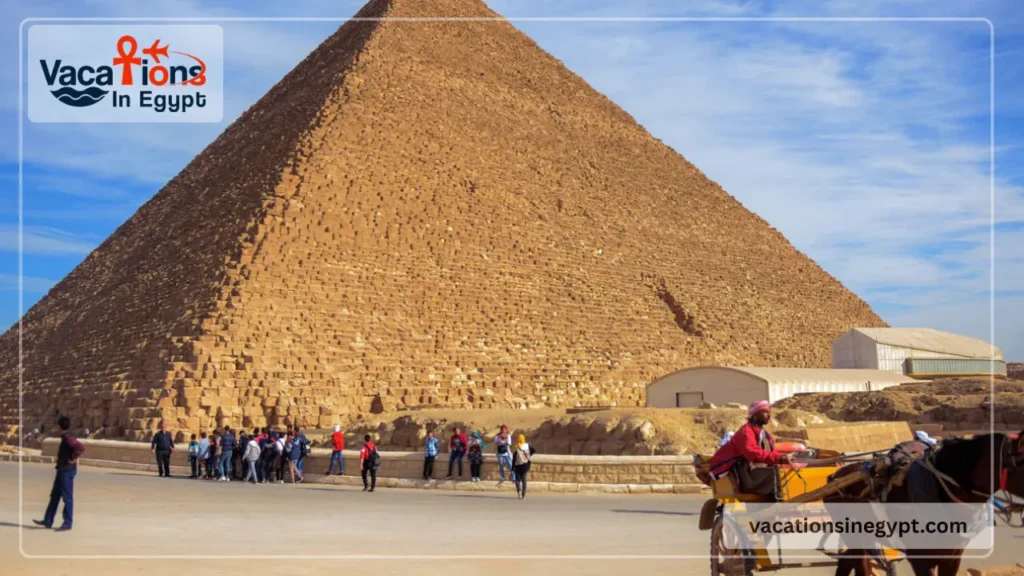
The pyramids of Giza are far more than tombs — they are powerful statements of political and economic supremacy. Organizing the labor, logistics, and resources required to build a structure of this magnitude demanded a functioning state apparatus of remarkable sophistication.
The Pyramid of Cheops, as the largest ever built in Egypt, represents the peak of the Fourth Dynasty’s wealth, organizational capacity, and royal authority. Its construction required not only thousands of workers, but a massive supporting infrastructure of bakeries, breweries, medical facilities, administrative offices, and supply chains. Archaeologists excavating the surrounding area have uncovered evidence of this sprawling support city, offering a vivid picture of ancient Egypt’s administrative genius.
The Giza Pyramid Complex: What Surrounds the Pyramid of Cheops?
The Pyramid of Cheops does not stand alone. It is the centerpiece of the Giza Necropolis, a vast funerary complex that includes:
- The Pyramid of Khafre — built by Khufu’s son, slightly smaller but appearing taller due to its elevated position; still retains some of its original white limestone casing at the apex
- The Pyramid of Menkaure — the smallest of the three main Giza pyramids, built by Khufu’s grandson
- The Great Sphinx — a colossal limestone statue with a lion’s body and a human head, believed to represent Pharaoh Khafre
- Satellite pyramids — smaller pyramids built for queens and royal family members
- Mortuary temples and causeways — processional routes and ritual spaces connecting the pyramids to the Nile
Together, these structures form one of the most complete and impressive ancient sacred landscapes anywhere on Earth.
Visiting the Pyramid of Cheops: Practical Guide
Location: Giza Plateau, approximately 13 kilometers southwest of central Cairo, Egypt
How to get there: Taxi, ride-hailing app (Uber or Careem), or organized tour from Cairo. The site is accessible from most central Cairo hotels in 20–40 minutes depending on traffic.
Entry: A general admission ticket grants access to the Giza Plateau and the exterior of all three main pyramids. A separate ticket is required to enter the interior of the Pyramid of Cheops, and a limited number of these interior tickets are sold daily — book in advance or arrive early.
Interior access: Visitors who enter the pyramid climb through narrow, steeply angled passages to reach the Grand Gallery and King’s Chamber. The passages are hot, low-ceilinged, and physically demanding. Those with claustrophobia or mobility issues may wish to skip the interior and focus on the exterior and surrounding complex.
Best time to visit: Early morning when the site opens — both to beat the heat and to experience the plateau before crowds arrive. October to April offers the most comfortable temperatures.
Giza Plateau Visitor Center: Located near the site entrance, the visitor center provides excellent context and exhibits on the history and construction of the pyramids before you explore.
Nearby sites to combine: The Egyptian Museum in Cairo, the Grand Egyptian Museum (GEM) in Giza, and the Solar Boat Museum adjacent to the Great Pyramid are all worth visiting alongside the Cheops Pyramid.
Frequently Asked Questions
How can I visit the Cheops Pyramid?
Are there any mysteries or hidden chambers inside the Pyramid of Cheops?
Can you go inside the Cheops Pyramid?
What are some interesting facts about the Pyramid of Cheops?
What is the purpose of the Cheops Pyramid?
What are the dimensions of the Pyramid of Cheops?
How was the Cheops Pyramid constructed?
What is the Cheops Pyramid?
- Medical Tourism in Egypt
- New Alamein City
- Mousa Mountain: Unwind in Nature’s Tranquility
- Nefertiti
- Giftun Island: A Portrayal of Lagoon in Egypt
- Oasis of Egypt: A Hidden Paradise in the Desert
- In Egypt, which holiday holds the utmost significance?
- Embrace the Magic of the Khafre Pyramid
- Egyptian Gods and Their Powers
- Discover the Delights of Egyptian food