Saqqara New Discovery
Why Saqqara Continues to Astonish the World?
Few places on Earth have yielded as many archaeological treasures as Saqqara. Egypt’s largest ancient burial ground continues to reveal its secrets year after year, with each new excavation uncovering tombs, artifacts, and mummies that rewrite our understanding of ancient Egyptian civilization. Whether you are a history enthusiast, a cultural traveler, or simply curious about the ancient world, Saqqara belongs at the top of your Egypt itinerary.
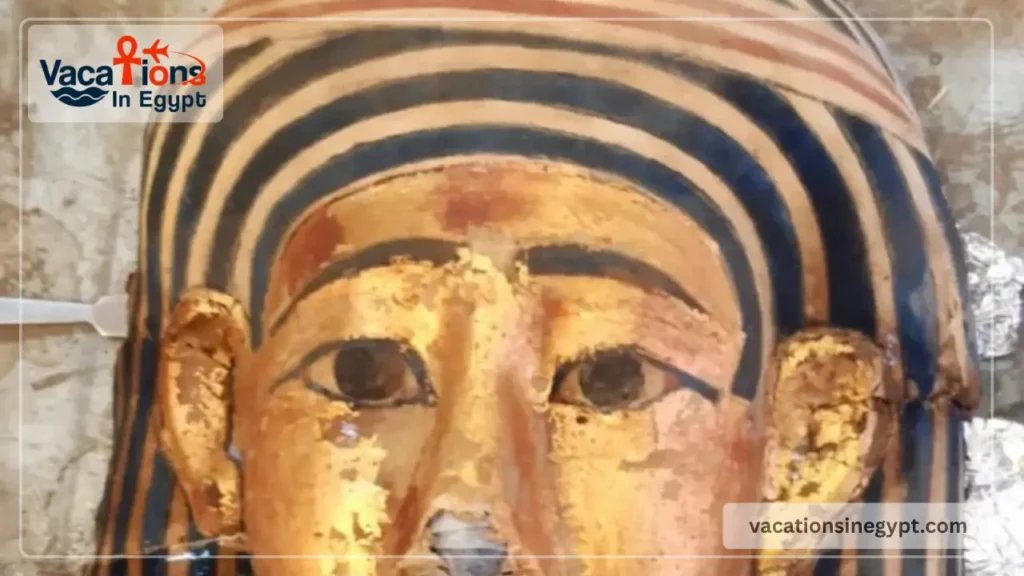
The 5 Newly Discovered Tombs at Saqqara
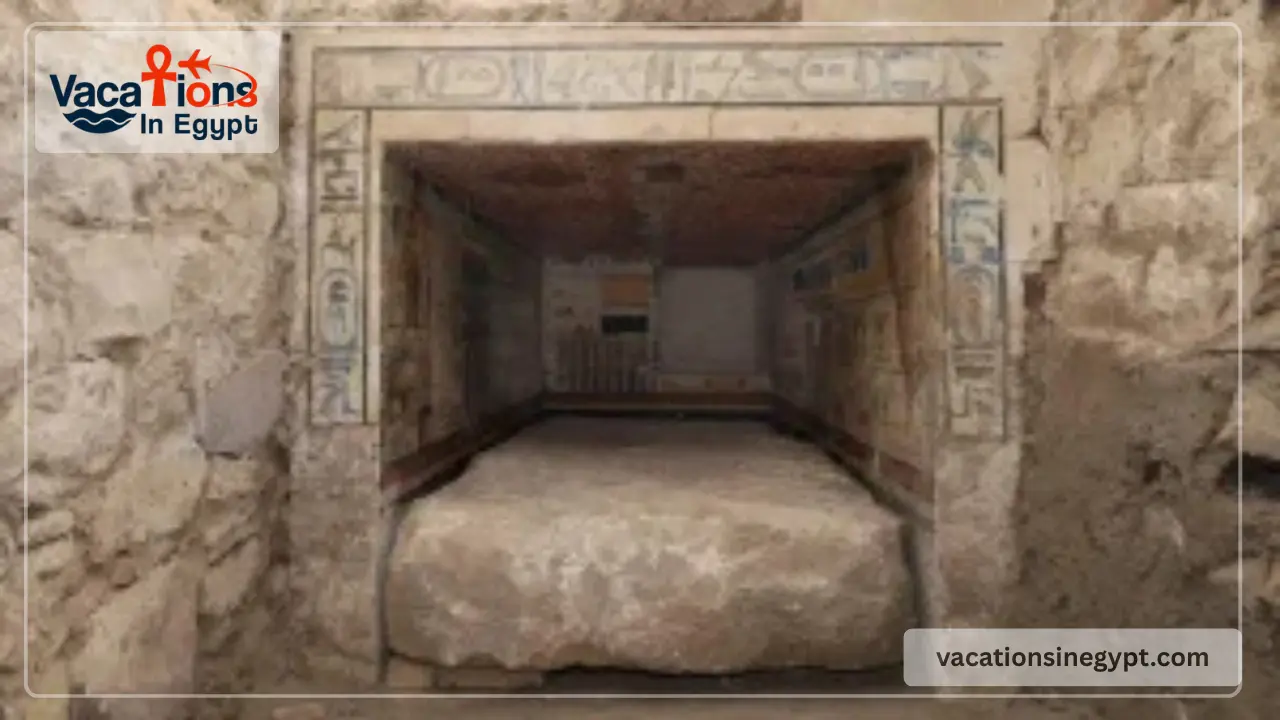
One of the most exciting recent breakthroughs at Saqqara was the unearthing of five remarkably well-preserved tombs near the Pyramid of King Teti. Led by Egyptian archaeological missions under the supervision of the Ministry of Antiquities and renowned Egyptologist Dr. Zahi Hawass, the excavations revealed tombs belonging to some of ancient Egypt’s most prominent figures:
- A senior statesman buried alongside his wife
- The priest “Penefer Hephai”
- A lady priestess of the goddess Hathor
- A supervisor of the royal palace
What makes these finds truly extraordinary is their condition. The tombs remained completely untouched for more than 4,400 years, preserving their contents, inscriptions, and decorations in exceptional detail. These discoveries have not only captured global attention but have also sparked further excavations in search of even more hidden secrets beneath Saqqara’s sands.
The Step Pyramid of Djoser: The World’s Oldest Pyramid
No visit to Saqqara is complete without standing before the Step Pyramid of Djoser — the oldest pyramid in history and a defining monument of ancient Egyptian architecture. Built during the reign of King Djoser of the Third Dynasty, this pioneering structure was humanity’s first attempt at large-scale pyramid construction and served as the blueprint for the iconic pyramids at Giza.
Surrounded by the vast necropolis of nobles and the ruins of Memphis, Egypt’s ancient capital, the Step Pyramid sits at the heart of what is arguably the most historically significant archaeological site on the planet.
Major Archaeological Discoveries at Saqqara
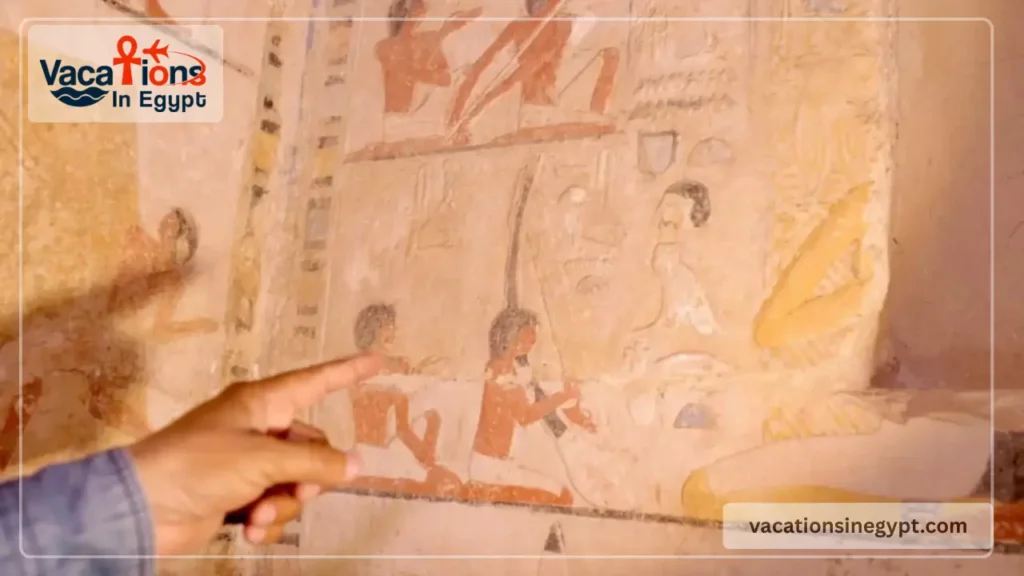
Rare Fifth Dynasty Priest’s Tomb
Egyptian excavation teams uncovered a rare tomb belonging to a priest from the Fifth Dynasty, carved directly into the rock. Alongside it, seven additional rock-cut tombs and a funerary façade from the Old Kingdom were found, further expanding our knowledge of burial practices from this era.
The Tomb of “Ni-Hes-Ba”
Among the most decorated of the recent finds, the Tomb of Ni-Hes-Ba is a rectangular mastaba whose entrance is richly carved with scenes depicting the tomb’s owner and his wife, accompanied by hieroglyphic inscriptions. The interior halls feature detailed drawings of daily life, hunting scenes, funerary rituals, and offerings. A large alabaster statue of the tomb owner seated and holding a lotus flower was discovered inside a carved niche — a breathtaking example of Old Kingdom artistry.
Also notable is the Minkhbar tomb, mostly carved from rock, featuring a limestone gate bearing the owner’s titles and a hall with depictions of both the owner and his wife.
Mummification Workshops Uncovered
One of the most groundbreaking finds at Saqqara was the discovery of the largest mummification workshops ever excavated in Egypt. The human mummification facility is a rectangular brick structure divided into several specialized rooms, each containing a dedicated mummification bed. Inside, archaeologists found pottery vessels used in the embalming process, large quantities of linen, and various ritual tools.
A separate animal mummification workshop was also found nearby — a rectangular, limestone-floored structure with multiple rooms and dedicated animal burial chambers. Evidence suggests this facility was specifically used to mummify the sacred animals of the goddess Bastet, offering rare insight into ancient Egyptian religious practices.
The Largest Cache of Bronze Statues
Excavations at the Bubastion area of Saqqara yielded the largest collection of bronze statues ever found at the site. Among the artifacts discovered were items linked to the god Horus, reflecting the deep religious significance Saqqara held for ancient Egyptians across multiple dynasties.
Wooden Coffins and Mummies
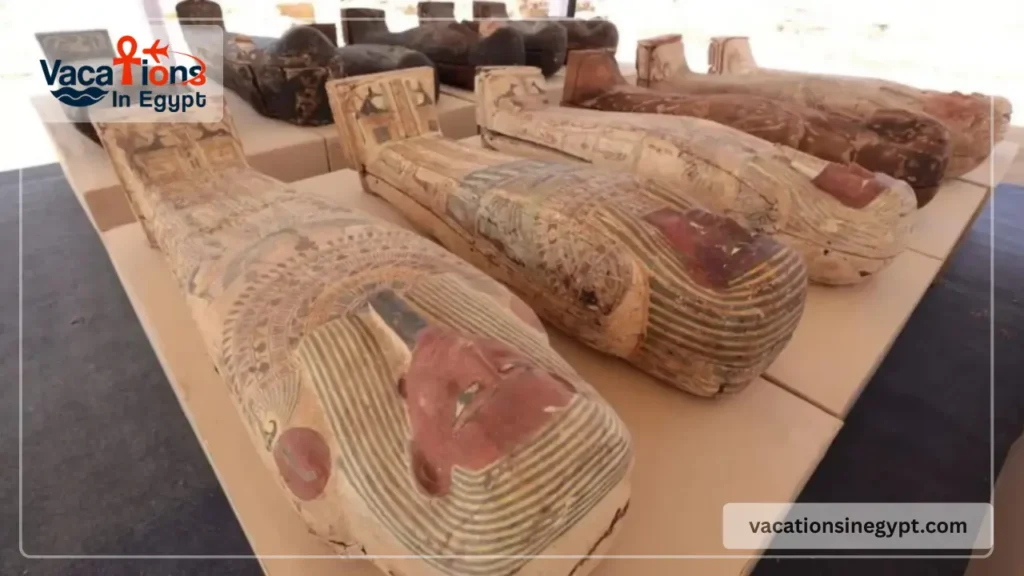
Archaeologists uncovered more than 250 intact wooden coffins still containing mummies — a find that sent shockwaves through the Egyptological community. Additional discoveries included wooden and stone statues from the Fifth Dynasty, offering tables, amulets, pottery, jewelry, seals, and bronze pieces, painting a vivid picture of ancient Egyptian funerary customs.
Why Saqqara Matters for Tourism in Egypt
The steady stream of discoveries at Saqqara has made it one of the most talked-about destinations in cultural tourism worldwide. Travelers with a passion for ancient history, archaeology, and Egyptian civilization are increasingly drawn to the site, where the legacy of the pharaohs feels tangible and immediate. Excavations at Saqqara are ongoing, meaning that every visit holds the possibility of witnessing history being made in real time.
What to Visit Near Saqqara
When planning your trip to Saqqara, consider pairing it with visits to other nearby monuments for a full immersion into ancient Egyptian history:
- Memphis — the ancient capital of Egypt, just minutes away
- Dahshur — home to the Bent Pyramid and the Red Pyramid
- The Pyramids of Giza — the most iconic structures in the world
- The Great Sphinx — guardian of the Giza Plateau
Together, these sites form one of the world’s greatest archaeological corridors and can comfortably be explored over one or two days.
Plan Your Visit to Saqqara
Saqqara is more than an archaeological site — it is a living window into one of humanity’s greatest civilizations. Walking among tombs that have stood untouched for over four millennia, surrounded by hieroglyphs, statues, and the remnants of ancient rituals, is an experience unlike any other.
Book a guided tour of Saqqara to make the most of your visit, gain deeper insight into the discoveries, and explore the site with expert commentary that brings Egypt’s ancient past to life.