How to choose the right Egypt tour company: what experienced travelers look for
The most common mistake travelers make when comparing Egypt tour companies is evaluating the wrong things. Price gets too much attention. The number of sites listed gets too much attention. What actually determines whether a trip is rewarding — the structure of the itinerary, the quality of the guides, the realism of the daily schedule — tends to get far too little.
Choosing the right Egypt tour company is less about finding the most impressive brochure and more about reading between the lines of how a company actually builds its trips. Here’s what that evaluation looks like in practice.
Start with the itinerary, not the price
The first thing a serious traveler should examine when comparing any Egypt tour company is not the headline price — it’s how the itinerary is constructed.
A well-built itinerary groups destinations logically by region, so the route makes geographical and historical sense rather than bouncing arbitrarily between cities. It avoids excessive overnight transfers that eat into rest and recovery. It allocates enough time at major sites for the experience to register properly, rather than scheduling 45-minute visits to places that deserve half a day. And crucially, it explains why specific locations are combined — what thread connects them — rather than simply listing attractions in sequence.
If an itinerary reads like a catalogue of highlights with no apparent logic connecting them, that tells you something important about how the company thinks. A great Egypt tour company designs journeys with intention, not just coverage.
Why itinerary length matters more than intensity
There is a widespread assumption that longer Egypt tours are inherently more demanding. In practice, the opposite is often true — when the length is used correctly.
A well-structured multi-day tour uses additional days to reduce pressure, not to add stops. It spreads major sites across dedicated days, builds in genuine rest where the schedule demands it, and treats travel time between regions as a planned element rather than something squeezed around sightseeing. An extended itinerary like a 12-day Egypt luxury tour works precisely because the pacing is realistic — accommodations, site visits, and travel time are sequenced to sustain energy across the full trip rather than front-loading intensity and hoping travelers survive the back half.
Length becomes an advantage only when it creates breathing room. When a longer tour simply adds more stops at the same compressed pace, it delivers more exhaustion rather than more experience. When evaluating any Egypt tour company, look at how many days are dedicated to major regions versus how many involve both significant travel and significant sightseeing simultaneously.
How to evaluate discounted Egypt tour deals

Promotional pricing from an Egypt tour company is not automatically a red flag — but it requires careful scrutiny before you book.
A reduced price is entirely reasonable when the value comes from planning efficiency: smarter routing that reduces internal flight costs, accommodations chosen for quality-to-location ratio rather than brand name, or itineraries timed to avoid peak-season surcharges. These are legitimate ways to offer strong value without compromising the experience.
The warning signs appear when discounts are achieved by shortening visits to major sites, substituting lower-quality transport or accommodation without disclosure, or designing a route that looks comprehensive on paper but involves impractical travel times between stops. Options like Egypt tour deals covering major highlights can deliver genuine value when the route still makes geographical sense, hotel and transport standards are clearly stated upfront, and no essential experience has been quietly removed to hit a price point.
The question to ask any Egypt tour company offering a promotional itinerary is simple: where did the saving come from? A confident, specific answer is reassuring. A vague one is not.
Does nationwide coverage make a tour better?
Not automatically — and this is one of the most important distinctions a traveler can make when comparing Egypt tour companies.
A tour that spans Egypt from Alexandria in the north to Abu Simbel in the south sounds impressively comprehensive. Whether it actually delivers a better experience depends entirely on how those regions are connected and how much time is lost to domestic travel between them. A tour that visits six regions in ten days but spends three of those days in transit is not a more thorough trip — it’s a more exhausting one.
The strongest multi-region tours are designed so that each destination builds on the one before it. The history accumulates. The traveler’s understanding deepens rather than fragmenting across too many disconnected stops. Itineraries that thoughtfully link the best attractions across Egypt work because the flow between regions is deliberate — each location has a clear purpose within the larger journey rather than being included simply to extend the list.
When evaluating any Egypt tour company’s nationwide itinerary, ask what historical or cultural thread connects the stops. If the answer is compelling, the coverage is likely genuine. If the answer is essentially “because these are Egypt’s famous sites,” the itinerary is probably built around marketing rather than experience design.
Private tours versus small-group tours: which is better?
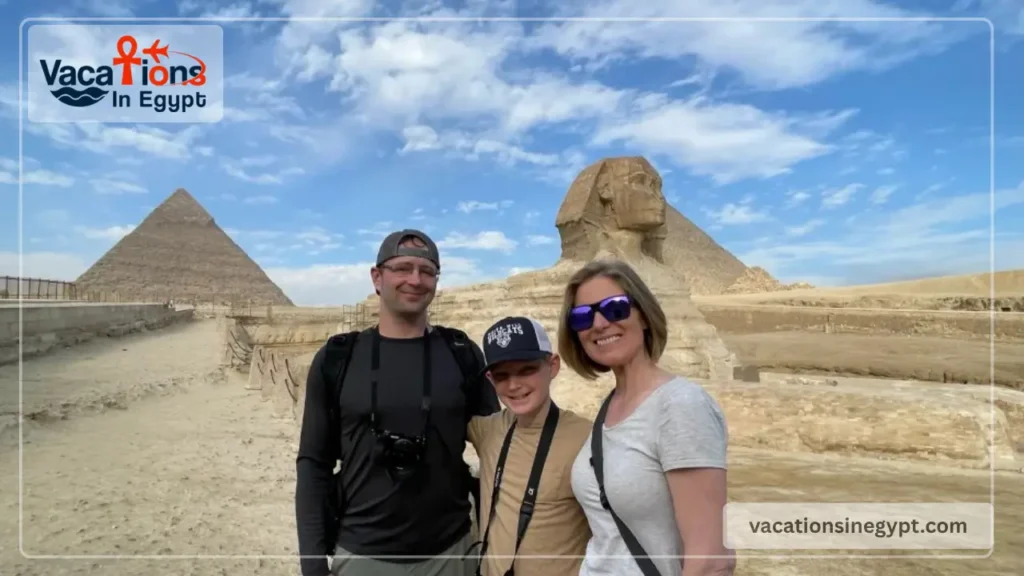
For most first-time visitors to Egypt, private tours offer a meaningfully better experience than small-group alternatives — and the difference is worth understanding before you commit to either format.
The core advantage of a private tour through a quality Egypt tour company is flexibility. Time at each site adjusts to your actual interest rather than the group’s average. If you want to spend an extra hour in a specific tomb at the Valley of the Kings, you can. If you’re finding a particular museum section less engaging than expected, you move on without negotiating with eight other travelers. The guide’s explanations respond to your questions rather than pitching at a group’s assumed knowledge level.
Small-group tours have their own merits — they tend to cost less, and the social dimension suits some travelers well. But the logistical friction that comes with coordinating a group — the waiting, the compromised scheduling, the pace set by the slowest or most demanding participant — is something first-time Egypt visitors consistently underestimate until they’re experiencing it.
The flexibility that private touring provides often makes the difference between a trip that feels rewarding and one that feels managed. It’s worth asking any Egypt tour company you’re evaluating whether their itineraries are private by default or whether “private” comes at a significant premium.
The guide question: what to ask every Egypt tour company
Guide quality is the single factor that most influences how much a traveler actually absorbs from an Egypt trip — and it’s the factor most commonly glossed over in tour company marketing.
The meaningful distinction is between a licensed Egyptologist and a general tour guide. A licensed Egyptologist holds a university degree in ancient history or archaeology and is certified by Egypt’s Ministry of Tourism. They don’t recite facts — they provide context, narrative, and the kind of historical framework that makes monuments genuinely meaningful rather than visually impressive but intellectually disconnected.
Before booking with any Egypt tour company, ask directly: are your guides licensed Egyptologists? What are their specific academic backgrounds? Can you tell me about the guide who would be assigned to my itinerary? A company that answers these questions with specificity and confidence is one that takes guide quality seriously. A company that responds with vague assurances about “experienced local guides” probably does not.
Five practical checks before booking with any Egypt tour company

These are the questions that cut through marketing language and reveal how a company actually operates:
How much driving or flying does the itinerary involve? The answer should be specific — actual transfer times between cities, not just a list of transport modes. Any Egypt tour company that can’t tell you how long the Cairo-to-Luxor transfer takes in their specific itinerary hasn’t thought carefully enough about the logistics.
What is flexible versus fixed? Can the daily schedule shift if you want more time somewhere? , Can hotels be upgraded? , Or Can the itinerary be adjusted for your specific interests? The degree of genuine flexibility is a reliable indicator of how traveler-focused the company actually is.
Are major sites compressed into single days? The Pyramids of Giza, Karnak Temple, the Valley of the Kings — these deserve dedicated days with unhurried time. Any itinerary that schedules two or more of Egypt’s major sites in a single day is almost certainly sacrificing depth for the appearance of coverage.
What is included in the price, explicitly? Entrance fees, domestic flights, guide fees, and hotel taxes should be listed clearly. An Egypt tour company that provides a detailed, itemized inclusion list is one that respects your ability to evaluate what you’re buying. One that offers a vague “most things included” answer is not.
What happens when something goes wrong? A site unexpectedly closes. A flight is delayed. A traveler becomes unwell. The quality of an Egypt tour company’s contingency planning — and the availability of its local support — shows most clearly in how it answers this question.
The bottom line
The right Egypt tour company is not the one with the longest site list. Also, the lowest price, or the most impressive collection of stock photography. It’s the one that builds its itineraries with genuine intelligence: — around pacing, historical coherence, guide quality, and the realistic demands of traveling in Egypt.
Read itineraries for structure, not just attractions. Ask hard questions about logistics and flexibility. Verify guide credentials. Examine what discounted pricing actually removed. And trust companies that answer your questions with specificity rather than reassurance.
That’s what separates an Egypt tour company worth booking. From one that simply looks good until you’re already on the ground.