Elephantine Island
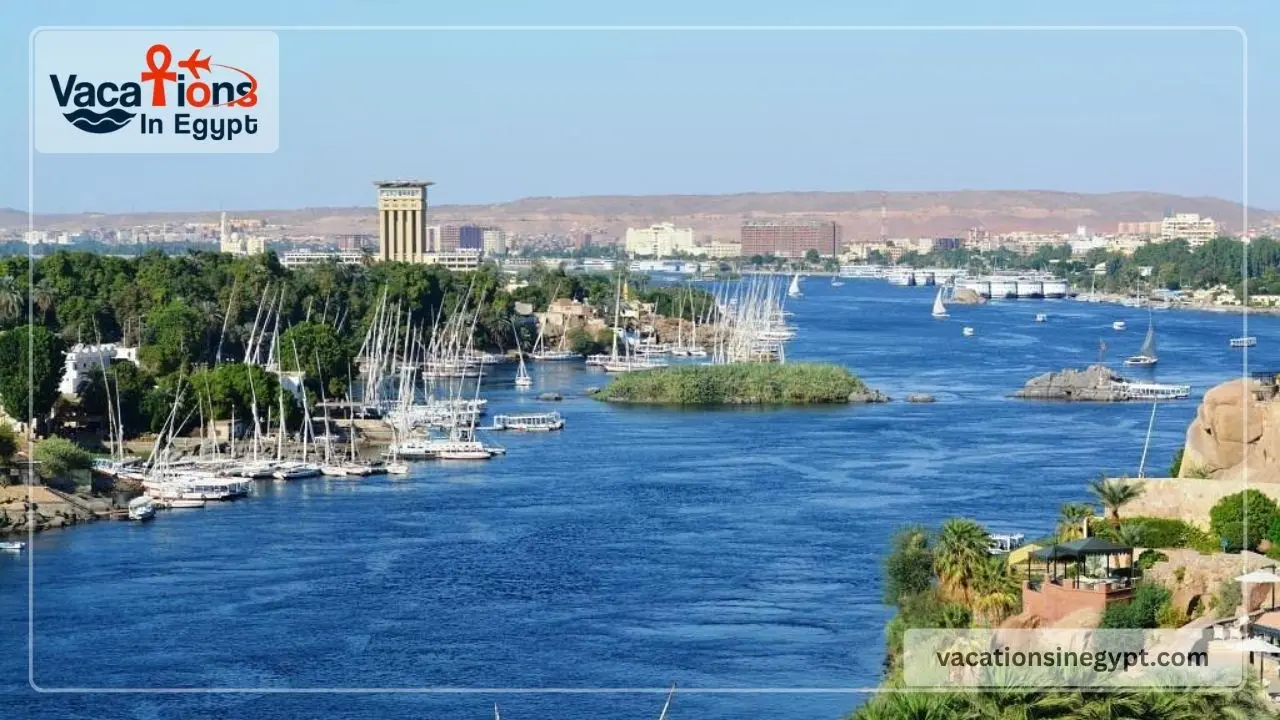
Elephantine Island is an archaeological gem located in the city of Aswan, Southern Egypt. Nowhere else in Egypt is the history of ancient settlement and temple development better documented than on this picturesque rock-island.
Located just below the First Cataract of the Nile, the island stretches approximately 1,200 meters long and 400 meters wide. For thousands of years, it served as a border fortress and a major trading hub. Today, it offers a peaceful escape from the bustling city and a deep dive into Pharaonic history.
Why is it Called “Elephantine”?
The Ancient Egyptians called the island “Abu” (Elephant). It likely received this name for two reasons:
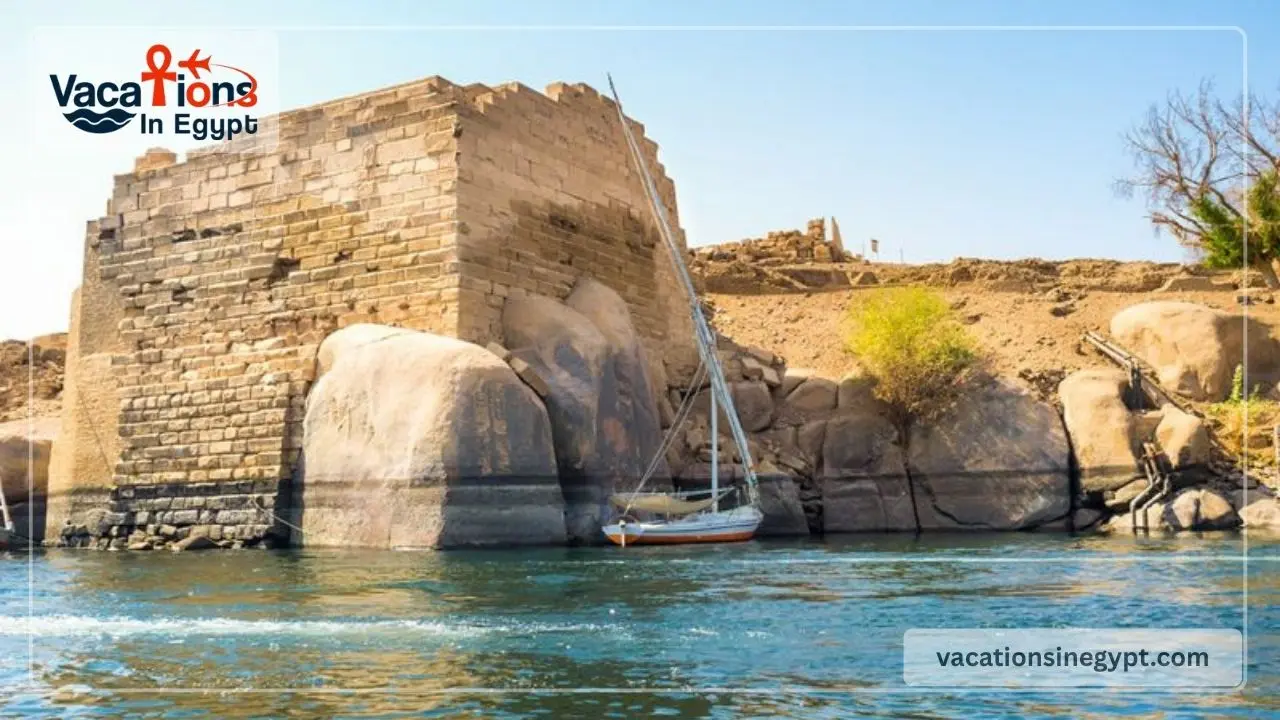
The Landscape: The striking gray granite rock formations on the shores resemble a group of bathing elephants.
Ivory Trade: The island was a major trading center for ivory (elephant tusks) coming from the south.
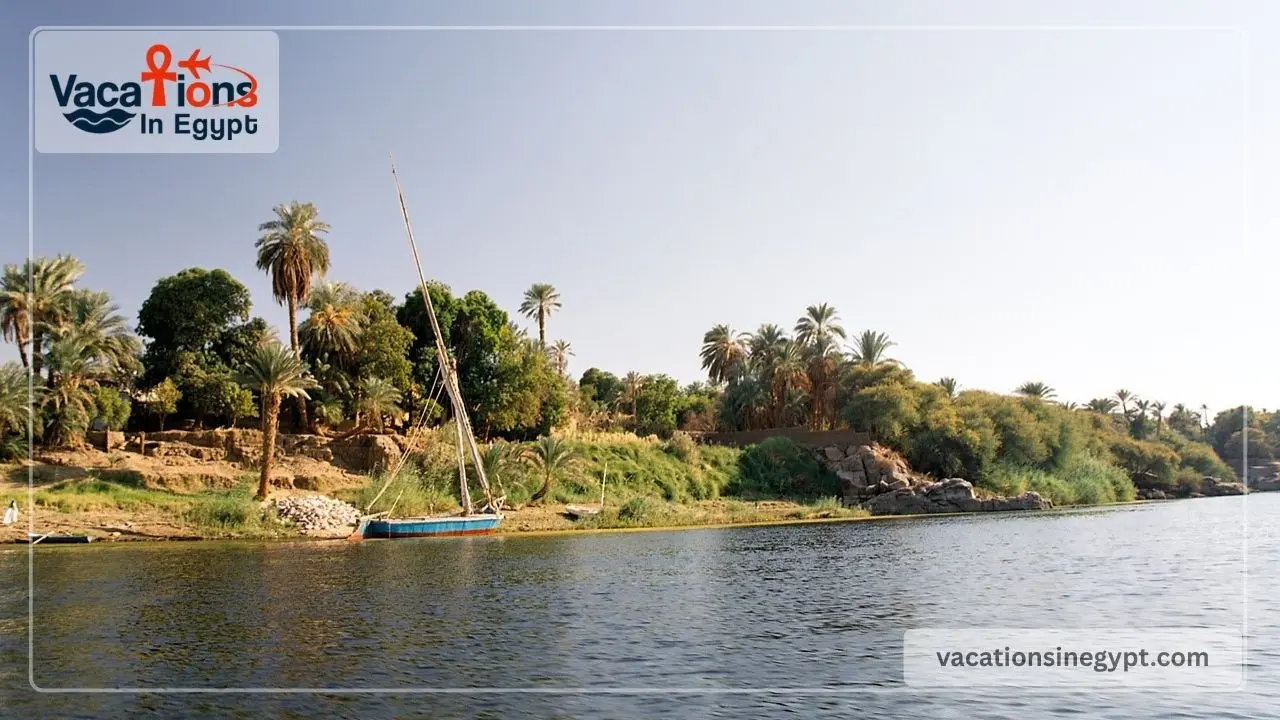
Elephantine Island at Ancient Times
The Egyptians called the island elephant camp It probably got this name because of the striking rock formations that the Nile had formed on the shores of the island, which from some distance look like groups of elephants.
With the busy island came the worship of local gods. The first temple in the early period was dedicated to the Satis goddess which was extended much later by queen Hatshepsut (about 1478 – 1457 B.C.). Also, other well-known pharaohs built and extended temples on Elephantine, such as Thutmosis III or Amenhotep III.
Many of the temples were completely destroyed in the long history until today. Nevertheless, Elephantine is an interesting destination for Nile travelers, because here, as in Aswan, the red-grey rose granite was extracted, which was reserved for the buildings of the pharaohs and can be found for example in obelisks, statues and offering tables all over Egypt.
The archaeologist site in Elephantine Island
Under the guidance of the royal architects, the stonemasons chose the most homogeneous rocky bench on the site. They began to groom its surface to make it perfectly smooth. Then they dug trenches all around the rock. This area was to be the thickness of the obelisk. As they began to cut the lower part of the obelisk, they suddenly heard a thud and tearing noise. A sound they knew too well. They all rushed to the surface of the monument. Their worries were then confirmed. A large crack had appeared on the surface of the forming obelisk. The stone had cracked under the blows of hammers.
And in an instant, all the hard work of the workers was shattered.
Informed of the tragedy, Hatshepsut saw a sign from the gods. His nephew and successor, Thutmose III, was to be the builder of the Karnak obelisks, a work he accomplished several years later.
The queen project was therefore abandoned and the obelisk remains unfinished to this day.
Top Things to See on Elephantine Island
The Aswan Museum
Located in a colonial-era villa, this museum houses artifacts discovered specifically on the island and in the Nubian region. It offers a perfect overview of the island’s 4,000-year history.
The Nilometer
One of the most fascinating features of Elephantine is the Nilometer. Dating back to the Roman period (and possibly built on older foundations), these stone stairs descending into the river were used to measure the water level of the Nile. This measurement determined the taxes for the coming harvest season—a high flood meant good crops and higher taxes.
The Temple of Khnum Ruins
Walk through the remains of the ancient town and see the granite gateways and pillars that once formed the magnificent temple dedicated to the creator god who fashioned humans from Nile clay.
Visitor Tips for Elephantine Island
How to get there: You can take a public ferry from the Aswan corniche (near the Egypt Telecom building) or hire a private felucca.
Best time to visit: Late afternoon is ideal to watch the sunset over the Nile from the rocky shores.
Nubian Villages: The island is also home to two colorful Nubian villages, Siou and Koti, where you can experience local culture and hospitality.