
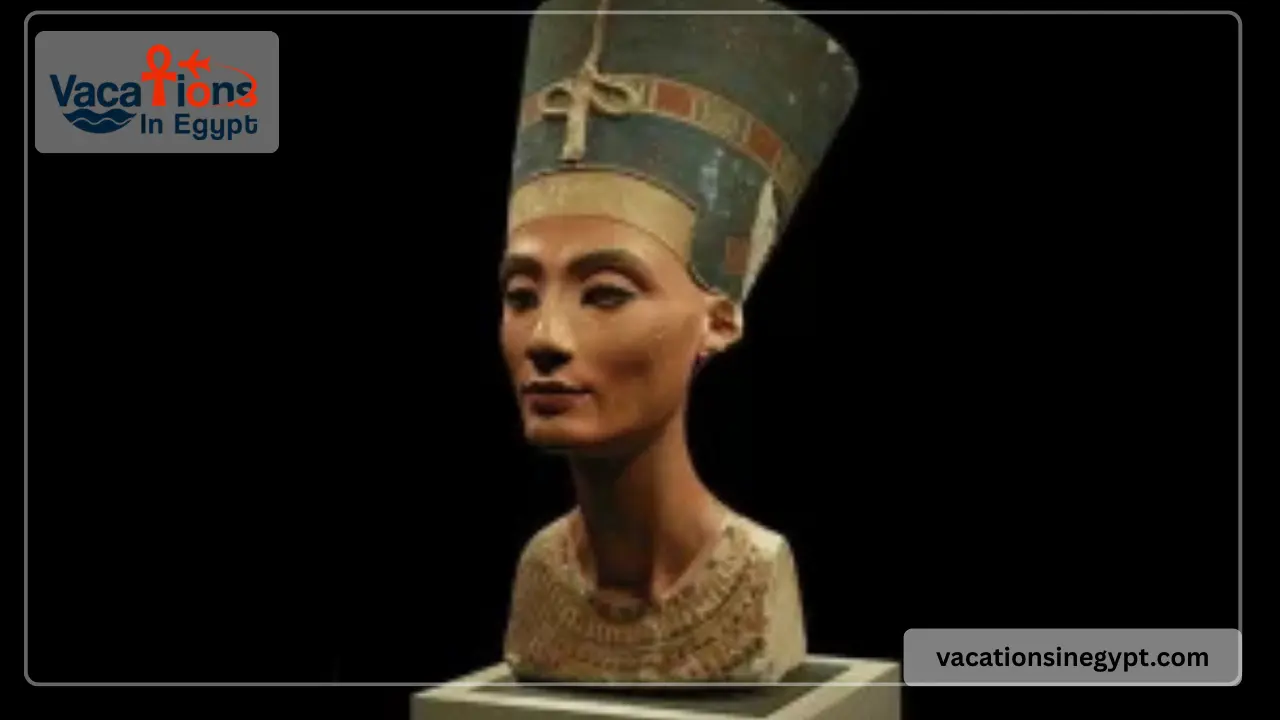
Queen Nefertiti
Queen Nefertiti remains one of the most iconic and captivating figures of Ancient Egyptian history. Celebrated for her extraordinary beauty, political influence, and mysterious legacy, she rose to prominence during the Eighteenth Dynasty as the Great Royal Wife of Pharaoh Akhenaten. Nefertiti played a central role in the revolutionary Amarna Period, a time of dramatic religious and cultural transformation in Egypt. Even thousands of years later, her famous bust, her powerful presence in royal art, and the unanswered questions surrounding her life and burial continue to fascinate historians and travelers alike.
Who Was Queen Nefertiti?
Queen Nefertiti (c. 1370 BC – c. 1331 BC) was one of the most famous and influential queens of Ancient Egypt. She lived during the Eighteenth Dynasty and became the first Great Royal Wife of Pharaoh Akhenaten.
Nefertiti played a central role during the remarkable and controversial period known as the Amarna Age, when Egypt experienced dramatic religious, cultural, and artistic changes.
Queen Nefertiti’s Family Background
Queen Nefertiti was likely born in Thebes, placing her within the era of the New Kingdom (c. 1500 BC – 1070 BC).
Her father is widely believed to have been Ay, a powerful court official who later became pharaoh after the death of Tutankhamun.
Ay’s wife, Tey, may have been Nefertiti’s stepmother, as she did not carry the title “Royal Mother of the Great Royal Wife.”
Nefertiti also had a half-sister named Mutnedymet.
Queen Nefertiti and the Amarna Period
Nefertiti rose to prominence during the reign of Akhenaten, a pharaoh who introduced major reforms that transformed Egyptian society.
This era, known as the Amarna Period (c. 1353–1336 BC), was marked by:
- Religious revolution centered on the worship of Aten
- Artistic innovations
- Political and cultural upheaval
Egyptologists continue to debate Nefertiti’s role in these reforms.
Some believe she was strongly influenced by her husband, while others argue she was an active leader in the movement. What is clear is that Nefertiti consistently appeared beside Akhenaten, supporting his decisions and sharing his vision.
The Famous Bust of Queen Nefertiti
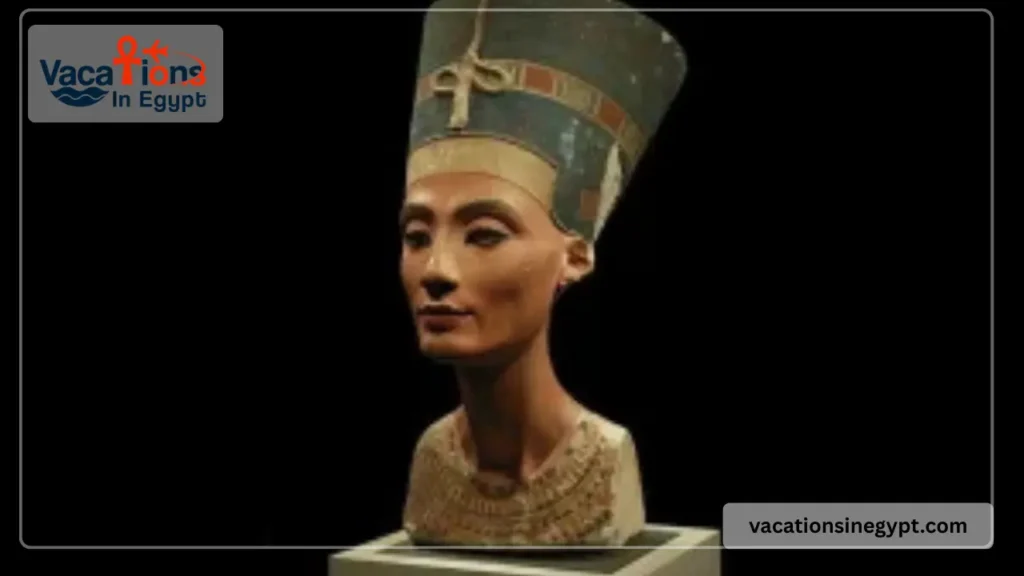
The most iconic representation of Queen Nefertiti is her stunning painted limestone bust, considered one of the greatest masterpieces of Ancient Egyptian art.
Discovery of the Bust
In 1912, German archaeologists led by Professor Ludwig Borchardt discovered the bust in the workshop of the sculptor Thutmose at Amarna.
Today, it remains one of the most recognized symbols of Egyptian beauty and royal power.
Why Is Queen Nefertiti’s Eye Missing?
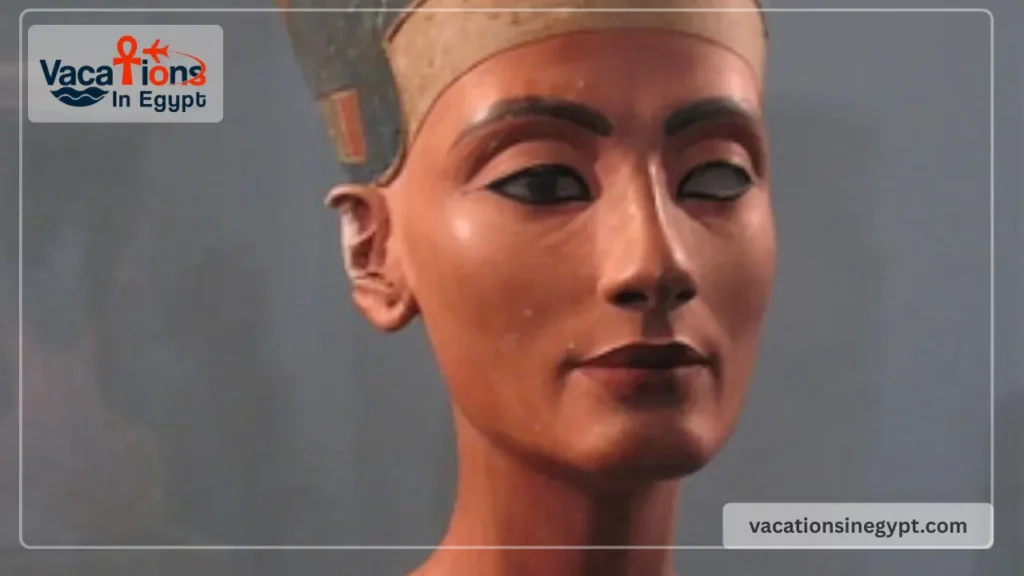
One of the most intriguing mysteries surrounding the bust is the missing left eye.
Archaeologists have proposed several theories:
- The eye may have fallen out after burial, but it was never found.
- Some suggested Nefertiti may have lost an eye in life, but other depictions show her with both eyes.
- Researchers later noticed the socket was smooth, with no trace of glue or wax, suggesting the eye was never inserted.
- Another theory proposes the bust was used as a teaching model for apprentices learning how to place quartz eyes.
The true reason remains unknown.
The Mystery of Nefertiti’s Mummy

The location of Queen Nefertiti’s mummy remains one of Ancient Egypt’s greatest unsolved mysteries.
Several unidentified female mummies have been discovered in royal tombs, but none have been definitively confirmed as Nefertiti.
Some tombs were later reused as burial sites for other mummies, making identification extremely difficult.
The Wedding of Nefertiti and Akhenaten
There is no exact recorded date for Nefertiti’s marriage to Akhenaten, but historians believe it occurred when Akhenaten became co-regent with his father, Amenhotep III.
Together, Nefertiti and Akhenaten had six daughters, including:
- Meritaten
- Meketaten
- Ankhesenpaaten (later wife of Tutankhamun)
The Queen Who Defied Tradition
Although she was not officially a ruling pharaoh, Queen Nefertiti became one of the most powerful women in Egyptian history.
She was portrayed in temple reliefs with unusual prominence, sometimes performing roles traditionally reserved for kings.
Historians believe she was a key supporter of Akhenaten’s religious movement, representing the feminine divine force while Akhenaten embodied the masculine, together forming a symbolic bridge between Aten and the Egyptian people.
Discover the Legacy of Queen Nefertiti in Egypt
Queen Nefertiti’s story continues to fascinate visitors from around the world. Her art, influence, and mysteries remain deeply woven into Egypt’s ancient heritage.
Discover the wonders of Ancient Egypt with our vacations in Egypt tour packages, and explore the temples, tombs, and monuments that reveal the secrets of the Amarna Age.