King Menkaure
King Menkaure was the fifth ruler of the Fourth Dynasty during Egypt’s Old Kingdom, one of the most powerful and influential periods in ancient Egyptian history. He ascended the throne after the death of his father, Pharaoh Khafre, and ruled during a time marked by monumental architecture and strong religious traditions.
Known in ancient Egyptian as Menkaure, he is remembered as a just, kind, and deeply religious ruler—qualities that distinguished him from his father Khafre and his grandfather Khufu. Today, King Menkaure is best known for constructing his pyramid at the Giza Necropolis, famously called the Pyramid of Menkaure.
King Menkaure’s Place in the Fourth Dynasty
King Menkaure was an Egyptian ruler of the Fourth Dynasty, which is renowned for building the three great pyramids of Giza. This dynasty represented the height of royal power, wealth, and architectural achievement in the Old Kingdom.
Unlike some of his predecessors, Menkaure was celebrated in later traditions for his compassion toward his people and his strong devotion to the gods.
Menkaure’s Family History
King Menkaure was born into Egypt’s most powerful royal family:
- Father: Pharaoh Khafre
- Grandfather: Pharaoh Khufu
- Mother: Queen Khamernabti I
Menkaure had two wives:
- Queen Khamernabti II, his sister
- Queen Rekhe-Ra, his half-sister
He fathered three sons and two daughters. One of his daughters died at a young age during his lifetime. After the death of Menkaure’s eldest son, his second son, Shepseskaf, succeeded him as king.
The Pyramid of King Menkaure
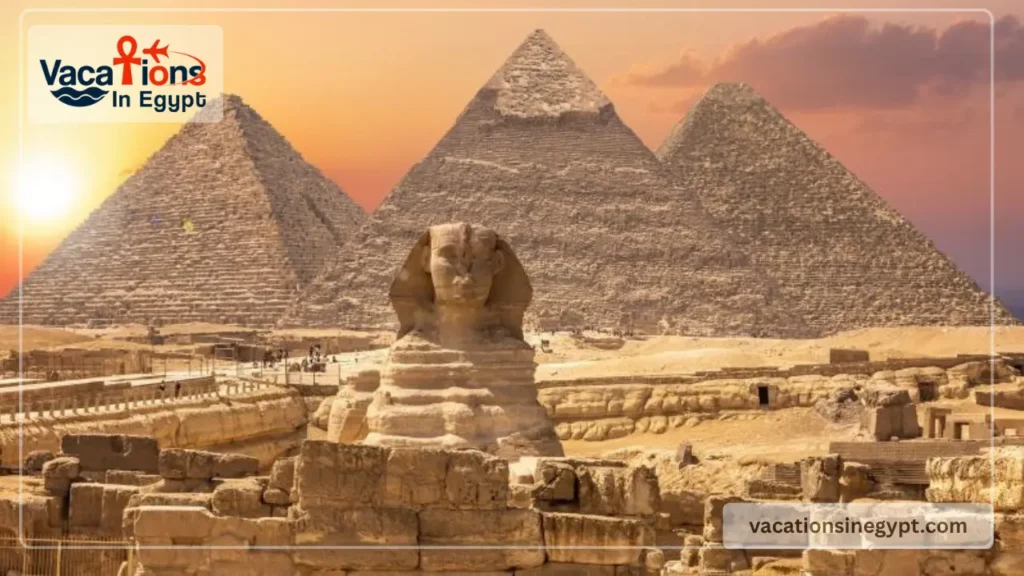
The Pyramid of Menkaure, also known as Menkaure Is Divine, is the smallest of the three main pyramids on the Giza Plateau, yet it is considered one of the most refined in design.
Key Features of the Pyramid:
- Height: approximately 65.5 meters
- Core structure built of limestone
- Lower casing stones made of red granite
- Construction was left incomplete due to Menkaure’s death
- A large basalt sarcophagus decorated with hieroglyphic inscriptions was discovered inside
Three smaller pyramids stand nearby and were used as tombs for his queens, including Queen Khamernabti II.
The Valley Temple of Menkaure
The Valley Temple associated with Menkaure’s pyramid is one of the most important artistic sites of the Old Kingdom. It contained numerous statues of the king, his wives, and Egyptian deities.
Many of these masterpieces demonstrate exceptional craftsmanship and provide insight into royal ideology, divine kingship, and religious beliefs of the time.
The Menkaure Triads in the Museum
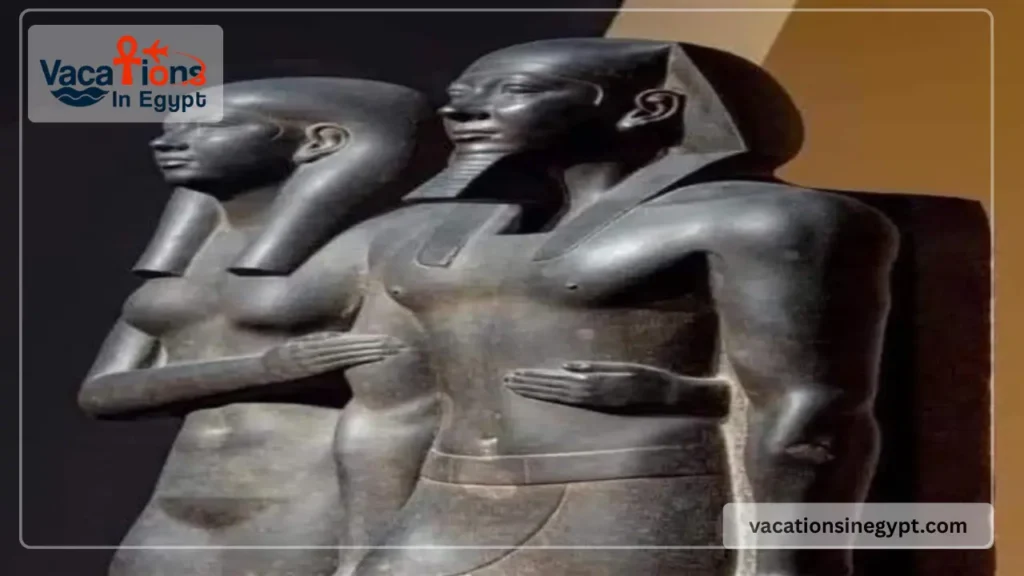
One of the most famous artistic legacies of King Menkaure is the Menkaure Triads, also known as triptych statues.
Key Facts About the Menkaure Triads:
- Discovered in 1908 in the Valley Temple at Giza
- Several are displayed in the Egyptian Museum in Cairo
- Depict King Menkaure standing between the goddess Hathor and a local nome goddess
- Menkaure is shown wearing the White Crown, royal beard, and a short kilt (nedet)
These statues emphasize idealized physical strength, divine authority, and harmony between the king and the gods.
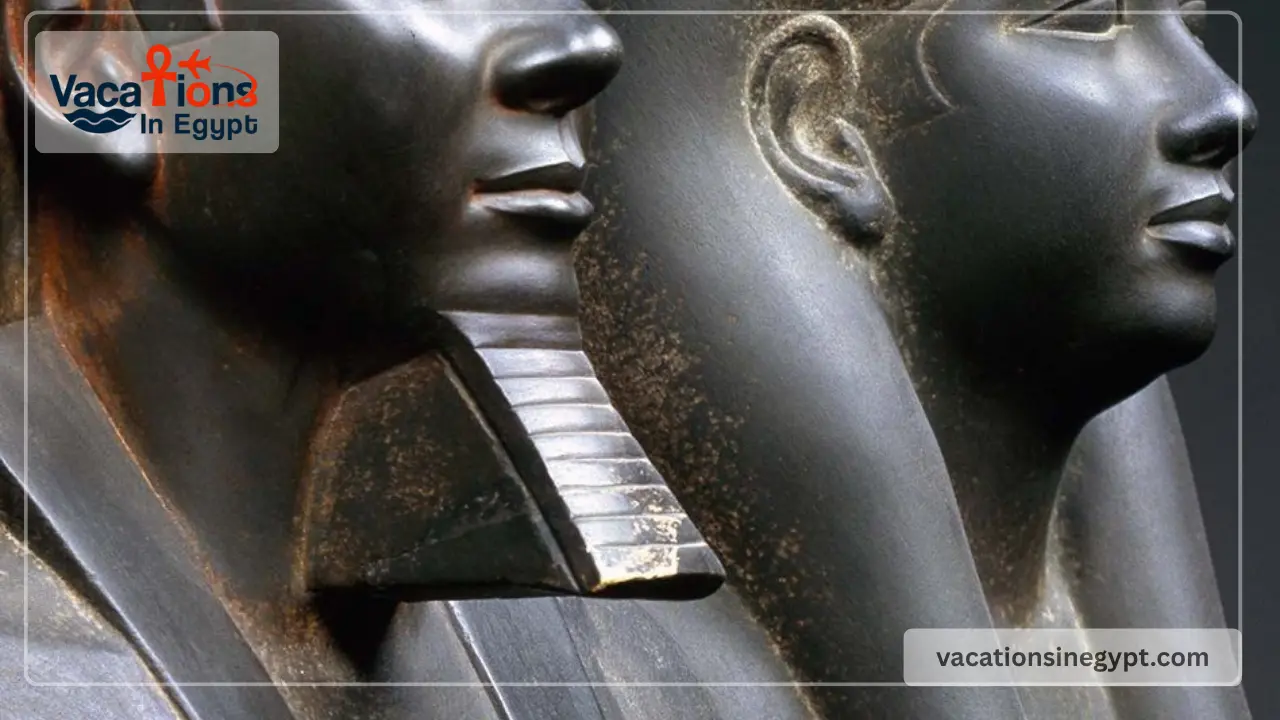
King Menkaure and Queen Statue
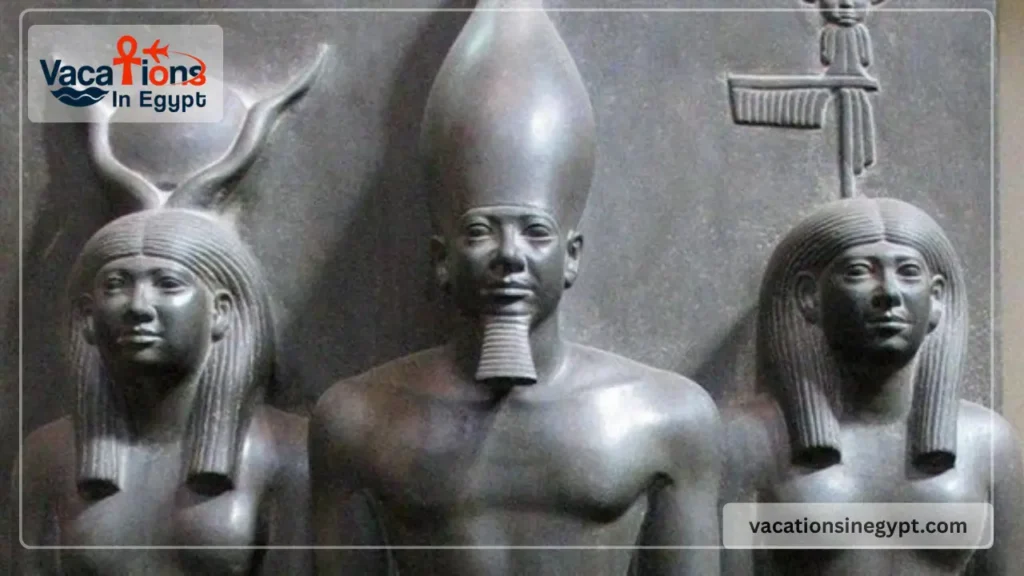
Statues of King Menkaure and his queen are considered masterpieces of ancient Egyptian art. They convey calm dignity, royal power, and timeless elegance.
The figures demonstrate:
- Idealized proportions
- Refined facial features
- Detailed musculature of the chest, arms, legs, and feet
These sculptures reflect the Old Kingdom’s artistic goal of eternal perfection and divine kingship.
King Menkaure and the Pyramids of Giza
The three main pyramids at Giza were constructed during the Old Kingdom and served as both burial places and centers of royal worship:
- Great Pyramid of Khufu – the largest
- Pyramid of Khafre – the middle
- Pyramid of Menkaure – the smallest and youngest
Together, they symbolize the power, religious devotion, and architectural brilliance of ancient Egypt.
Legacy of King Menkaure
King Menkaure remains one of the most respected rulers of the Fourth Dynasty. His reign is remembered for its emphasis on justice, piety, and artistic excellence. Through his pyramid, statues, and temple remains, Menkaure’s legacy continues to offer invaluable insight into the beliefs and achievements of ancient Egypt.