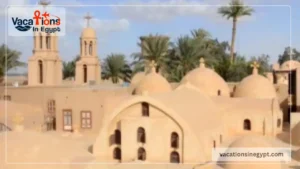

National Museum of Alexandria
Inaugurated in 2003, the National Museum of Alexandria is one of the city’s finest cultural gems. It is not just a repository of artifacts; it is a journey through the layers of history that define this coastal metropolis.
Located on the historic Tariq Al-Horreya Street (formerly Rue Fouad), the museum is housed in a stunning restored Italian-style palace. This building, which once served as a meeting place for the upper class and later housed the U.S. Consulate, now stands as one of the best sites to understand the antiquity of Alexandria and Egypt as a whole.
Inside the Museum: 1,800 Treasures
The National Museum of Alexandria has gained immense importance over the years. It houses around 1,800 objects that narrate the story of the city across four major eras:
- Pharaonic Era: Ancient statues and relics from Egypt’s dynastic past.
- Greco-Roman Era: Artifacts reflecting Alexandria’s golden age under the Ptolemies and Romans.
- Coptic Era: Religious icons, textiles, and daily life objects.
- Islamic Era: Intricate art, ceramics, and weaponry.
There is also a fascinating collection dedicated to the modern history of Egypt, specifically the 19th century and the royal family.
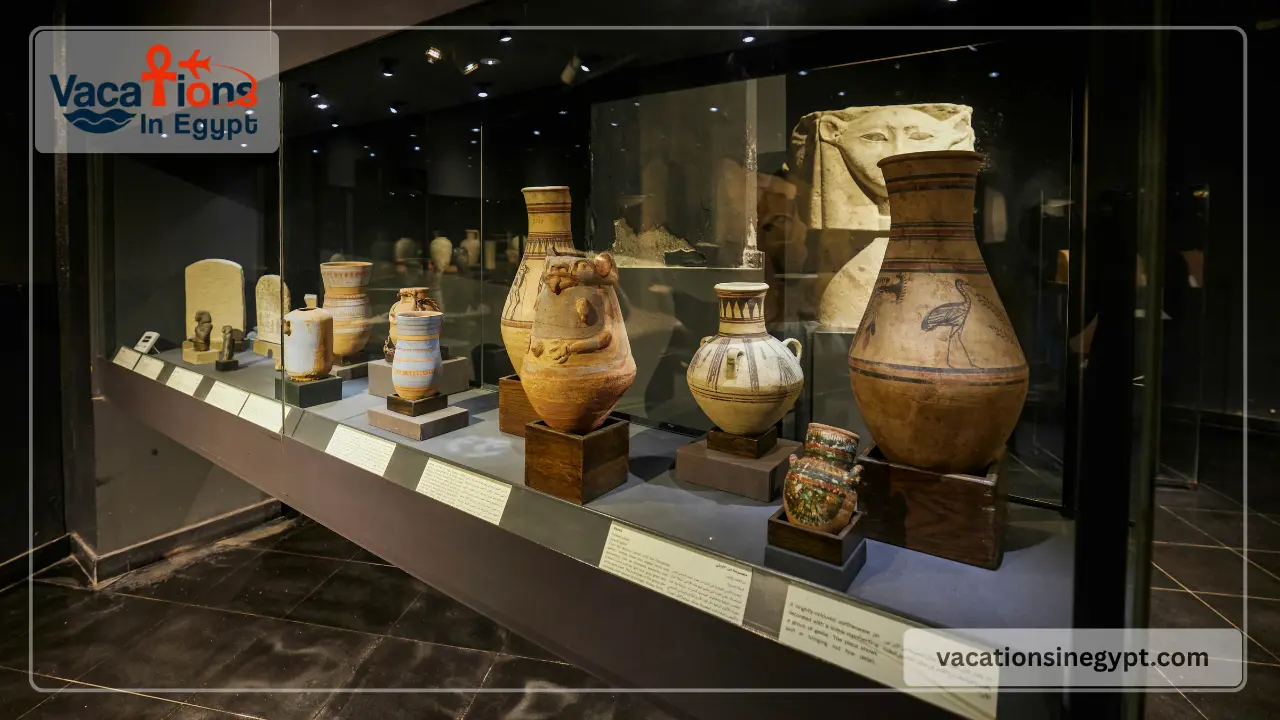
Highlights of the Collection
The museum is laid out across three floors, making it easy to navigate through time:
- Coptic & Islamic Floor: This section is particularly rich. You can see icons of Jesus, the Virgin Mary, and the Last Supper, alongside textiles decorated with gold and silver crosses. The Islamic collection features incense burners, doors inlaid with ivory, exquisite candlesticks, decorated ceramics, and jewelry including rings and crystal glasses.
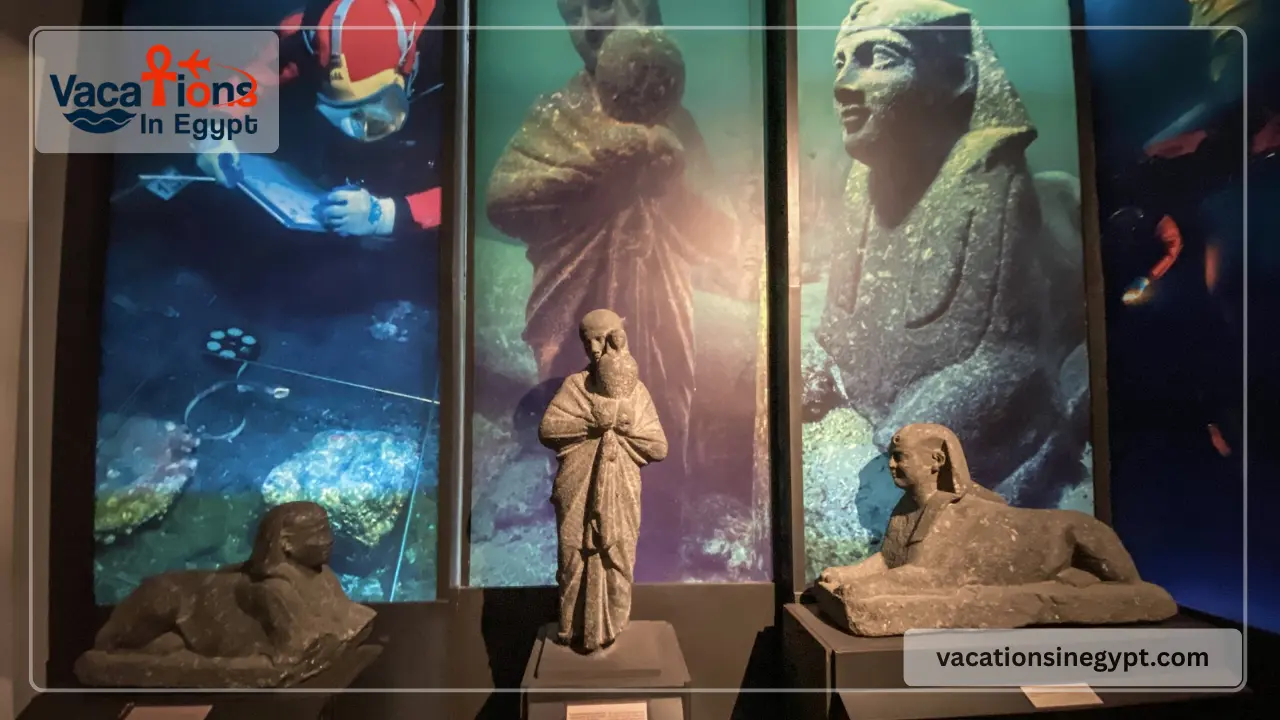
- Underwater Discoveries: The museum houses statues and artifacts recovered from the sunken palace of Cleopatra, discovered just 6 meters underwater near the Bibliotheca Alexandrina.
- Tanagra Statues: Don’t miss the valuable Tanagra figurines, which offer a glimpse into the fashion and clothing styles of women during the time of Cleopatra.
Modern Facilities & Restoration
What makes this museum remarkable is its blend of history and modern technology.
- Audiovisual Room: Located in the basement, this room allows visitors to browse the museum’s contents digitally and view pieces from all angles via computer screens.
- Open-Air Theatre: The palace’s former garage has been creatively adapted into a conference room and an open-air theatre with a capacity of 800 people, often used for cultural events.
Nearby Attractions to Combine With Your Visit
1. The Roman Amphitheater (Kom el-Dikka)
Just a short distance away lies the Roman Amphitheater of Kom el-Dikka. This site features 12 marble terraces arranged in a semi-circle. In the gardens surrounding the theater, you can discover the remains of a Roman Villa built by a nobleman in the 2nd century AD. Excavations here have revealed a dining room, a living room, and a children’s room, all decorated with magnificent mosaics depicting birds.
2. Mustafa Kamel Cemetery
For archaeology enthusiasts, the Mustafa Kamel Cemetery is a worthy stop nearby. It contains four tombs dating back to the 2nd century BC, all in excellent condition.
- Fun Fact: The area is named after Mustafa Kamel, one of Egypt’s greatest 20th-century political figures, famous for the quote: “If I had not been born an Egyptian, I would have liked to be an Egyptian.”
Why You Should Visit
If you are a fan of art and ancient civilizations, the National Museum of Alexandria is a mandatory stop. It offers a quieter, more curated experience than the massive Cairo Museum. It is advisable to take your time touring each room to fully appreciate the transition from the ancient Pharaonic gods to the Coptic crosses and Islamic geometric patterns.
Discover Alexandria—the city that was once the cultural capital of the world, the dramatic setting for Cleopatra and Mark Antony, and today, a guardian of human history.