Egyptian Scarab Beetle
Egyptian Scarab Beetle: Symbolism, Meaning, and Religious Significance in Ancient Egypt
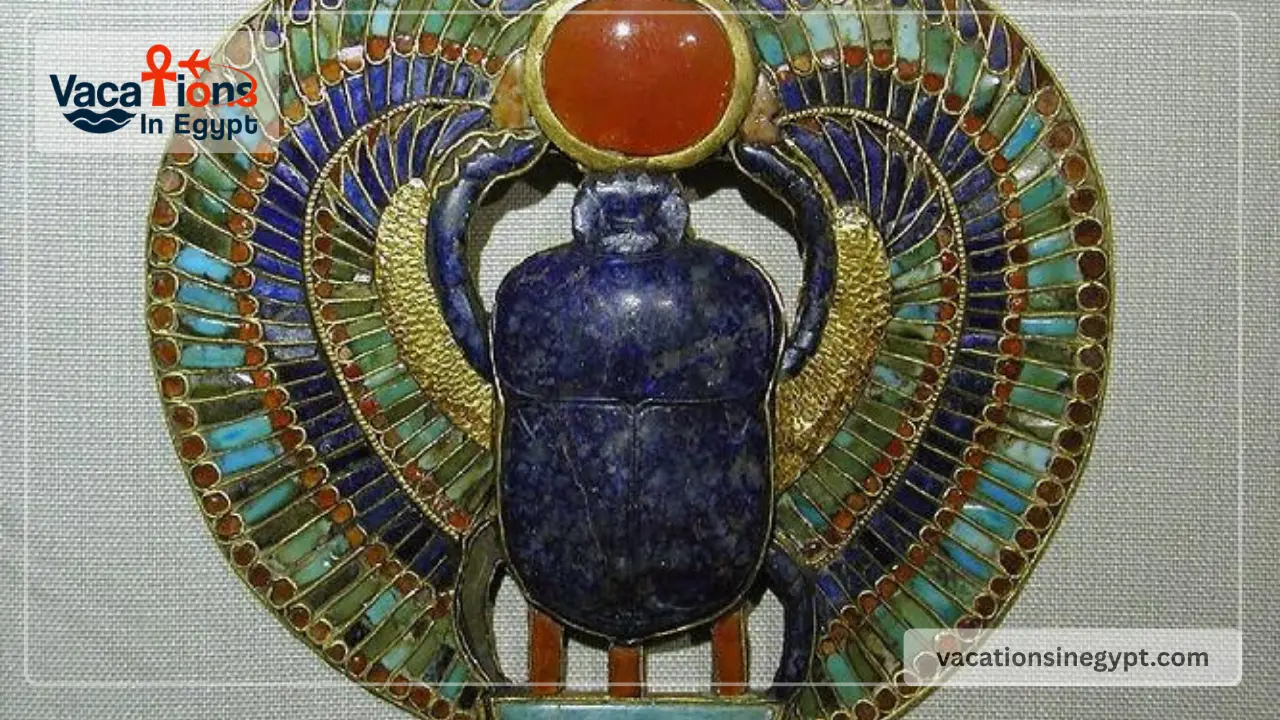
The egyptian scarab beetle is one of the most powerful and recognizable symbols of ancient Egyptian civilization. Revered for thousands of years, this small dung beetle became a sacred emblem of rebirth, protection, divine power, and eternal life.
In this complete guide, we explore the symbolism, religious importance, funerary role, and modern meaning of the egyptian scarab beetle.
What Is the Egyptian Scarab Beetle?
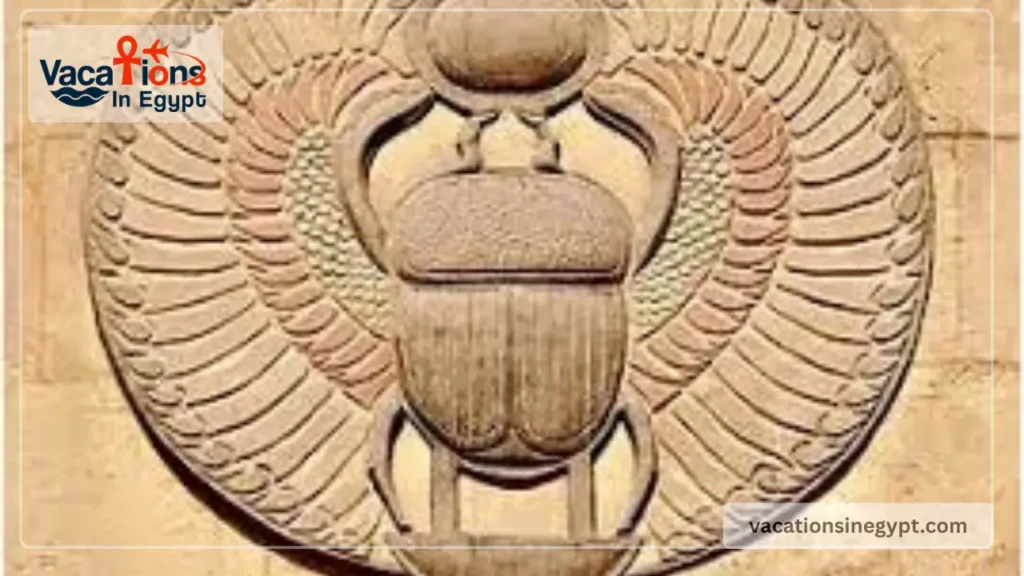
The egyptian scarab beetle refers to the sacred dung beetle (Scarabaeus sacer) that ancient Egyptians observed rolling balls of dung across the ground. This natural behavior inspired deep spiritual meaning.
The Egyptians believed the beetle symbolized:
- Rebirth and regeneration
- Transformation
- Protection from evil
- The eternal cycle of life
Because of these powerful associations, the egyptian scarab beetle became central to religion, art, jewelry, and burial rituals.
Symbolism of the Egyptian Scarab Beetle in Ancient Egypt
1. Rebirth and Resurrection
The strongest meaning of the egyptian scarab beetle was rebirth.
Ancient Egyptians saw the beetle lay its eggs inside dung balls. When young beetles later emerged, it appeared as if life had come from nothing. This mirrored their belief in resurrection and the soul’s journey into the afterlife.
The scarab became a symbol of:
- Life after death
- Spiritual transformation
- The eternal cycle of existence
2. Solar Symbolism and the Sun God Ra
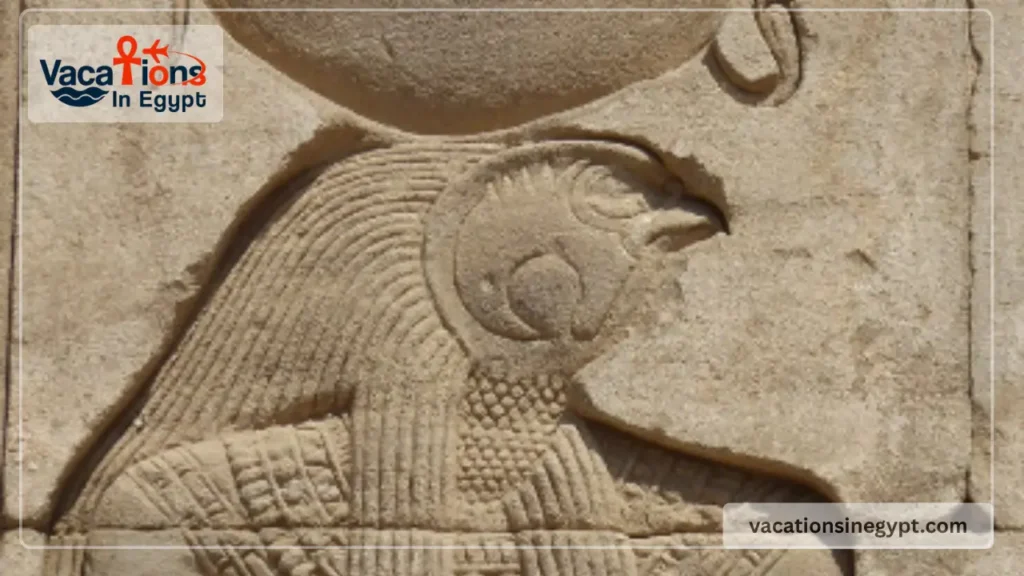
The egyptian scarab beetle was closely linked to Ra, the powerful sun god and creator deity.
Because the beetle rolls a round ball across the earth, Egyptians compared it to the sun moving across the sky. This led to the belief that the scarab helped push the sun each day.
The beetle also became associated with Khepri, the morning form of the sun god. Khepri, often depicted as a man with a scarab head, represented:
- Creation
- Renewal
- The rising sun
- Daily rebirth
3. Protection and Good Luck
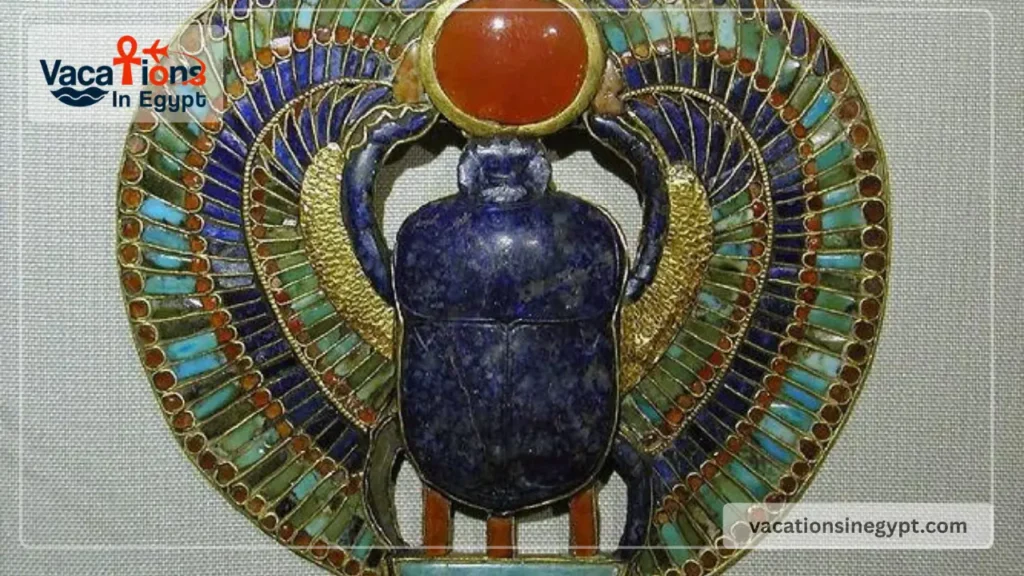
The egyptian scarab beetle was widely used as a protective amulet.
People believed wearing scarab jewelry would:
- Ward off evil spirits
- Protect against illness
- Bring good fortune
- Provide divine protection
Because of its connection to Ra and Khepri, the scarab was considered a powerful spiritual shield.
Egyptian Scarab Beetle in Mummification and the Afterlife
Scarabs played a major role in ancient Egyptian burial practices.
The Heart Scarab
During mummification, a special “heart scarab” was placed over the chest of the deceased. The heart was believed to be the center of emotion, memory, and intelligence.
In the afterlife, the heart would be judged before Osiris, the god of the underworld.
The heart scarab:
- Protected the deceased
- Prevented the heart from testifying against its owner
- Helped ensure safe passage to eternal life
Many tombs in the Valley of the Kings feature scarab carvings, demonstrating the deep belief in its protective powers.
Types of Egyptian Scarabs
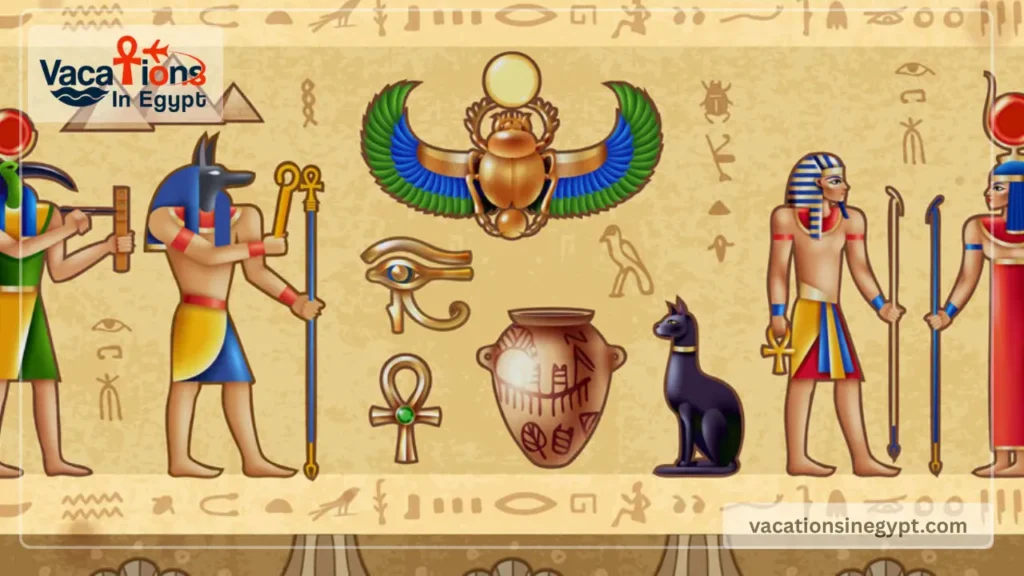
Over time, different types of egyptian scarab beetle artifacts were created for various purposes.
1. Heart Scarabs
Placed on mummies during burial to protect the heart in the afterlife.
2. Funerary Scarabs
Wrapped within mummy bandages to guide and protect the soul.
3. Amuletic Scarabs
Worn as charms for protection and luck in daily life.
4. Seal Scarabs
Used as official stamps for documents. The flat underside was engraved with names, titles, or symbols.
5. Commemorative Scarabs
Commissioned by pharaohs to celebrate victories or major achievements.
Scarab Beetle in Egyptian Art and Jewelry
The egyptian scarab beetle became one of the most popular artistic motifs in ancient Egypt.
It was carved from:
- Lapis lazuli
- Green jasper
- Faience
- Precious stones
both royalty and common people wore Scarab rings, necklaces, bracelets, and seals . Some of the most famous examples include scarabs found in the tomb of Tutankhamun.
Famous Egyptian Scarabs You Can See Today
Today, many important scarab artifacts are displayed in world-renowned museums, including:
- The British Museum
- The Metropolitan Museum of Art
- Egyptian Museum
These collections highlight the enduring cultural and religious importance of the egyptian scarab beetle.
Egyptian Scarab Beetle Meaning in Modern Times
The symbolism of the egyptian scarab beetle continues to inspire people today.
In modern jewelry and spiritual symbolism, it represents:
- Personal transformation
- Protection
- Inner strength
- Renewal and new beginnings
Many travelers to Egypt purchase scarab charms as lucky symbols or reminders of ancient wisdom.
Why the Egyptian Scarab Beetle Was So Important
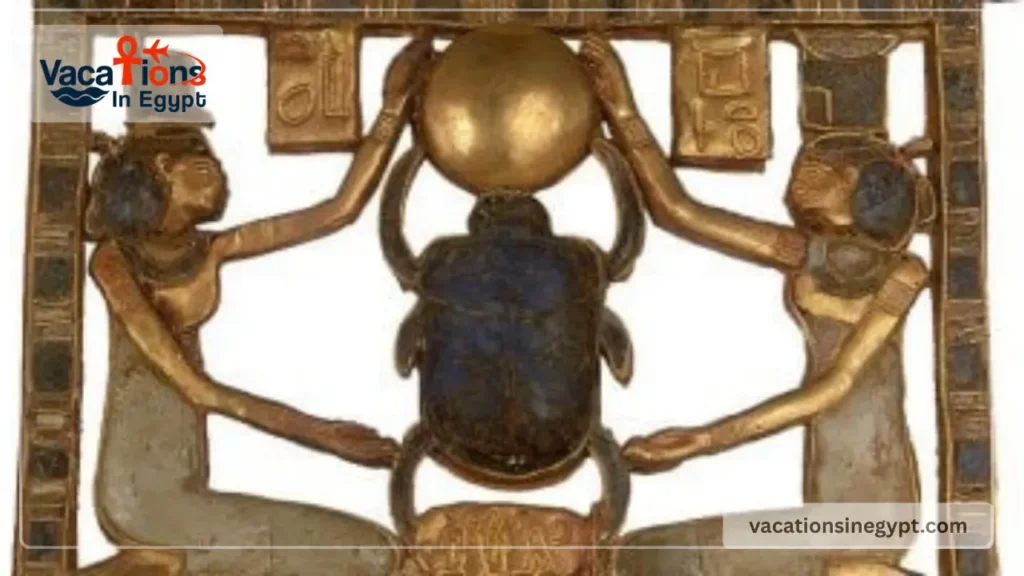
The egyptian scarab beetle was far more than an insect — it embodied the very core of Egyptian belief:
- The cycle of life and death
- The power of the sun
- Divine creation
- Protection in this life and the next
Its presence in temples, tombs, jewelry, seals, and art proves how central it was to ancient Egyptian civilization.
Finally, Egypt is a dream vacation destination for those who want to discover the extraordinary world of antiquity. Enjoy your vacation in Egypt with vacation packages to Egypt
Frequently Asked Questions
What is the Egyptian scarab beetle?
What does the Egyptian scarab beetle symbolize?
Why was the scarab associated with the sun god Ra?
Who is Khepri in relation to the scarab beetle?
What is a heart scarab?
How were scarabs used in ancient Egypt?
Where can you see Egyptian scarab beetles today?
Is the scarab beetle still considered a lucky symbol today?
- Oasis of Egypt: A Hidden Paradise in the Desert
- In Egypt, which holiday holds the utmost significance?
- Embrace the Magic of the Khafre Pyramid
- Egyptian Gods and Their Powers
- Discover the Delights of Egyptian food
- The Best Things to do in Alexandria
- The New Kingdom of Ancient Egypt (1570–1070 B.C.E)
- King Akhenaton
- The Ancient Egypt Foods and Drinks
- Daily Life in Ancient Egypt