
Mummification Process
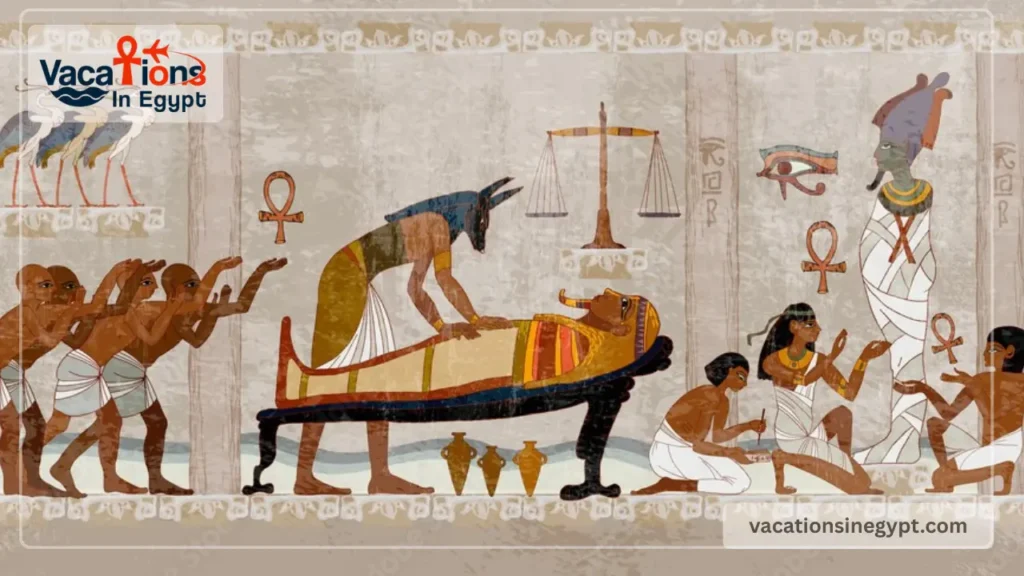
The mummification process was one of the most remarkable achievements of ancient Egyptian civilization. It involved preserving the body after death to prevent decomposition, based on the strong belief in resurrection and eternal life.
Ancient Egyptians believed that for the soul to live forever, the body had to remain intact. This belief led to the development of highly specialized embalming techniques that lasted for thousands of years.
History of the Mummification Process
The origins of the mummification process date back to around 2600 BCE during the Fourth and Fifth Dynasties of the Old Kingdom.
Initially, bodies were naturally preserved in the hot desert sand. Over time, Egyptians refined the technique into a sophisticated scientific and religious procedure.
By the New Kingdom, the mummification process had become highly advanced, especially during the Eighteenth to Twentieth Dynasties — the era of famous rulers like Tutankhamun.
Why Did the Ancient Egyptians Practice Mummification?
The purpose of the mummification process was deeply spiritual.
Ancient Egyptians believed the soul consisted of multiple parts:
- Ka – the life force that remained in the tomb
- Ba – the personality that could travel between the worlds
For the Ka and Ba to reunite in the afterlife, the physical body had to be preserved.
Their beliefs were influenced by myths such as the story of Osiris, whose resurrection symbolized eternal life. Funerary texts like the Book of the Dead contained spells to guide the deceased safely into the underworld.
Step-by-Step Mummification Process
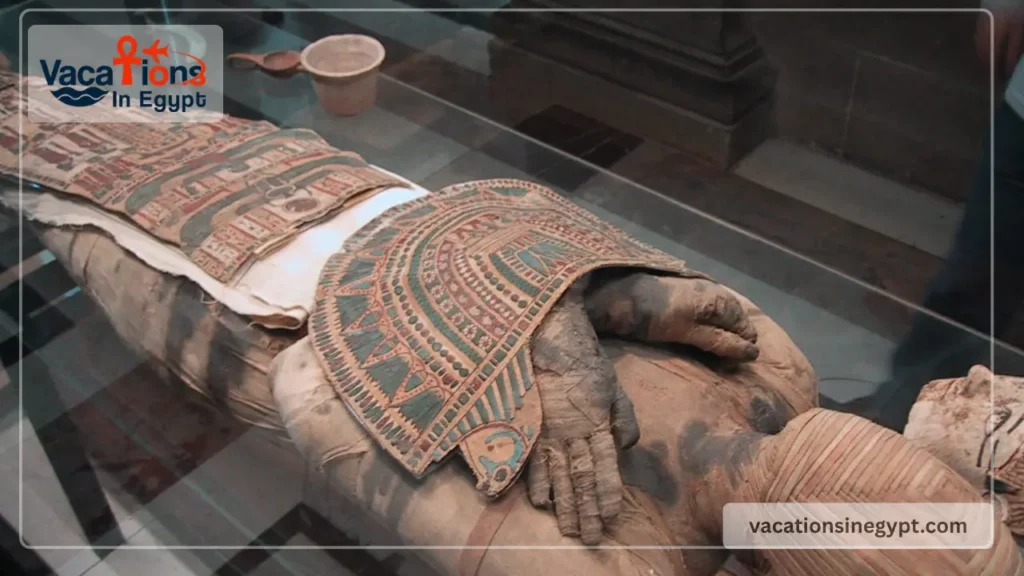
The mummification process typically took around 70 days and was performed by skilled embalmers.
1. Removal of the Brain
The brain was extracted through the nostrils using a metal hook.
2. Removal of Internal Organs
An incision was made in the abdomen to remove the lungs, liver, stomach, and intestines.
These organs were cleaned, dried with natron, and placed in canopic jars.
The heart was left inside the body because it was believed to be the center of intelligence and emotion.
3. Drying with Natron
The body was covered completely in natron (a natural salt) for 40–70 days to remove all moisture.
4. Filling and Shaping
After drying, the body was filled with linen, sawdust, or mud to maintain its shape. Artificial eyes were inserted, and the body was carefully stitched.
5. Wrapping in Linen
The body was wrapped in multiple layers of linen bandages. Amulets and charms were placed between the layers for protection.
6. Funeral Mask and Burial
A funerary mask was placed over the face.
If the deceased was a pharaoh, he was buried in a richly decorated tomb with treasures, personal belongings, and sacred texts.
Who Was Mummified?
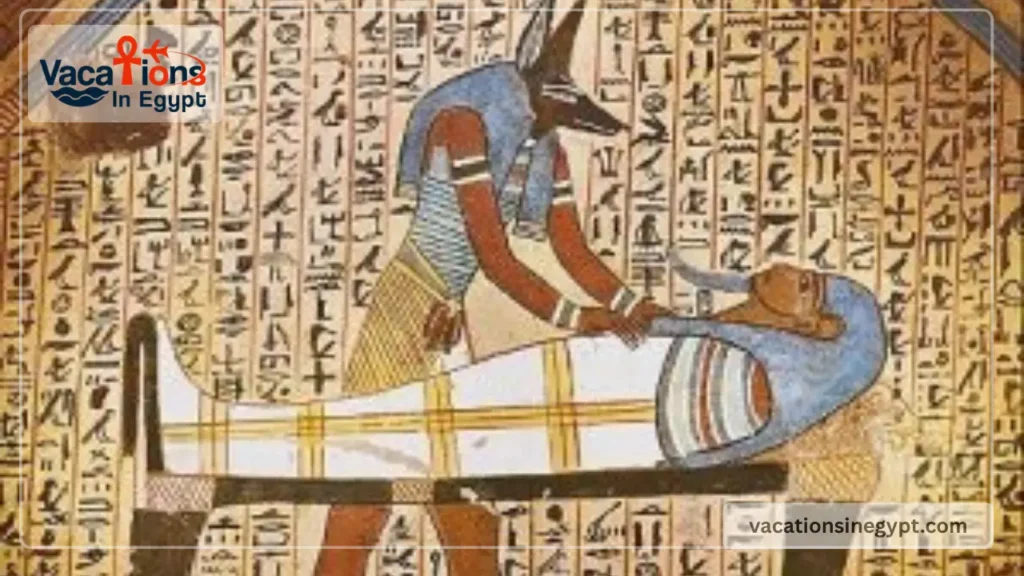
The mummification process was first reserved for:
- Pharaohs
- Royal family members
- Nobles and high officials
Over time, wealthier common people could also afford mummification. Even those with limited means were wrapped in linen and buried with protective charms.
Animal mummification was also common. Sacred animals such as cats, ibises, bulls, crocodiles, and birds were preserved for religious purposes.
Interesting Facts About the Mummification Process
- Early mummification began with natural desert burials.
- The most well-preserved mummies date to the New Kingdom period.
- The heart was never removed because it was needed for judgment in the afterlife.
- Tomb inscriptions warned against disturbing graves, contributing to the legend of the “mummy’s curse.”
- Mummification reflected both scientific knowledge and religious devotion.
Religious Significance of the Mummification Process
The mummification process was not just a medical procedure — it was a sacred ritual.
It symbolized:
- Resurrection
- Spiritual purification
- Preparation for eternal life
- Protection in the underworld
The entire process was accompanied by prayers, spells, and rituals performed by priests to ensure safe passage into the afterlife.
Conclusion
The mummification process stands as powerful evidence of the ancient Egyptians’ belief in immortality and the afterlife. Through careful preservation, spiritual rituals, and advanced embalming techniques, they created one of history’s most fascinating funerary traditions.
Today, mummies remain among Egypt’s most extraordinary archaeological discoveries, offering insight into the religious beliefs, medical knowledge, and cultural practices of this ancient civilization.